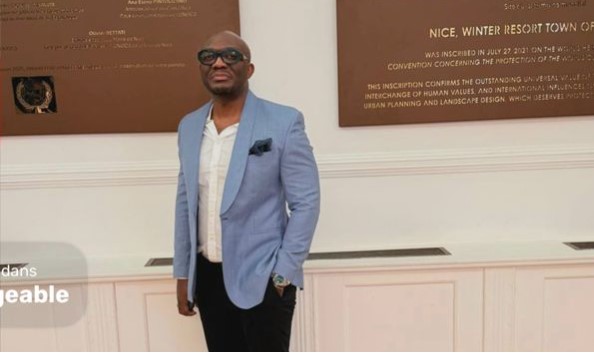
Gabon is witnessing a disturbing surge in verbal abuse targeting not just political leaders but their families, sparking a stern rebuke from public figure Hugues Ongoundou. The recent barrage of insults against President Brice Clotaire Oligui Nguema, his mother, and his wife has prompted Ongoundou to draw a clear line in the sand—one that separates legitimate criticism from gratuitous obscenity.
The outburst of insults directed at the President’s mother—a woman known for her discretion and complete disconnection from politics—along with similar attacks on his wife and the Head of State himself, has left Ongoundou deeply troubled. His stance is unequivocal: such behavior crosses a red line that transcends individual personalities.
Beyond politics: defending dignity and national values
Ongoundou emphasizes that this is not a matter of political allegiance or endorsement of government policies. Instead, he frames the issue as a fundamental assault on the dignity, values, and collective identity of the Gabonese people. “These insults are not just directed at three individuals—they strike at the very soul of our society,” he asserts.
The attacks on the President’s mother, a grandmother far removed from public life, and his wife are not isolated incidents. They represent a broader, more insidious trend: the normalization of vulgarity in public debate. Ongoundou warns that when a nation tolerates such behavior, it erodes its own moral foundations.
Symbolic figures under siege
In Gabonese culture, certain figures carry deep symbolic weight. Mothers symbolize transmission, grandmothers embody memory, and women represent the essence of family and societal cohesion. When these figures are publicly humiliated, the damage extends far beyond the individuals targeted.
“The mother is the guardian of our values. The grandmother is the keeper of our history. When we allow them to be dragged through the mud, we are not just insulting them—we are attacking our own heritage,” Ongoundou explains. He argues that such attacks weaken the symbolic pillars of the nation, including its perceived authority and moral integrity.
A society in moral decline
Ongoundou describes the current climate as symptomatic of a nation struggling with its identity. “There was a time when patriotism, respect for elders, and a sense of honor were core values in Gabonese upbringing. Today, that foundation appears to be crumbling.”
He points to a troubling inversion of values, where insults are not only tolerated but sometimes celebrated. When provocateurs become stars and vulgarity becomes entertainment, it signals a society that has lost its moral compass.
Collective responsibility: choosing virtue over vice
Ongoundou does not mince words when addressing the role of Gabonese citizens in this crisis. He argues that every individual who laughs at, shares, or normalizes such insults bears some responsibility for the erosion of public discourse.
“When insults become a form of entertainment, when those who degrade others are rewarded with attention, we are collectively complicit in our own decline,” he states. He distinguishes between responsible activism and the irresponsibility of using obscenity as a political tool.
Ongoundou acknowledges that legitimate criticism and opposition are vital to a healthy democracy. However, he draws a firm boundary: “One can challenge policies, expose wrongdoing, and demand accountability without resorting to insults targeting a leader’s family.”
A personal commitment to action
In response to this growing scourge, Ongoundou has taken a decisive step. He plans to consult with legal experts to explore potential legal avenues to address such insults, emphasizing that his actions are driven by personal conviction rather than political allegiance.
“I am not acting on behalf of the President, his family, or any institution. I am speaking as a Gabonese, as a citizen, and as a son,” he clarifies. His goal is not to silence dissent but to restore dignity to public debate.
He concludes with a powerful appeal: “I refuse to accept a society where our mothers, wives, and fathers are used as pawns in political battles. I refuse to raise my children in a world where vulgarity is glorified over virtue.”
Ongoundou’s message is clear: Gabon must choose between moral decay and the restoration of its core values. The time for action is now.
You may also like
Northern Niger’s unanswered question: can Tiani’s government deliver water and power where it matters most?
Can Air Sénégal survive the Interpol smuggling probe? The stakes for crew, passengers and the airline’s future
As donor fatigue spreads, can Benin’s €544,042 UNAIDS pledge keep the HIV response on track?
Who pays the price when Burkina Faso’s public payroll contracts? Households weigh the cost of 1,917 fewer agents
Libya pushes for direct Tripoli-Yaoundé flights as Cameroon sets up working groups