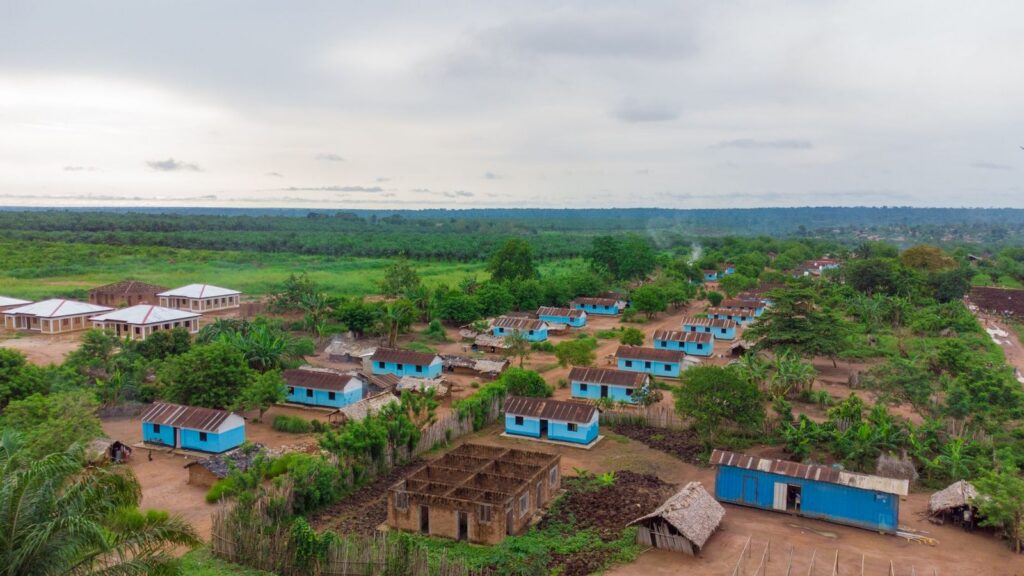
The eastern region of Ituri in the Democratic Republic of the Congo has witnessed another brutal assault carried out by the Allied Democratic Forces (ADF), an Islamist militant group with Ugandan roots. Local authorities confirm that at least thirteen civilians were killed and an entire village was torched during the nighttime raid. This latest violence underscores the persistent threat posed by armed factions in the area, despite ongoing military operations aimed at restoring stability.
Another chapter in Ituri’s long history of suffering
Armed assailants struck under the cover of darkness, targeting unarmed residents before setting homes ablaze. The majority of the village was reduced to ashes, forcing survivors to abandon their homes and seek refuge in nearby settlements with little more than the clothes on their backs. The tactics employed—swift strikes against civilian targets, deliberate burning of property, and the use of close-quarters weapons to conserve ammunition—mirror the ADF’s long-documented methods. This militia has been active in northeastern Congo for over a decade, sowing fear and instability across the region.
Ituri, which borders Uganda and South Sudan, remains a hotspot of insecurity. Beyond the ADF threat, the province grapples with deadly intercommunal clashes between Hema and Lendu militias, as well as the persistent presence of local armed groups exploiting artisanal mining operations. Since May 2021, the province has been under a state of siege, placing civilian governance under military control, yet tangible improvements in security have yet to materialize.
Operation Shujaa struggles against an elusive enemy
In late 2021, the Armed Forces of the Democratic Republic of the Congo (FARDC) joined forces with Uganda’s People’s Defence Forces (UPDF) to launch Operation Shujaa, aimed at dismantling ADF strongholds in North Kivu and Ituri. Nearly four years into the campaign, the results remain under scrutiny. While several rebel bases have been destroyed, fighters have fragmented into mobile cells, shifting their strategy to hit-and-run raids on isolated villages rather than confronting military convoys.
This dispersed combat style presents a major challenge for counterinsurgency efforts. The ADF leverages the dense equatorial forests, porous borders, and almost nonexistent communication networks to strike and vanish into the wilderness. Each attack fuels growing frustration in Kinshasa, where opposition voices criticize the government’s inability to safeguard civilians—despite substantial military investment and the gradual withdrawal, initiated in 2024, of the United Nations Organization Stabilization Mission in the DRC (MONUSCO).
Security challenges multiply as humanitarian crisis deepens
The phased withdrawal of UN peacekeepers has left a security vacuum that the FARDC are struggling to fill. In neighboring South Kivu and North Kivu, the resurgence of the M23 rebellion—widely reported as receiving support from Rwanda—has drawn the bulk of Congo’s military resources. As a result, Ituri has become a secondary focus in Kinshasa’s security agenda, even as attacks in the province grow in frequency and severity throughout the year.
The humanitarian toll is staggering. Hundreds of thousands of displaced individuals now live in overcrowded, under-resourced camps around Bunia, the provincial capital. Aid organizations warn of worsening shortages in food and medical supplies. The repeated destruction of entire villages, as seen in this latest assault, only exacerbates homelessness and weakens the already fragile rural economy.
For the central government, the stakes are high. Stabilizing Ituri is not just a military imperative but a test of national credibility, the protection of trade routes with East Africa, and the safe exploitation of one of the continent’s richest mineral deposits. Until the ADF’s operational capacity is neutralized, mining and logistics investors will likely remain cautious, depriving the province of the capital needed for recovery. Early assessments suggest the death toll from this attack may rise in the coming hours.
You may also like
Can Ibrahim Traoré’s 300 armored vehicles claim survive scrutiny? Inside Faso Armored’s made-in-Burkina Faso gamble
Can Washington force third-country deportations? Ivory Coast’s refusal raises the stakes
Will Benin’s AEO exporters finally crack the Chinese market?
Northern Niger’s unanswered question: can Tiani’s government deliver water and power where it matters most?
Can Air Sénégal survive the Interpol smuggling probe? The stakes for crew, passengers and the airline’s future