In 2024, Burkina Faso made headlines by nationalizing the Boungou and Wahgnion gold mines, signaling a bold move toward reclaiming control over its strategic mineral wealth. Two years later, Ouagadougou faces the hard realities of reviving these industrial giants, a task that demands massive capital injections. With a loan from the West African Development Bank (BOAD) approved and operational costs spiraling, the Burkinabe government is staking its economic credibility on this high-stakes mining gamble.
From nationalist rhetoric to economic pragmatism
The story of Boungou and Wahgnion’s mines reads like a political and financial thriller, mirroring the broader shifts sweeping across West Africa. Once operated by the Canadian giant Endeavour Mining, these two lucrative sites were transferred in 2023 to Lilium Mining. However, financial and operational disputes prompted Burkina Faso’s transitional government to execute a historic takeover in 2024.
Through the Société de participation minière du Burkina (SOPAMIB), the administration nationalized these assets with a clear goal: to maximize direct financial returns for the national budget and reassert economic sovereignty in a sector of critical importance. Yet, modern mining is no small feat. Transitioning from regulator or minority shareholder to principal operator means assuming the full spectrum of financial, logistical, and security risks. For Ouagadougou, the post-nationalization honeymoon phase has given way to the daunting challenge of industrial management.
From shutdowns to slow revival: the production comeback
Technically speaking, the state inherited infrastructure that was operating far below its historical potential. In 2022, under Endeavour Mining’s management, the two sites boasted robust output, with a combined production of 240,000 ounces of gold (116,000 ounces from Boungou and 124,000 ounces from Wahgnion). However, the turbulent transition to Lilium Mining, compounded by the region’s security crisis, shattered this momentum. The Boungou site remained completely inactive for two years, and it wasn’t until July 2025 that the first gold bars rolled out of its refineries under public ownership.
Now, the focus is on reclaiming lost ground. For 2026, SOPAMIB has set ambitious targets, particularly for Wahgnion, where an annual production of 92,000 ounces is officially projected. Meanwhile, the Ministry of Mines anticipates a broader acceleration, aiming for a combined output exceeding 7 tons of gold from both sites—roughly 225,000 ounces. Achieving these figures would return the mines to their 2022 performance levels, but the realization of these forecasts hinges on one critical variable: funding.
BOAD’s lifeline: 45.7 million euros to modernize operations
To turn these ambitions into reality, Burkina Faso’s Parliament took a decisive step by ratifying a €45.7 million loan (30 billion FCFA) from the West African Development Bank (BOAD). This financial boost is complemented by a national contribution: an additional FCFA 3.21 billion (about €4.9 million) directly injected by the Burkinabe government.
Where will the funds go? Official documents confirm that this consolidated budget is not earmarked for debt repayment but is instead allocated to priority structural investments:
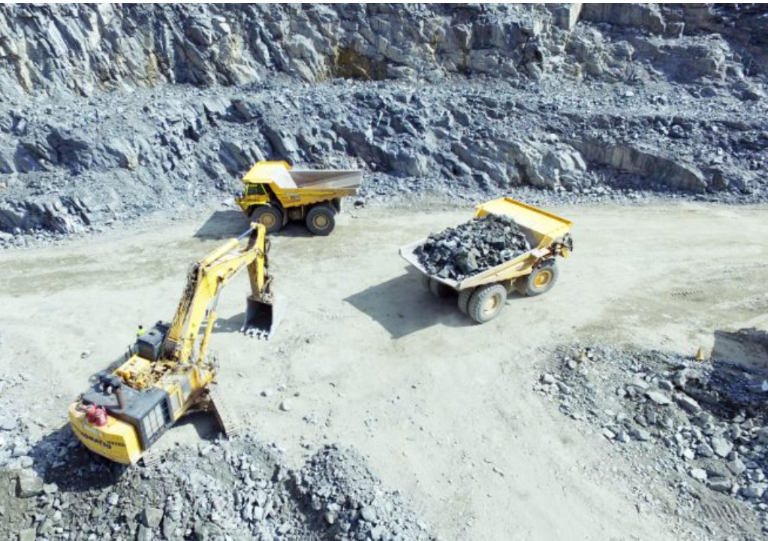
- Acquisition of heavy-duty mining equipment to modernize the fleet.
- Strengthening of tailings storage facilities, a critical environmental and technical requirement for safely managing processing waste.
- Electrification of the Wahgnion mine, connecting it to the national grid via a dedicated SONABEL power line.
The latter initiative is particularly strategic. Until now, the Wahgnion site relied on costly imported fossil fuels to power its generators, inflating both its carbon footprint and operational expenses.
The battle against fixed costs and dependence
The urgency of this financing stems from an unsustainable financial equation over the medium term. By assuming control of the mines without a fully owned fleet or total logistical expertise, SOPAMIB has had to heavily rely on outsourcing and equipment leasing.
The Minister of Mines, Yacouba Zabré Gouba, highlighted the staggering costs of this dependency, revealing that for Wahgnion alone, leasing equipment and outsourcing services exceed FCFA 3 billion (around €4.57 million) per month. Such a cash-flow hemorrhage is suffocating profitability, even amid historically high gold prices. The BOAD loan aims to break this vicious cycle by enabling the purchase of owned equipment, reducing reliance on external contractors, and restoring the financial leeway needed to justify the state’s initial investment.
A litmus test for state-led mining
Beyond technicalities, the trajectory of Boungou and Wahgnion serves as a real-world stress test for Burkina Faso’s economic policy. In a region where the extractive sector has long been dominated by Western multinationals, Ouagadougou’s decision to take direct operational control is under intense scrutiny from its Sahel Alliance neighbors and international investors alike.
The success of this strategy rests on a delicate balance. On one hand, the state must demonstrate the managerial rigor required to manage complex assets without succumbing to bureaucratic inefficiencies or poor governance. On the other, it must ensure the security of sites and supply routes in an unstable regional environment—a factor that had heavily influenced the decisions of previous private operators.
From political symbol to industrial reality
The acquisition of Boungou and Wahgnion’s mines marked a major political and symbolic victory for Burkina Faso’s transitional authorities, celebrated by a public eager to see national resources directly benefit the country. The BOAD funds represent the true kickoff of the operational phase of this ambition.
Yet, the hardest work lies ahead. Transforming a symbol of sovereignty into a profitable and sustainable public enterprise demands drastic cost rationalization and production stabilization. If Ouagadougou can break free from its ruinous dependence on contractors and meet its 2026 production targets, the country could set a new benchmark for mineral governance in West Africa. Failure, however, risks burdening an already strained public treasury with the weight of a nationalized dream.