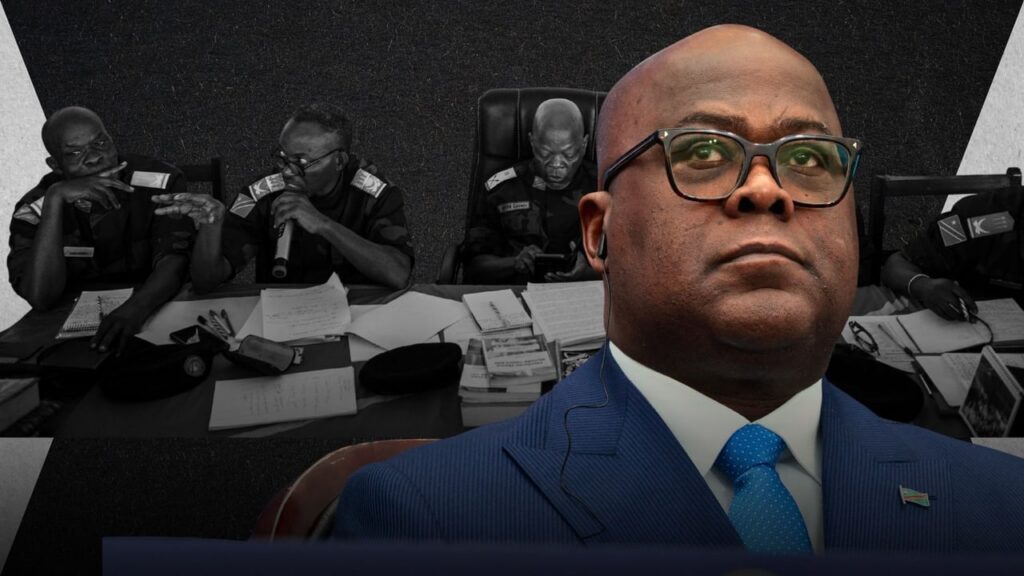
The Democratic Republic of Congo (DRC) finds itself at the center of a heated national debate as calls grow louder for the reinstatement of the death penalty. This contentious issue has once again sparked intense discussions across political, legal, and civil society circles, reflecting deep divisions over justice and punishment in the country.
Proponents of the death penalty argue that it serves as a necessary deterrent against violent crimes, particularly in a nation grappling with persistent security challenges. They contend that the harshest punishment could restore a sense of order and accountability in communities plagued by rampant criminality. The debate has gained momentum following a series of high-profile crimes that have shocked the nation, prompting renewed demands for stricter penalties.
Legal and historical context of capital punishment in the DRC
The death penalty has a complex history in the Democratic Republic of Congo. While it remains part of the national legal framework, its application has been suspended for decades. The last execution took place in the late 1980s under former President Laurent-Désiré Kabila, and since then, the country has observed a de facto moratorium on capital punishment.
Under current President Félix Tshisekedi, the government has maintained a cautious stance on the issue. While there have been no public executions, the legal possibility of reinstating the death penalty remains on the table. Legal experts point out that the DRC’s constitution does not explicitly abolish the practice, leaving the door open for future legislative changes.
Opposition voices and human rights concerns
Critics of the death penalty, including human rights organizations and activists, warn against its potential reinstatement. They argue that the practice violates fundamental human rights and does little to address the root causes of crime, such as poverty, corruption, and weak governance. International bodies like the United Nations have repeatedly urged member states to abolish capital punishment, citing its irreversible nature and potential for misuse.
Civil society groups in the DRC have been vocal in their opposition, organizing campaigns and public forums to raise awareness about the ethical and practical implications of the death penalty. They emphasize the risk of wrongful convictions, particularly in a judicial system that is often criticized for inefficiency and political interference.
Political dynamics and public opinion
The debate over the death penalty has also become intertwined with the broader political landscape of the DRC. President Félix Tshisekedi faces mounting pressure from both domestic and international actors to take a definitive stance. While some political factions advocate for its reinstatement as a tool to combat rising crime rates, others caution against undermining the country’s human rights commitments.
Public opinion remains sharply divided. Surveys conducted in urban centers reveal that a significant portion of citizens support the death penalty as a form of justice for heinous crimes. However, rural communities, where traditional justice systems often prevail, express more nuanced views, highlighting the need for alternative approaches to crime prevention and rehabilitation.
What’s next for the DRC’s death penalty debate?
As the debate continues to unfold, the government faces a critical decision. Will it bow to public pressure and reinstate capital punishment, or will it uphold its current moratorium while exploring alternative measures? The outcome of this debate could have far-reaching implications for the DRC’s legal system, human rights record, and international reputation.
For now, the nation remains at a crossroads, with the fate of the death penalty hanging in the balance. Advocates on both sides are gearing up for what promises to be a protracted and deeply polarizing struggle over the future of justice in the Democratic Republic of Congo.
You may also like
Burkina Faso: what does Ibrahim Traoré’s four-year record truly mean for the displaced and the silenced?
Thali oil permit: can Prime Global Energies’ $15 million rescue finally unlock Cameroon’s stalled Njom-3 well?
Can West Africa’s peace hold without the Entente Council and UNOWAS pact?
Can Lomé’s quiet diplomacy finally deliver peace to eastern DRC?
Can Nigeria’s security forces ever shut down the kidnapping economy in the north?