Challenges
How can the Port of Cotonou sustain street vendors’ livelihoods while ensuring food safety and hygiene for both customers and sellers?
Best practice
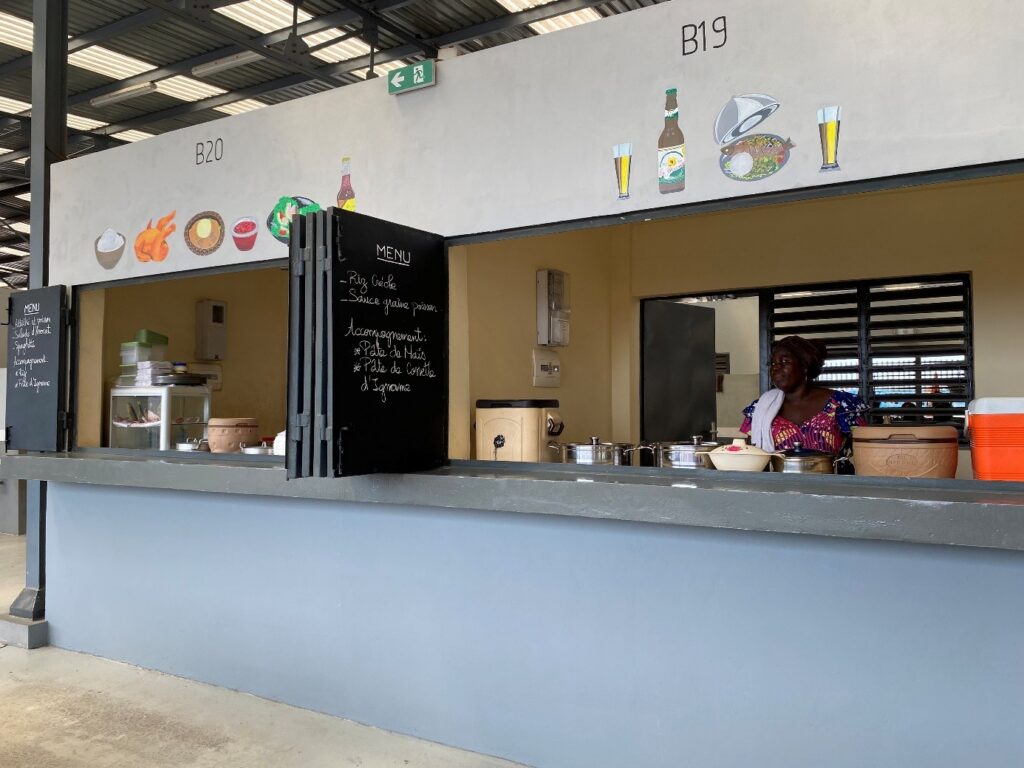
Recognizing the hazardous working conditions and poor hygiene standards faced by food vendors along the port access roads, the Port Autonome de Cotonou (PAC) initiated comprehensive consultations to address these concerns. The result was the creation of modern, weatherproof vending spaces equipped with running water and electricity. This initiative underscores the port authority’s commitment to social and environmental responsibility for nearby communities.
Case study
The Port Autonome de Cotonou has long prioritized modernization and community-focused initiatives. In 2024, it launched a 3,000m² covered marketplace featuring fully equipped vendor stalls, water access, and electricity. Previously, 98 vendors operated along the roadside without protection from traffic or weather, lacking cooking facilities, sanitation, or storage options. The new facility provides clean, secure spaces that enhance working conditions while improving food hygiene standards for port workers and local residents.
The project, costing over 600 million FCFA, involved stakeholder consultations and delivered multiple benefits. Vendors gained financial stability through increased customer access, while the new location attracted a more diverse clientele, including senior staff and dockworkers. Early data indicates a 20% sales increase, and ongoing assessments are tracking further improvements in safety and waste reduction.
In pictures
You may also like
Will the AES ever launch its own currency? The question Traoré keeps leaving unanswered
Can Ibrahim Traoré’s 300 armored vehicles claim survive scrutiny? Inside Faso Armored’s made-in-Burkina Faso gamble
Can Washington force third-country deportations? Ivory Coast’s refusal raises the stakes
Will Benin’s AEO exporters finally crack the Chinese market?
Northern Niger’s unanswered question: can Tiani’s government deliver water and power where it matters most?