What we know about the arrest of Sunni imam Mohamad Ishaq Kindo in Burkina Faso
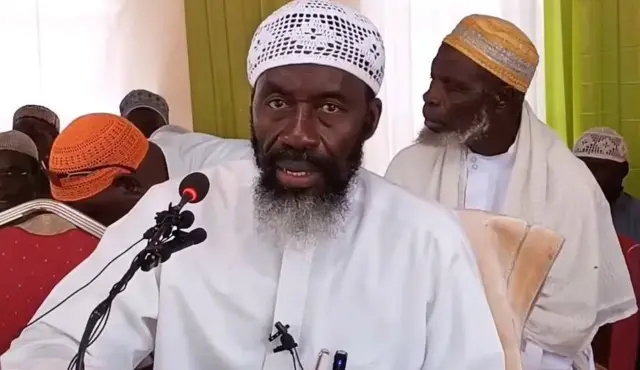
On Tuesday, May 26, influential Sunni imam and preacher Mohamad Ishaq Kindo was arrested in Ouagadougou, Burkina Faso, by security forces. The operation took place in broad daylight but left many unanswered questions about the motives behind his detention. Hours later, the Federation of Islamic Associations of Burkina (FAIB) issued a statement confirming his arrest, describing it as having occurred “under circumstances whose reasons have not yet been officially disclosed.”
This high-profile interpellation comes just two days after the imam publicly criticized the new religious freedoms bill adopted on March 19, a move that has drawn significant attention within both religious and political circles. The FAIB has since announced it is pursuing all necessary channels to obtain clear information and a favorable resolution regarding his case.
Heavy-handed arrest sparks outrage
A close associate who witnessed the operation reported it occurred around 2:00 PM local time, the day before Eid al-Adha, a major Muslim holiday. The arrest was carried out by security personnel including police officers and masked soldiers, which escalated tensions as bystanders attempted to intervene. “The situation turned violent as supporters tried to block the officers,” the witness explained. Several Muslim worshippers were injured during the confrontation.
The imam had recently gained attention for a widely circulated video recording of his teachings, in which he condemned the newly adopted religious freedoms law. He urged authorities to “reconsider the implications of their actions before proceeding further.” Among his remarks, he warned, “Beware of trying to ban public prayers. Whether you are a leader or powerful figure, you possess neither the strength nor the authority of God.”
Protests erupt in Ouagadougou
Within hours of his arrest, hundreds of citizens gathered in Ouagadougou demanding Kindo’s immediate release. The peaceful protest was met with force as police dispersed the crowd using tear gas. In response, the FAIB called on the Muslim community to remain calm and refrain from any actions that could escalate tensions.
The following day, coinciding with Eid al-Adha celebrations, the country’s president addressed the nation through social media. While praising the security forces for their ongoing fight against jihadist groups, he also issued a stern warning to those who might attempt to undermine national stability or discourage the military effort. “Anyone who engages in such behavior will bear full responsibility for the consequences,” he stated. To date, no official comment has been made regarding the imam’s detention.
New religious law fuels debate
The controversial law on religious freedoms, adopted by the council of ministers on March 19, aims to regulate religious practices in Burkina Faso. Authorities state the legislation seeks to curb online religious extremism, hate speech, and other forms of digital radicalization that threaten national cohesion. Mariam Sanogo, Director General of Religious, Customary, and Traditional Affairs, emphasized that the updated law responds to rising extremism and incitement to violence in digital spaces.
The law prohibits the construction of places of worship within public institutions, with limited exceptions for healthcare facilities, prisons, and military barracks. Given the impracticality of providing dedicated religious spaces for all faiths in government buildings, the state has opted for a blanket ban. Authorities clarify, however, that public prayer remains permitted in open spaces, provided it respects the beliefs of others.
Since the military-led government of Captain Ibrahim Traoré assumed power nearly four years ago, Burkina Faso has faced persistent jihadist threats across much of its territory. The administration has defended its tough stance on dissent, including recent high-profile arrests, as necessary measures to protect national security and maintain stability.