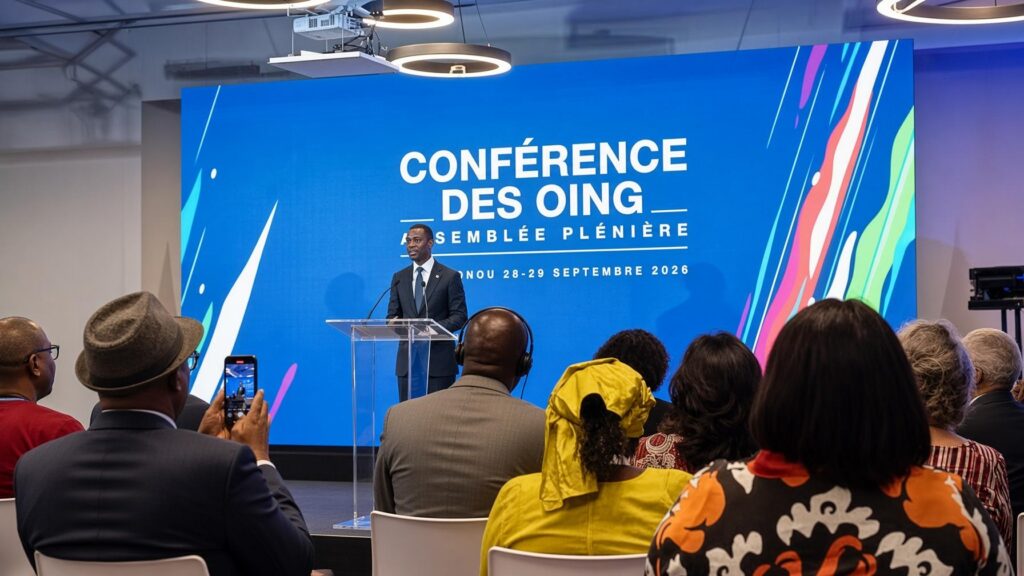
The 16th ordinary plenary assembly of the Conference of International Non-Governmental Organisations (COING) of La Francophonie opened on 28 September 2026 in Cotonou. Over two days, the gathering brings together francophone civil society actors to define their contribution ahead of the 20th Francophonie Summit, scheduled for 15–16 November in Cambodia, and to set the 2026-2028 roadmap.
The stakes are clear: can a two-day assembly in Benin actually shift how the Organisation internationale de la Francophonie (OIF) designs its peace and resilience policies? Or will the Cotonou momentum fade before Phnom Penh?
Peace beyond the absence of war
Under the theme “Reinvesting in peace, mobilising francophone civil society for shared prosperity, resilient territories and lasting stability”, the meeting makes a point that peace is not merely the absence of conflict. It requires social justice, access to basic services, mediation, human rights defence and resilience in the face of economic and security crises.
Stronger citizen participation
Participants are advocating for close cooperation between states, parliamentarians and NGOs. Working on the ground, citizen organisations are asking to be more closely involved in the decision-making processes of the OIF so that local recommendations can be turned into concrete public policies.
A pragmatic 2026-2028 roadmap
The Cotonou assembly aims to build a more operational COING. Its priorities focus on:
- Consolidating networks: structuring synergies between francophone NGOs.
- Mobilising resources: developing strategic financial and technical partnerships.
- Monitoring impact: concretely measuring the effects of actions within communities.
Benin’s role and the message to leaders
By hosting this session, Benin reaffirms its key role in francophone dialogue. Just weeks before the Cambodia meeting, civil society gathered in Cotonou is sending a clear message: the future of La Francophonie cannot be built without the active involvement of citizens and their representatives.
But the question remains: will this roadmap translate into binding commitments, or will it remain a statement of intent? The answer will shape not only the Cambodia summit but also the daily lives of millions across the francophone world.
You may also like
Ghana’s $109 million health deal refusal: who should control a nation’s medical records?
Will the UK’s new transit visa rules isolate Senegal from its key global routes?
Will the AES ever launch its own currency? The question Traoré keeps leaving unanswered
Can Ibrahim Traoré’s 300 armored vehicles claim survive scrutiny? Inside Faso Armored’s made-in-Burkina Faso gamble
Can Washington force third-country deportations? Ivory Coast’s refusal raises the stakes