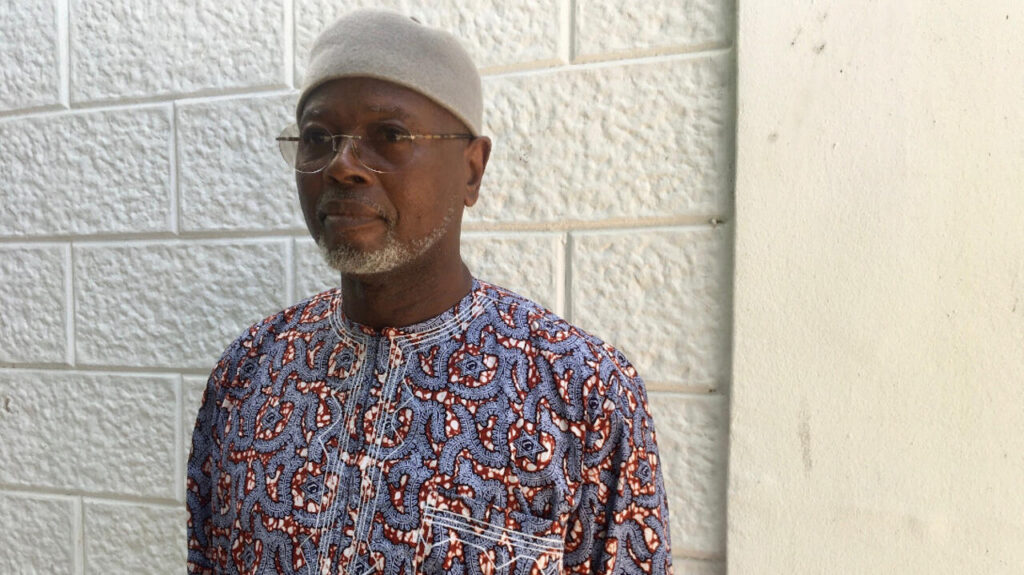
What is really behind the disappearance of Moussa Kaka in Niger?
Since August 31, the journalist Moussa Kaka has been missing in Niger. His arrest has drawn sharp criticism from Alioune Tine, a Senegalese human rights expert and former UN special rapporteur, who describes the situation as a forced disappearance. Tine, founder of the Afrikajom Center think tank focused on democracy and security in Africa, laments what he calls the total indifference of both the African and international communities. He is now calling for a broad mobilization of African public opinion and the organizations that represent it.
Alioune Tine: no legal basis for the arrest
In a direct and uncompromising statement, Alioune Tine insists that absolutely nothing justifies the arrest of Moussa Kaka. He points out that the veteran journalist has committed no offense and that his detention appears arbitrary. Tine warns that this case is not just about one individual but poses a serious threat to press freedom across West Africa. He urges African civil society groups, media associations, and regional bodies to break their silence and demand answers.
Why has the international community stayed silent?
The absence of strong reactions from African and global institutions is deeply troubling, according to Tine. He notes that while other cases of detained journalists often trigger swift condemnation, the disappearance of Moussa Kaka has been met with a deafening silence. This lack of pressure, he argues, only emboldens those who seek to stifle independent journalism. Tine calls on the African Union, ECOWAS, and international human rights organizations to speak out and push for a transparent investigation.
The stakes for democracy and security in the Sahel
For Alioune Tine, the Kaka case is a litmus test for democratic governance in the Sahel. If a journalist can vanish without consequence, the rule of law is at risk. He stresses that a free press is essential for holding power accountable and for preventing the kind of instability that has plagued the region. The Afrikajom Center founder warns that ignoring this disappearance sets a dangerous precedent that could spread beyond Niger’s borders.
What can be done to secure Moussa Kaka’s release?
Tine outlines several steps: first, African journalists and unions must amplify the call for Kaka’s immediate release; second, regional bodies should formally request information from Nigerien authorities; and third, international partners should condition their cooperation on respect for fundamental freedoms. He believes that sustained pressure from a united African front is the most effective way to secure Kaka’s freedom and to protect other journalists at risk.
A call to action for African public opinion
Alioune Tine does not mince words: the silence must end. He urges every African citizen who values democracy to demand justice for Moussa Kaka. Through petitions, social media campaigns, and peaceful protests, public opinion can force the hand of those in power. The disappearance of a journalist is not a private matter—it is an assault on the public’s right to know. Tine’s message is clear: mobilize now, before it is too late.
You may also like
Can OL Lyonnes still top the group after Chelsea stalemate?
Can Togo’s mediation still deliver peace in eastern DRC after Tshisekedi’s latest letter to Gnassingbé?
Mali: did the JNIM ambush on Africa Corps near Niono expose a fatal gap in Russia’s Sahel strategy?
Will Mali’s 73.6 million dollar funding gap decide the fate of millions by 2027?
Guinea-Bissau’s December 2026 vote: can Embaló return legally, and can the result ever be trusted?