
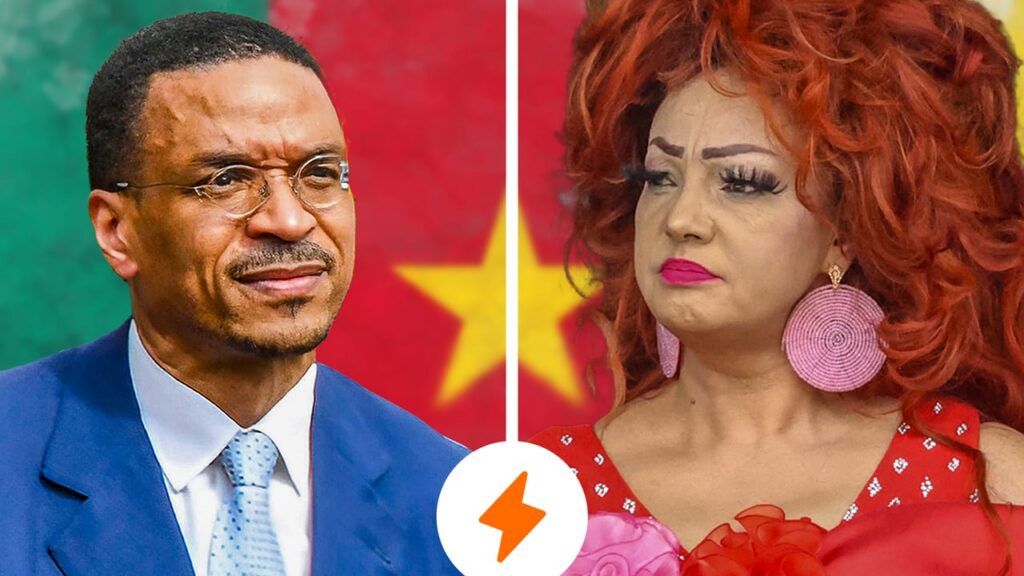
In Cameroon, tensions are escalating behind closed doors as whispers of a looming power struggle intensify. At the heart of this simmering conflict are two figures: Franck Biya, the President’s son, and Chantal Biya, the First Lady, both positioning themselves for a post-Paul Biya era.
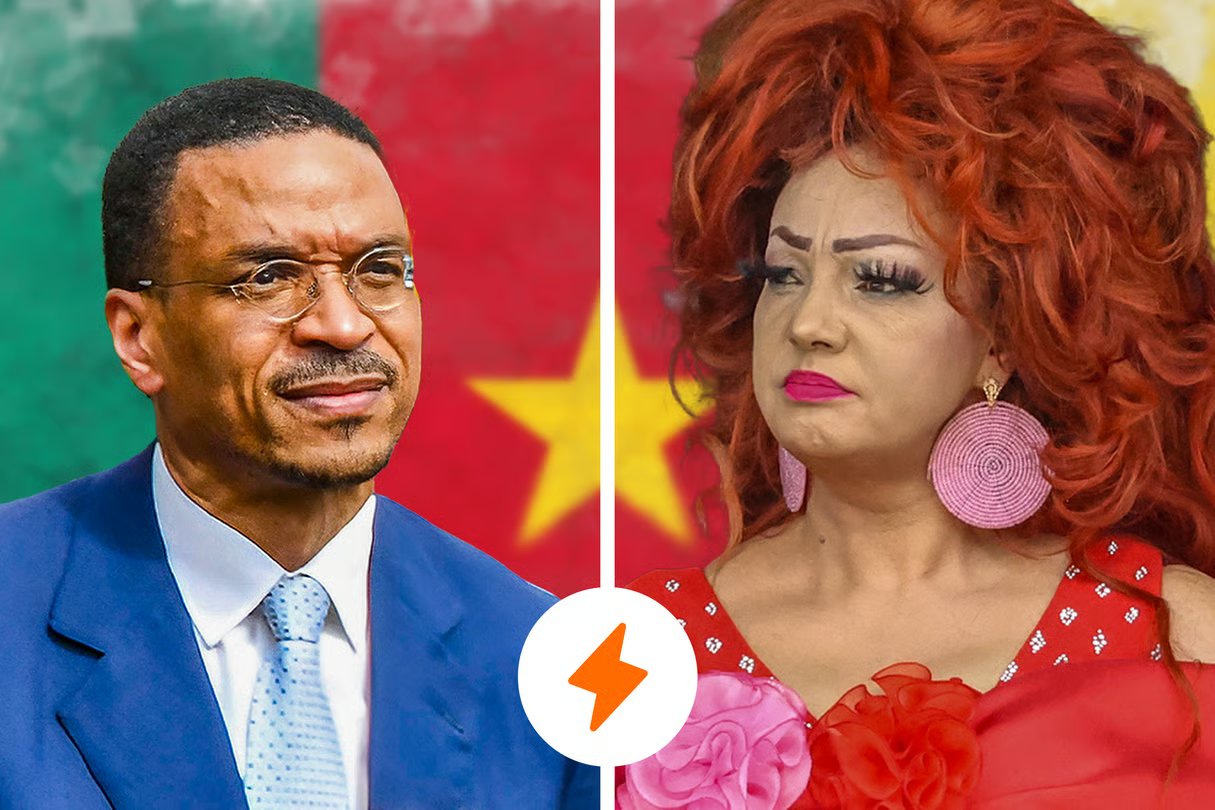
From allies to adversaries: a family feud
For years, Franck Biya and Chantal Biya maintained a facade of unity, standing shoulder to shoulder behind President Paul Biya. Yet, as whispers of succession plans grow louder, cracks in their alliance have become impossible to ignore. Observers note a shift in dynamics, with both figures now maneuvering to secure influence in a post-Paul Biya Cameroon.
The First Lady has long been a polarizing figure in national politics, wielding power through her Fondation Chantal Biya and close ties to the ruling elite. Meanwhile, Franck Biya, once seen as a reluctant heir, has recently taken on more public roles, fueling speculation about his ambitions.
Public gestures and private ambitions
Recent months have seen a flurry of activity from both camps. Chantal Biya has intensified her charity work, positioning herself as a champion of social causes, while Franck Biya has made high-profile appearances at official events. Analysts suggest these moves are carefully calculated to sway public opinion in their favor.
Yet, behind the scenes, tensions are palpable. Reports indicate that allies of both parties are already jockeying for position, with key political figures aligning themselves with one faction or the other. The power vacuum left by an aging President Biya has turned Cameroon into a chessboard where every move is scrutinized.
What’s at stake for Cameroon
The stakes couldn’t be higher. Cameroon, a nation of over 26 million people, faces myriad challenges: economic instability, security threats, and a growing youth unemployment crisis. The question of succession is not merely a family affair—it is a national concern that could determine the country’s stability for decades to come.
Opposition figures and civil society leaders have begun to voice concerns, warning that a chaotic transition could plunge the country into turmoil. Meanwhile, international observers are watching closely, wary of any power struggle that could destabilize a region already grappling with instability.
Signals of a deeper divide
Several indicators point to a widening rift. Public statements from Chantal Biya’s camp have taken on a more critical tone toward Franck Biya, while his supporters have begun to push back against what they describe as her overreach. Social media has become a battleground, with both sides trading barbs and accusations.
One particularly telling moment came when Chantal Biya reportedly skipped a key national event where Franck Biya was in attendance. While officially explained as a scheduling conflict, insiders suggest it was a deliberate snub, signaling the depth of their estrangement.
Looking ahead: a nation on edge
As Cameroon braces for what could be a tumultuous transition, the question remains: will the Biya family’s internal strife spill into the open, or will cooler heads prevail? One thing is certain—Cameroon’s future hangs in the balance, and the choices made in the coming months could reshape the nation’s trajectory.