Cameroon stands at a precarious crossroads as President Paul Biya, now 57 days into an unexplained absence from public view, leaves behind a trail of military reshuffles that threaten to redraw the nation’s fragile power landscape.
From Geneva to Yaoundé: A leadership vacuum
On June 7, 2026, President Paul Biya departed for what was officially described as a short private stay in Europe. Eight weeks later, he remains in Geneva—unseen in public since his departure. At 93 years old, each passing day without his presence deepens uncertainty about his condition and the future of the country.
The government continues to assure the nation that the president remains in good health and is scheduled to return. Yet, the reassurances from officials have done little to calm concerns. Speculation swirls around reports of a surgical procedure followed by complications, though no official medical update has been provided.
Roger Justin Noah, Secretary General of the Cameroon Renaissance Movement (MRC), has been vocal: “Why conceal health challenges behind a prolonged absence from the country? If the president faces medical issues, the Cameroonian people have the right to know.”
Military reshuffle raises alarm bells
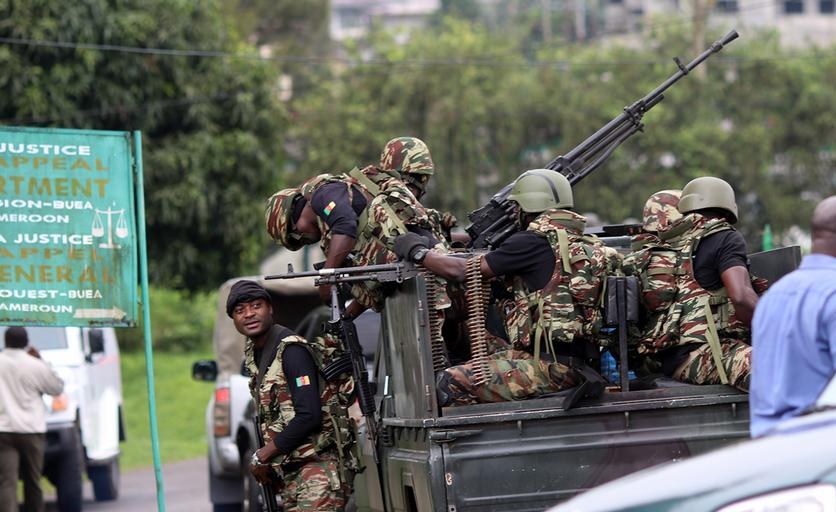
A series of presidential decrees signed in Biya’s absence has dramatically reshaped the command structure of Cameroon’s armed forces. On August 3, 2026, the most striking appointment saw General Beko’o Abondo Raymond Jean Charles named as head of the Presidential Guard—a position critical to the security of the head of state and the integrity of the presidency.
The reshuffle extended beyond this single appointment. Among the changes:
- Five new brigadier generals were promoted
- General Ebaka Hippolyte was appointed Major General of the Armed Forces General Staff
- Six new regional military commanders were installed across four of Cameroon’s five military zones
A retired colonel, speaking on condition of anonymity, emphasized the gravity of the situation: “No one—not even the highest-ranking military officials—can authorize such appointments without the president’s express approval.“>
The timing of these decrees, issued while Biya remains absent, has fueled speculation that the moves are part of a calculated strategy to secure control in the event of a prolonged power vacuum.
Factionalism and constitutional deadlock
Behind the official narrative lies a simmering power struggle between rival factions within the regime. Two dominant groups are emerging:
- The Biya family faction, centered around the president’s eldest son, Franck Biya, seen as a guarantor of the status quo
- The First Lady’s faction, led by Chantal Biya and Ferdinand Ngoh Ngoh, the powerful Secretary-General of the Presidency
The political landscape was further destabilized in April 2026 when parliament approved a constitutional amendment reintroducing the position of vice president. Intended to ensure a seamless transfer of power in the event of a vacancy, the position remains unfilled. As a result, the constitutional mechanism for succession is paralyzed, leaving the country in a state of institutional limbo.
Tribalization of power: A dangerous precedent
Analysts warn that the combination of prolonged presidential absence, military reshuffles, and factional infighting risks accelerating the tribalization of power. This fear is not unfounded. Historical parallels, particularly the 1994 Rwandan genocide, serve as a stark reminder of how ethnic divisions and military instrumentalization can spiral into catastrophe.
Jean-Pierre Bekolo, a prominent commentator, has sounded the alarm: “We are witnessing the militarization and tribalization of succession—an experiment with an unpredictable outcome.”
Opposition steps up pressure
The political opposition has not remained silent. Led by Maurice Kamto’s MRC, lawmakers have called on the Constitutional Council to formally recognize the vacancy of the presidency. Jean-Michel Nintcheu, a deputy in the National Assembly, stated, “The Constitutional Council must acknowledge the absence at the highest level of the state.”
Yet, without a vice president in place, the constitutional process to address a vacancy cannot be triggered. Cameroon remains trapped in a web of institutional inertia.
The unanswered questions haunting the capital
Why push through such sensitive military appointments in the president’s absence? The question lingers, unanswered by officials. Some observers suggest that the decrees may have been signed under questionable circumstances, while others hint at darker possibilities: Could it be that those who approved these measures already knew Biya would not return?
The government has dismissed rumors of forged decrees, yet skepticism persists. Once distrust takes root, it is difficult to dislodge.
Can Cameroon avert disaster?
The path forward remains uncertain, but potential solutions exist:
- Transparency: The government must disclose Biya’s health status and provide a clear timeline for his return
- National dialogue: A structured dialogue among political forces to address ethnic tensions and restore stability
- Constitutional clarity: The immediate appointment of a vice president to secure the succession process
A nation at the brink
Cameroon’s stability hangs in the balance. The choices made in the coming days—both in action and in silence—will determine whether the country veers toward chaos or finds a path back from the edge.
As Bekolo warned: “History will remember not only the actions taken, but also the silence and the failures to act.”
One thing is clear: the Cameroonian people, who have endured decades of unbroken rule, will not tolerate a descent into shadow politics and hidden agendas. “Stop playing with fire before it’s too late.“>
You may also like
Will Benin’s AEO exporters finally crack the Chinese market?
Northern Niger’s unanswered question: can Tiani’s government deliver water and power where it matters most?
Can Air Sénégal survive the Interpol smuggling probe? The stakes for crew, passengers and the airline’s future
As donor fatigue spreads, can Benin’s €544,042 UNAIDS pledge keep the HIV response on track?
Who pays the price when Burkina Faso’s public payroll contracts? Households weigh the cost of 1,917 fewer agents