The coordinated assaults that rocked Burkina Faso on September 26 exposed deeper layers of the conflict, revealing how jihadist groups are exploiting logistical and psychological vulnerabilities in the country’s security apparatus. While the attacks targeted Lalgaye in the Centre-Est and Ouahigouya in the North, the true story lies in the meticulous planning behind these strikes—a strategy designed to stretch military resources thin and destabilize civilian trust in government forces.
What happened during the deadly double offensive
On the morning of September 26, Burkina Faso’s security landscape shifted dramatically as two distinct but synchronized attacks unfolded. In the Koulpélogo province, a military outpost in Lalgaye came under heavy fire, resulting in the death of a soldier and the loss of critical equipment. Hours later, in the northern city of Ouahigouya, attackers targeted two military positions, leaving behind a trail of destruction—including a disabled armored vehicle.
The attacks were later claimed by the Group for the Support of Islam and Muslims (JNIM), the Al-Qaeda-affiliated coalition operating across the Sahel. The timing and coordination of these strikes suggest a deliberate effort to overwhelm Burkina Faso’s defenses, testing the resilience of both military personnel and civilian support networks.
Lalgaye: a tactical victory for jihadists with long-term consequences
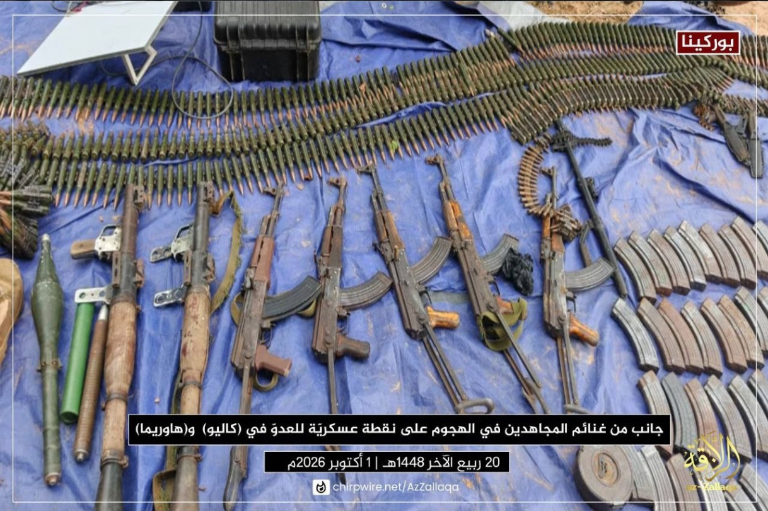
The assault on Lalgaye was not just a random act of violence—it was a calculated move to weaken local security structures. Attackers overwhelmed the outpost’s defenses, seizing weapons, ammunition, and communications equipment before retreating into nearby woodlands. This pattern of hit-and-run tactics has become a hallmark of JNIM operations, designed to degrade military capabilities while avoiding prolonged engagements.
The stolen equipment is likely to be repurposed, either for future attacks or to bolster the group’s logistical networks. For the Burkinabè military, the loss of even basic supplies represents a setback in an already strained operational environment.
Ouahigouya: the North’s strategic pressure point
While Lalgaye suffered direct human casualties, the attacks near Ouahigouya focused on crippling military infrastructure. The destruction of an armored vehicle—whether by heavy weaponry or an improvised explosive device—demonstrates the adaptability of jihadist tactics. The simultaneous nature of these strikes, occurring hundreds of kilometers apart, underscores the group’s ability to project force across vast distances.
For local communities, the message is clear: no region is safe. The attacks near Ouahigouya, a key administrative hub, serve as a reminder that even well-defended areas are vulnerable to asymmetric warfare.
Why these attacks reveal a deeper security crisis
The JNIM’s strategy goes beyond mere military confrontation—it’s a campaign of exhaustion. By targeting isolated posts, the group forces the Burkinabè army to spread its resources thin, creating gaps in coverage that can be exploited elsewhere. The psychological impact is equally damaging, as delayed claims of responsibility (such as the October 1 statement) keep communities on edge.
For Burkina Faso’s transitional government, the challenge is twofold: restoring territorial integrity while addressing the underlying conditions that allow jihadist groups to thrive. The recent assaults highlight the need for not just military solutions, but also long-term stabilization efforts in vulnerable regions.
Military response and the road ahead
In the wake of the attacks, Burkina Faso’s armed forces launched immediate counteroperations, deploying aerial surveillance to track fleeing attackers. However, the effectiveness of these measures is often limited by the terrain and the asymmetric nature of the conflict. Roads rigged with explosives and sudden ambushes make traditional military tactics less reliable.
The human cost is equally stark. Soldiers on the front lines face daily threats, while civilians in affected areas endure repeated disruptions to their lives. The question now is whether Burkina Faso can adapt its security strategy to counter this evolving threat—or if the jihadists’ long game will continue to dictate the terms of the conflict.