The nation of Burkina Faso continues to grapple with an escalating humanitarian and security crisis, yet the priorities of its transitional leadership appear increasingly misaligned with the urgent needs of its people. While communities face relentless terrorist assaults, besieged villages, and a growing exodus of internally displaced persons, the corridors of power seem preoccupied with a different agenda.
Symbolism over substance in times of peril
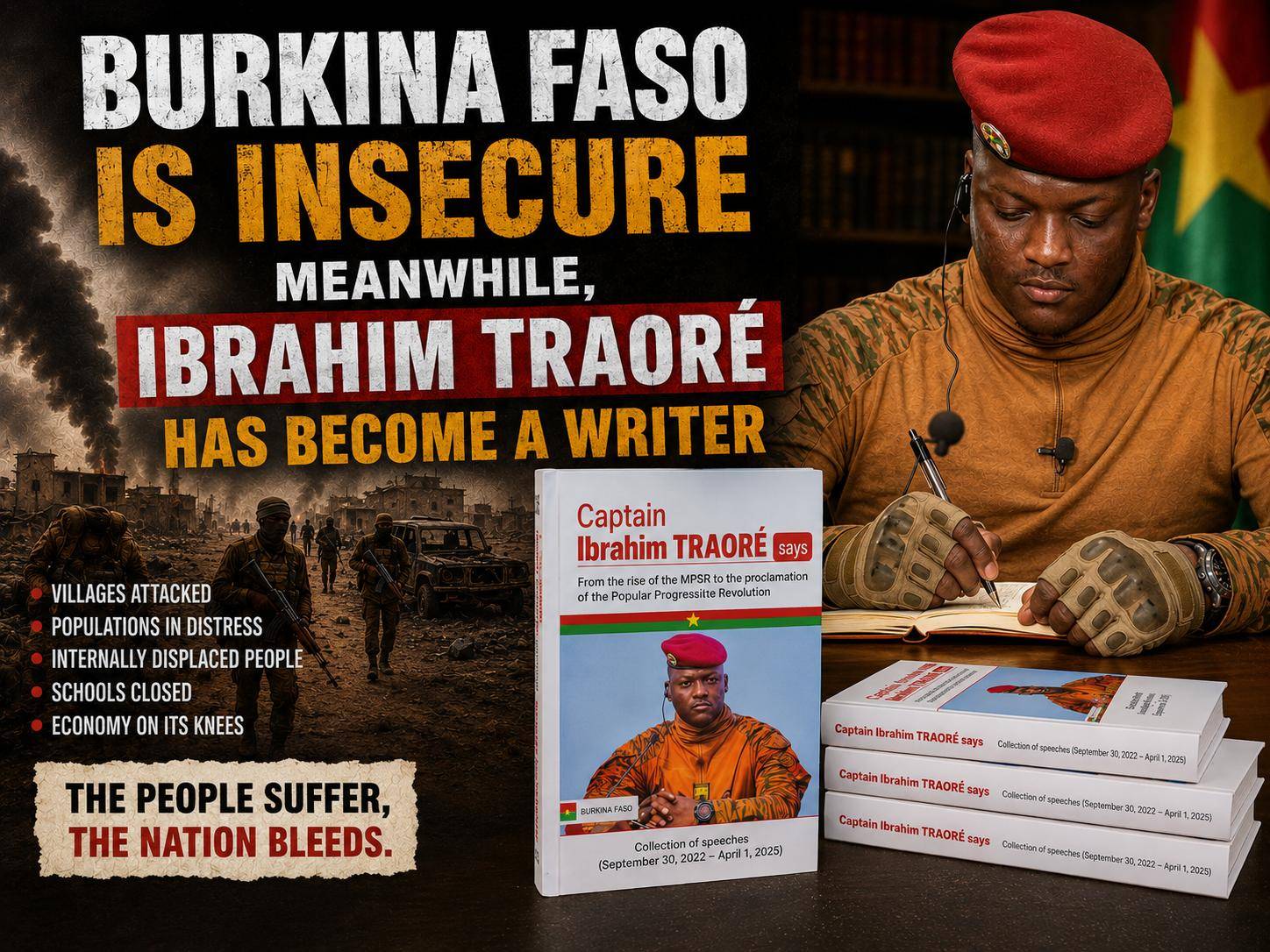
A stark and unsettling contrast has emerged: daily reports of attacks on civilians and territorial losses stand in sharp opposition to the government’s latest initiatives, which appear to prioritize image management over tangible solutions. The release of a book attributed to Captain Ibrahim Traoré has further fueled public discontent, with many questioning why state resources are being allocated to literary projects when security forces lack essential equipment and logistical support.
In Ouagadougou and beyond, the message from citizens is unequivocal. The demand is not for hagiographic narratives, but for tangible protection and the restoration of peace. The timing of such initiatives—amidst a backdrop of mounting losses and humanitarian suffering—has done little to quell widespread frustration.
A fractured social contract
When Captain Traoré assumed leadership, he did so under a tacit social contract: to reclaim lost territory and deliver security where previous administrations had failed. The trust placed in him was rooted in the expectation of decisive action, not symbolic gestures. Yet today, the narrative has shifted from strategic execution to one of self-aggrandizement, leaving many to question the legitimacy of the current approach.
Civil society voices have grown increasingly vocal. “We do not need stories; we need our homeland returned to us,” remarked one activist under the condition of anonymity. The sentiment reflects a broader sentiment of betrayal among a population that has endured years of instability and now finds itself abandoned by its leadership.
Leadership at a crossroads
The transitional government now faces a critical juncture. Prioritizing political branding over the restoration of security risks deepening the chasm between the state and its people. Burkina Faso requires leaders capable of decisive action, not self-promotion. If the current trajectory persists, history may record this period not as one of progress, but as a chapter defined by missed opportunities and unfulfilled promises.
For the nation to heal, the focus must return to the only priority that truly matters: the safety and sovereignty of its citizens.