
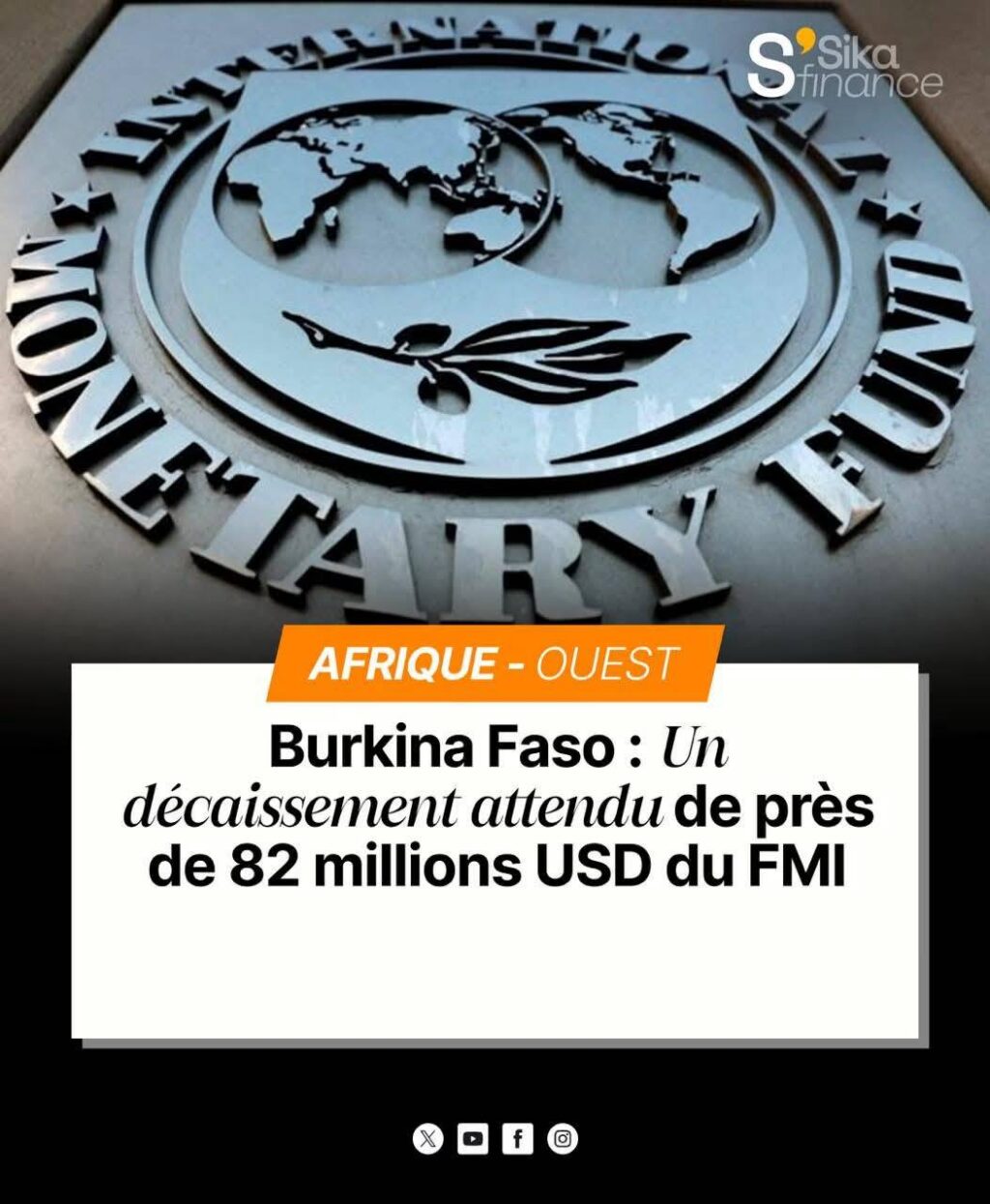
In Ouagadougou, the transitional authorities are striking a delicate balance between financial pragmatism and a bold sovereignty narrative. The Burkina Faso government is on the brink of receiving a much-needed $82 million lifeline from the International Monetary Fund, a move that underscores a striking contradiction in its current political stance.
Following a technical mission, the IMF has provisionally approved the disbursement, but this crucial step remains subject to final clearance by the institution’s executive board. The funds, equivalent to approximately 46.21 billion West African CFA francs, are tied to the Extended Credit Facility (ECF), a program designed to support countries grappling with prolonged balance-of-payments difficulties.
From rhetoric to financial necessity
The Burkina Faso leadership has repeatedly emphasized a radical break from traditional Western partners, severing ties with France and scaling back cooperation with the European Union. Meanwhile, the country has forged new alliances, particularly with Russia, as part of its sovereignist agenda. Yet, when it comes to stabilizing the national budget and reviving an overheated economy, these ideals clash with harsh economic realities.
The paradox is unmistakable: while the government champions absolute sovereignty in public discourse, it finds itself compelled to turn to the IMF—a symbol of Western economic dominance—for emergency financial support. This pragmatic U-turn exposes the limits of self-reliance when the state’s coffers are nearly empty.
A security crisis that cripples the economy
The primary driver behind this urgent financial appeal is the relentless security crisis that has plagued Burkina Faso for nearly a decade. Armed groups have seized control of vast swathes of territory, disrupting supply chains, restricting access to farmlands, and throttling the mining sector—the backbone of the national economy.
Businesses, both large and small, are shutting down or relocating to more stable neighboring countries, leaving unemployment in their wake. The resulting loss of tax revenue and economic activity has pushed the state to the brink, forcing it to seek external assistance despite ideological reservations.
Reforms imposed, sovereignty compromised
Securing the IMF’s funds is not a straightforward process. The disbursement hinges on Ouagadougou’s commitment to stringent structural reforms. The institution’s demands include tightening fiscal policies, enhancing domestic revenue collection, and streamlining public spending.
Subsidies on energy and public sector wage bills are among the most scrutinized areas. The transitional government must now accept close financial oversight, a stark contrast to its promise of interference-free governance. These conditions, though difficult, reflect the IMF’s insistence on fiscal discipline as a prerequisite for long-term stability.
The road ahead: survival or sovereignty?
The impending IMF loan offers a temporary reprieve, but it also highlights a hard truth. Until the security crisis is addressed at its core, Burkina Faso’s economy will remain dependent on international financial institutions it has publicly opposed. The transitional authorities face an unenviable choice: prioritize immediate financial survival or uphold their sovereignty pledge—at least for now, pragmatism has won out.
You may also like
Gabon’s economic management hindered by unreliable public data
Niger: General Tiani faces growing unease within special forces after Russian involvement
Mali : 17 morts dans les rangs des dozos, le JNIM accentue sa pression
Sahel : le pari des juntes tourne-t-il à l’échec sécuritaire ?
MALI : Le JNIM diffuse les images de l’attaque de la base de San et contredit la version des FAMa