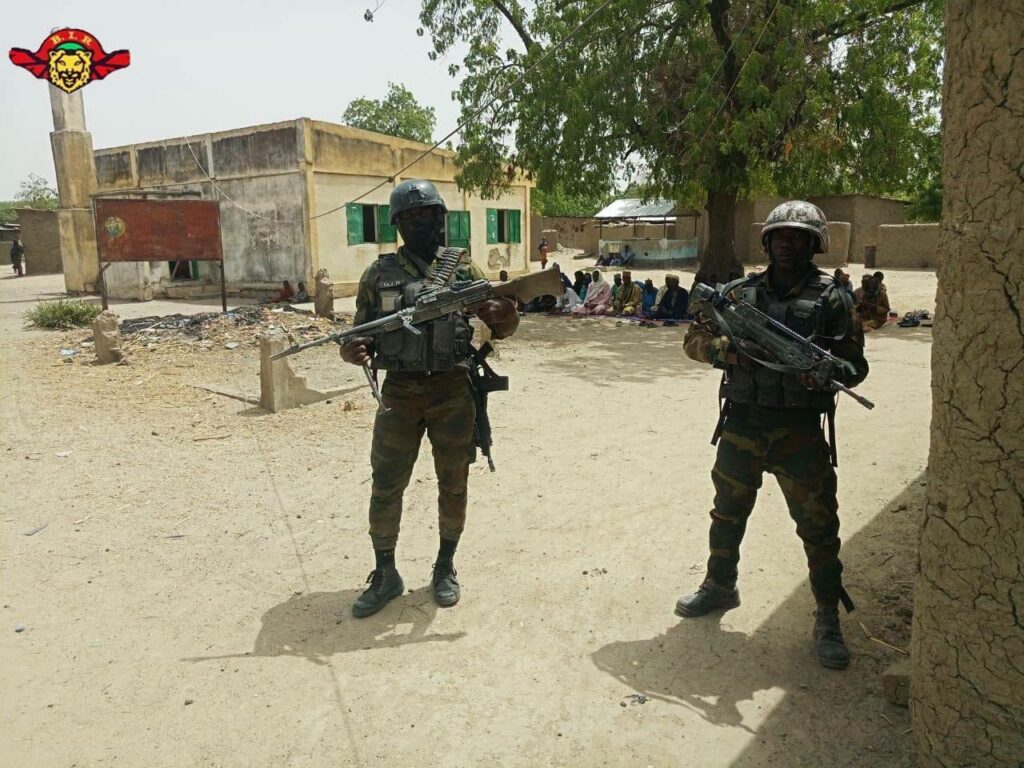
As part of the fight against terrorism and specifically in response to Boko Haram threats, Operation Alpha of the Rapid Intervention Battalions (BIR) is placing special emphasis on securing religious sites.
These spaces, frequently targeted by terrorist groups seeking to spread fear and undermine social cohesion, now benefit from increased surveillance and tailored protective measures.
Through regular patrols, a deterrent presence, and heightened alertness during religious gatherings, Operation Alpha helps prevent attacks and ensures a safe environment for worshippers. This effort reflects the BIR’s ongoing commitment to protecting civilians, upholding religious freedom, and strengthening peace and stability.
Background: The Rapid Intervention Battalion (BIR) is an elite force within the Cameroonian army, reporting directly to the President of the Republic. Backed by the United States, this unit operates against Boko Haram insurgents in northern Cameroon and separatist groups in the western regions. Its budget is reportedly not included in the defense ministry’s budget, and the exact amount remains undisclosed. It is said to be financed by the national hydrocarbons company (SNH). The BIR has its own flag, bearing the lion seal. Its headquarters in Yaoundé is known as Bastos, after the neighborhood where it is located. In 2001 and 2008, there were three rapid intervention battalions, one per joint military region. Each battalion consisted of an intervention unit of 145 men, a command and special support section of 37 men, a special intervention unit of 37 men, a command and support group of 97 men, and a light intervention group.
You may also like
Niger’s jailing of lawyer Abdourahamane Lirwana: is free speech now a crime in the country?
Can Benin turn a €500 million loan into lasting social change?
Burkina Faso: what does Ibrahim Traoré’s four-year record truly mean for the displaced and the silenced?
Will Benin’s UCESIF gambit in Bucharest pay off for francophone social dialogue?
Niger’s sovereignty paradox: can the junta’s UN rhetoric survive the SOMAÏR and SONIDEP collapse?