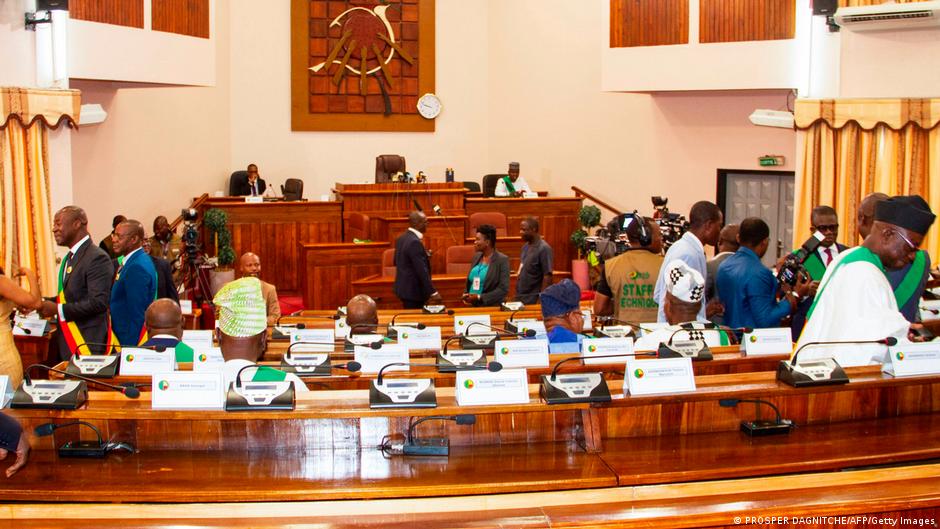
Benin’s Senate convenes in Porto-Novo with high expectations
July 30, 2026
The Senate officially opens its doors today with 25 members sworn in, including former presidents who bring decades of political experience. This second chamber, introduced through the November 2025 constitutional reform, is designed to serve as a regulatory body and council of elders to safeguard social peace.
Initially meeting in Cotonou last Friday under the leadership of Robert Dossou, former president of Benin’s Constitutional Court, the senators held closed-door discussions to organize their work. The primary challenge facing this institution lies in its ability to de-escalate political tensions and prevent future conflicts.
Joël Atayi-Guèdègbé, a governance expert, shared his perspective: “Frankly, I expect this upper house to demonstrate exceptional wisdom, functioning as a true council of elders given the caliber and experience of its members. This chamber cannot afford errors or repeat the political disputes that have divided our leaders in the past.”
An institutional regulator for Benin
The Senate includes prominent figures such as former presidents Patrice Talon, Boni Yayi, and Nicéphore Soglo, who have not always aligned politically. In a nation still healing from past political divisions, citizens and analysts view this institution as a crucial stabilizing force for social harmony.
“We see this institution as a pathway to peace, especially considering our history of political conflicts driven by self-interest. The new Senate will help create a calmer political ecosystem in Benin, though dissenting voices will still have their place,” noted Eugène Allossoukpo, a political analyst.

The financial implications for taxpayers
A critical question remains: How much will this new institution cost the national budget? The government has already allocated 100 million West African CFA francs solely for the installation ceremony.
“There will undoubtedly be increased costs. While the Senate is smaller in size, it will still generate additional expenses… We hope that beyond the four annual sessions planned, there won’t be many extraordinary meetings. Despite the high-level remuneration for these positions, we trust the proportionality will remain reasonable. Democracy, unfortunately, comes with a price,” explained Joël Atayi-Guèdègbé.
All eyes are now on the Senate’s presidency. Will former president Patrice Talon take the helm? As Benin’s first 25 senators begin their mandate, their greatest challenge will be proving that national stability is worth this new democratic investment.
You may also like
Niger’s FPL opens its ranks to youth as security crisis deepens
Kidal: 43 dead as strikes wipe out desert water wells in northern Mali
Chad releases 150 Klessoum prisoners under Decree No. 2151/PR/2026 collective sentence relief
Benin’s rating leap to AA-: the moment regional capital started taking Cotonou seriously
Brigitte Tchede’s Cairo surge: Benin’s discus medal breakthrough that changes everything