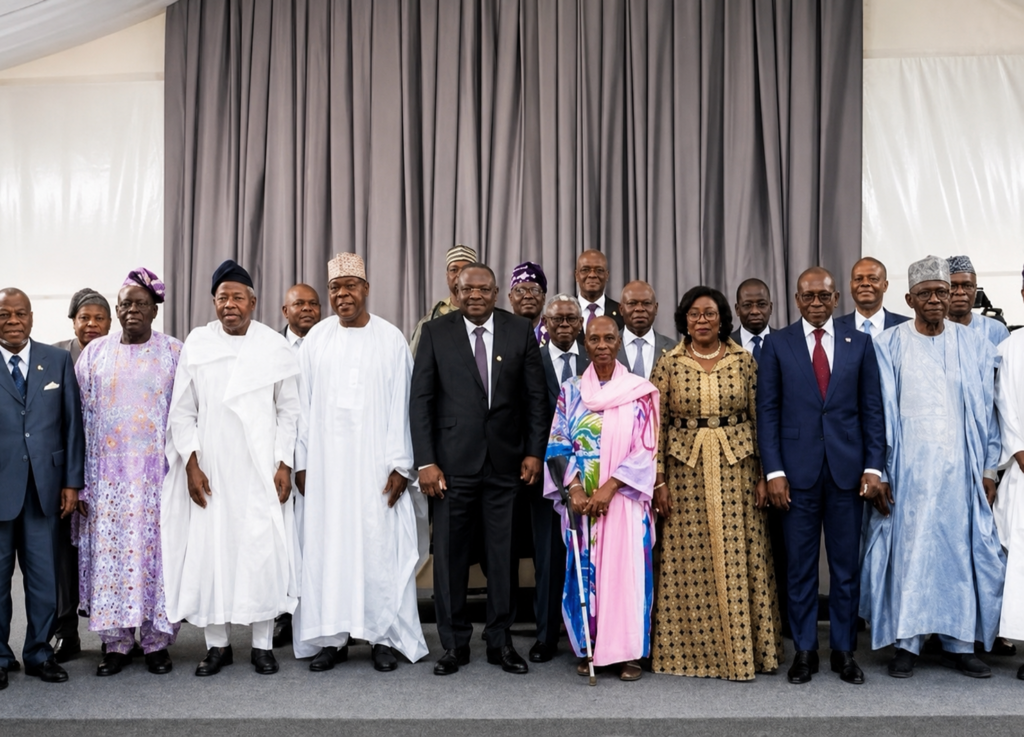
Institutional Evolution in Benin
The official inauguration of Benin’s inaugural Senate on July 30, 2026, followed by the election of former President Patrice Talon as its presiding officer on August 6, marks a pivotal moment in the nation’s political landscape. Established through the constitutional revision of December 17, 2025, this second legislative chamber introduces a fresh dynamic into Benin’s institutional framework, reshaping the balance of power within the government.
Constitutional Roots, Not Personal Ambition
The Senate is not a creation of Patrice Talon’s design. Its existence stems directly from the 2025 constitutional amendments, which redefined the structure of Benin’s Parliament. The revised Constitution explicitly outlines the composition, functions, and operational framework of the Senate, embedding it firmly within the country’s legal architecture.
Critics may question the necessity, structure, or operational mechanisms of the Senate, but its legitimacy as a constitutional institution is beyond dispute. It functions independently of any individual holding office, including its president. The debate, therefore, should focus on the Senate’s design and purpose not on unfounded assumptions about its role as a vehicle for extended executive influence.
Patrice Talon’s Role: Influence Without Authority
The election of Patrice Talon to lead the Senate has inevitably sparked speculation about his potential sway over national affairs. As a former head of state, his transition to this new position invites scrutiny, particularly regarding the scope of his political influence.
However, it is essential to distinguish between political influence and constitutional authority. Talon’s departure from the presidency in May 2026, following the election of Romuald Wadagni, marked a clear transition of executive power. The presidency of the Senate does not equate to a resumption of presidential duties. Talon, as Senate president, does not command the government, direct policy, or wield the executive powers vested in the elected president of the Republic.
Legislative Power, Not Executive Control
The Senate’s responsibilities are substantial but strictly defined. It serves as a regulatory body, tasked with preserving national unity, democratic principles, political stability, and state continuity. Its role includes overseeing adherence to political truce and ethical standards in governance.
Yet, regulation is not governance. The Senate does not replace the presidency, the government, or the ministries. The executive branch continues to operate under the authority of the president of the Republic and the cabinet, while the Senate functions within the legislative framework, contributing to the lawmaking process and institutional oversight.
A Chamber with Real, Yet Limited, Powers
The Senate’s legislative influence is significant but carefully circumscribed. Certain categories of bills including constitutional amendments, electoral laws, and regulations governing political parties require its not-objection before enactment. To withhold consent, a two-thirds majority of senators must vote in favor, and silence within the stipulated timeframe is interpreted as approval.
The Senate also holds the power to request a second review of legislation passed by the National Assembly, with exceptions for budgetary and financial laws. This mechanism reinforces its role as a deliberative body but does not grant it executive authority. The Senate’s function is to refine and scrutinize legislation, not to administer the state.
The Senate’s Composition: A Forum for Experience
Benin’s Senate stands out for its distinctive makeup. It includes ex-officio members drawn from former high-ranking positions, as well as appointees with backgrounds in defense, security, or other key sectors. When necessary, additional members are appointed to ensure the chamber meets its constitutional minimum of 25 senators.
This structure reflects a deliberate effort to create a space where seasoned institutional experience can inform legislative and regulatory processes. In a democracy, stability often depends not only on majority rule but also on dialogue, mediation, and consensus-building. The Senate, with its blend of political and institutional expertise, is designed to serve as a stabilizing force, mitigating tensions and fostering compromise.
Navigating Political Influence and Constitutional Boundaries
Critics argue that an institution led by an influential figure like Patrice Talon could wield undue influence. While it is reasonable to acknowledge the political clout he retains, conflating that influence with constitutional power is a misstep. The pertinent question is not whether Talon can shape outcomes but whether the Senate, as an institution, can overstep its legally defined boundaries.
The Constitution explicitly prohibits senators from engaging in partisan politics or publicly advocating for specific agendas. Their role is to act as impartial custodians of the legislative process, ensuring that laws align with democratic principles and national stability. Whether the Senate adheres to this mandate will determine its success or failure as an institution.
The Path Forward: Evaluating Performance Over Perception
The true measure of the Senate’s value will lie in its day-to-day operations. Will it strike a balance between assertiveness and restraint? Can it collaborate effectively with the National Assembly and the executive branch without becoming a mere rubber stamp? Will it utilize its powers judiciously, particularly in reviewing contentious legislation?
These questions transcend personal narratives. The Senate’s effectiveness will hinge on its ability to fulfill its constitutional role: fostering legislative rigor, safeguarding democratic norms, and contributing to the nation’s stability. The era of speculation must give way to a period of evaluation, where the institution’s actions not assumptions define its legacy.
Conclusion: A New Chapter for Benin’s Democracy
Benin’s Senate is neither a shadow government nor a tool for prolonging executive power. It is a constitutional body with a defined mission: to enhance the quality of governance, uphold democratic principles, and reinforce institutional stability. Its success will be judged not by who leads it, but by how it performs its duties.
As the nation moves forward, the focus must remain on the Senate’s adherence to its legal mandate. Only then can Benin’s democratic experiment with its bicameral legislature fulfill its promise of balanced, transparent, and effective governance.
You may also like
South Africa’s mass shooting crisis: can Johannesburg and Cape Town ever feel safe again?
Can Ibrahim Traoré’s 300 armored vehicles claim survive scrutiny? Inside Faso Armored’s made-in-Burkina Faso gamble
Can Washington force third-country deportations? Ivory Coast’s refusal raises the stakes
Will Benin’s AEO exporters finally crack the Chinese market?
Northern Niger’s unanswered question: can Tiani’s government deliver water and power where it matters most?