Bénin’s healthcare metamorphosis: a decade of bold reforms
Over the past decade, Bénin’s healthcare landscape has undergone a seismic transformation. Under the leadership of President Patrice Talon and the Ministry of Health, the sector has been restructured around four core pillars: governance, infrastructure, technical capacity, and sanitation. Outdated practices like opaque medical evacuations have been replaced by state-of-the-art hospitals, stringent regulations, and universal coverage—placing the Béninese patient at the heart of national priorities.
Breaking with the past: a radical overhaul
For years, discussing Bénin’s healthcare system meant confronting a litany of persistent challenges: crumbling infrastructure, outdated equipment, frequent strikes, and a proliferation of unregulated medical facilities. Upon taking office, the Talon administration made a decisive choice: to abandon piecemeal solutions and implement sweeping reforms.
Today, the results are undeniable. Through bold legislative reforms and substantial investments, Bénin is emerging as a leading medical hub in West Africa.
Tightened governance: zero tolerance for malpractice
The cornerstone of this revolution was disciplined governance. To steer this transformation, the executive established the Autorité de Régulation du Secteur de la Santé (ARS), a powerful body tasked with setting standards, ensuring care quality, and accrediting health facilities.
One of the most striking measures was the outright ban on public healthcare workers practicing in the private sector. Previously unthinkable, this policy restored dignity to public hospitals by ensuring doctors were present where they were most needed—at the patient’s bedside.
Sanitation efforts extended to eliminating illegal medical practices. Hundreds of unlicensed clinics and practices, which endangered lives daily, were shut down. The message was clear: Béninese health is no longer a commercial enterprise—it is a matter of national security.
Building the hospitals of tomorrow
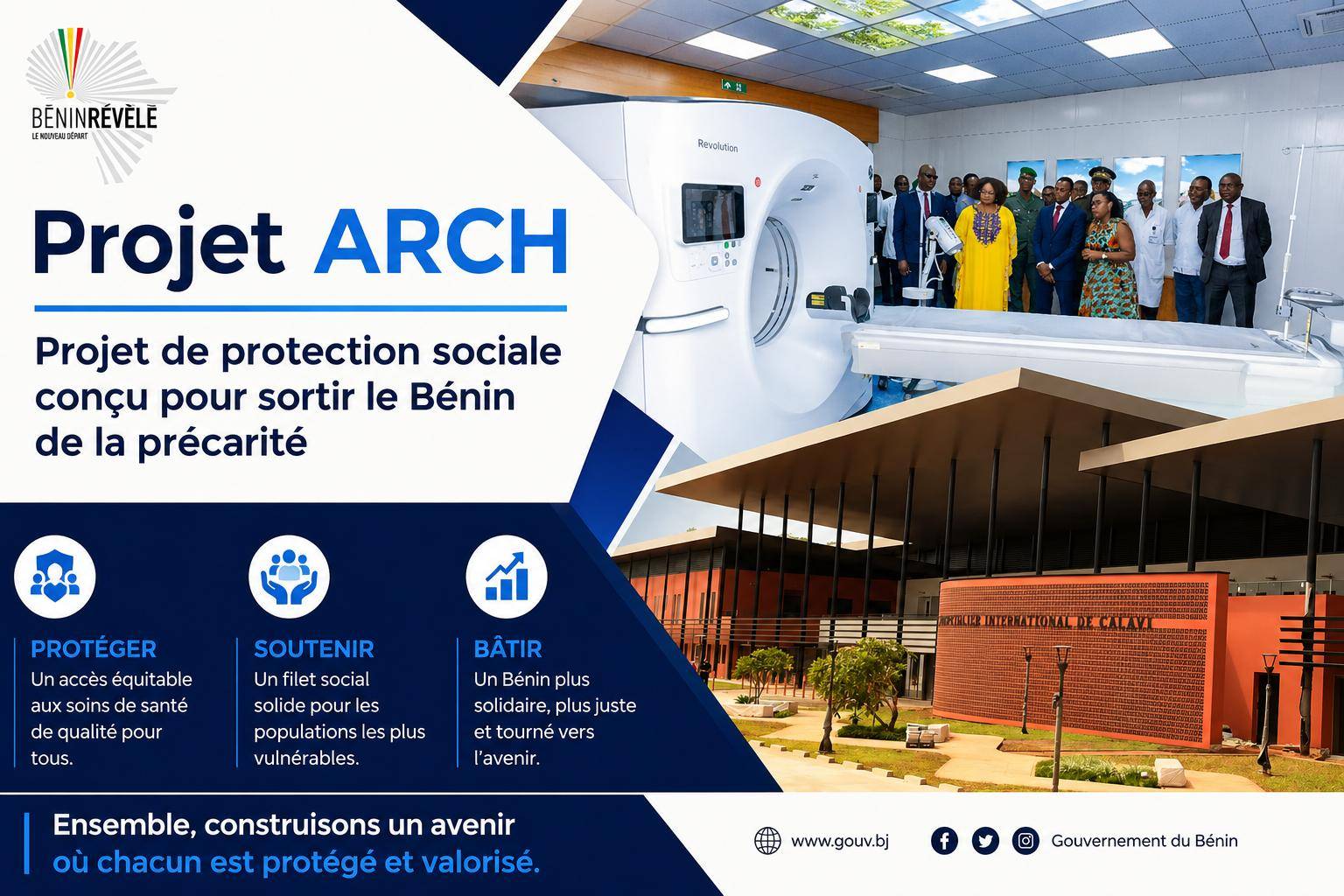
The transformation in infrastructure is visible across the country. The Centre Hospitalier International de Calavi (CHIC) in Abomey-Calavi, alongside the upcoming Togbin hospital complex, stands as a testament to this progress. These architectural and medical marvels rival European and Asian standards, embodying Bénin’s restored healthcare sovereignty.
« With the CHIC, we no longer need to seek treatment abroad. Bénin has finally equipped itself with the means to ensure dignity in healthcare, » shared a health official in Cotonou.
Modernization hasn’t spared existing facilities. Historic institutions like the Centre National Hospitalier Universitaire Hubert Koutoukou Maga (CNHU-HKM) in Cotonou, the Centre Hospitalier Universitaire de la Mère et de l’Enfant Lagune (CHU-MEL), and regional hospitals have undergone deep renovations to bring quality care closer to every household.
Cutting-edge technology: the price of medical excellence
Enhancing technical capacity was essential to curb the financial and human toll of overseas medical evacuations. The state spared no expense, allocating over 198 billion FCFA to healthcare in the national budget and mobilizing 275 billion FCFA for major projects.
Hospitals like the CNHU, CHU-MEL, and regional centers received comprehensive upgrades. Advanced medical imaging now includes high-end multi-slice CT scanners (up to 64 slices), MRI machines, and digital radiology tables for millimetric precision. Operating rooms and intensive care units are equipped with high-performance ventilators, multiparametric monitors, ergonomic surgical tables, and minimally invasive surgery tools like laparoscopy devices. Laboratories and maternity wards have been automated for efficiency, while modern neonatal incubators and 4D ultrasound machines ensure top-tier care.
The CHIC: a 115 billion FCFA technological marvel
The Centre Hospitalier International de Calavi (CHIC) exemplifies this national strategy. With a total investment of 175 million euros (approximately 115 billion FCFA), this historic financial partnership has delivered a revolutionary medical complex for West Africa.
The CHIC boasts ultra-modern facilities, including a cutting-edge oncology unit with linear particle accelerators for targeted radiotherapy and laminar flow hoods for safe chemotherapy preparation. Its cardiac and interventional surgery department features a digital angiography suite for coronary imaging and operating rooms equipped with heart-lung machines for open-heart procedures.
The hospital’s advanced imaging includes 3 Tesla MRI machines for exceptional resolution, while fully automated molecular biology platforms enable rapid diagnosis and treatment of complex pathologies. Thanks to this arsenal, major cardiovascular interventions and cancer treatments are now available in Cotonou and Calavi, sparing families the financial and emotional burden of overseas medical travel.
Universal coverage: no one left behind
A reform holds meaning only if it benefits all. The social pillar of Talon’s administration addresses this by recruiting thousands of healthcare professionals—doctors, nurses, midwives, and technicians—to bridge medical deserts in rural areas.
The Assurance pour le Renforcement du Capital Humain (ARCH) project extends gradually across all municipalities, offering free or subsidized health coverage to vulnerable populations. Simultaneously, the revival of the National Community Health Policy deploys health workers directly in villages to ensure prevention and primary care.
Bénin is also embracing innovation. Digital health services and telemedicine platforms now allow patients in remote areas to consult specialists in Cotonou without leaving their communities.
Measurable progress: a healthier nation
The impact on everyday Béninese citizens is tangible. Public trust in hospitals has surged, wait times have shortened, and the availability of essential medicines has improved thanks to the reorganization of the Centrale d’Achat des Médicaments Essentiels (CAME). Transparency has become a hallmark, with rigorous monitoring and evaluation of all initiatives. The publication of the first national health sector report, developed with technical support from the World Health Organization, underscores this commitment to accountability—highlighting declines in maternal and infant mortality and improved efficiency in public health spending.
A future of promise
The strides made by Bénin in recent years are remarkable. By addressing structural, material, and ethical flaws simultaneously, the Talon administration has laid a solid foundation for a modern, equitable, and high-performing healthcare system.
While challenges remain—such as maintaining high-tech equipment and ensuring continuous staff training—the trajectory is unmistakably positive. Bénin has proven that with political vision, fiscal discipline, and a commitment to national pride, transforming a nation’s healthcare system is not just a dream—it is an achievable reality.