The Bénin-Togo energy partnership is gaining momentum as both nations seek to reduce their reliance on unreliable external suppliers. Facing chronic power shortages and repeated supply disruptions, Cotonou and Lomé are forging a stronger political and economic alliance to secure their industrial growth through shared energy infrastructure.
Last April’s fire at Ghana’s Akosombo substation, which cut off 1,000 megawatts from the regional grid, served as a stark reminder. Within hours, power exports to Togo and Bénin were suspended, reinforcing a harsh truth: during crises, nations prioritize their own needs. This pattern has recurred too often, from the 2024 West African Gas Pipeline failures forcing Togo to allocate 31 billion FCFA in emergency funds to compensate for dwindling Nigerian gas supplies.
The decades-old Communauté Électrique du Bénin (CEB), established in 1968, has proven ineffective—functioning as little more than a transmission channel without its own generation capacity. Both countries now recognize the need for a structural shift.
Adjarala dam: a game-changer for regional energy independence
The turning point lies in the Adjarala dam project on the Mono River. With a budget of 266 billion FCFA and a capacity of 147 megawatts, this initiative offers a 30-year stable electricity supply while also irrigating 14,700 hectares of farmland in Togo. For industries in both countries, this is more than an energy solution—it’s a lifeline. The Glo-Djigbé economic zone in Bénin, a 1-billion-dollar hub for cotton and cashew processing, and Togo’s Adétikopé platform, can no longer afford to depend on the unreliable energy policies of neighboring states. By pooling resources, they aim to create a unified market that strengthens their bargaining power with investors.
Leveraging domestic savings to fund energy sovereignty
As international lenders increasingly withdraw from fossil fuel financing, Cotonou and Lomé are turning inward. They are tapping into long-term domestic savings by engaging national pension funds (CNSS) and insurance firms, which hold substantial reserves currently parked in short-term government securities. The proposed issuance of joint energy bonds, backed by both governments, could convert this social savings into a robust regional infrastructure fund, experts suggest.
A historic political realignment
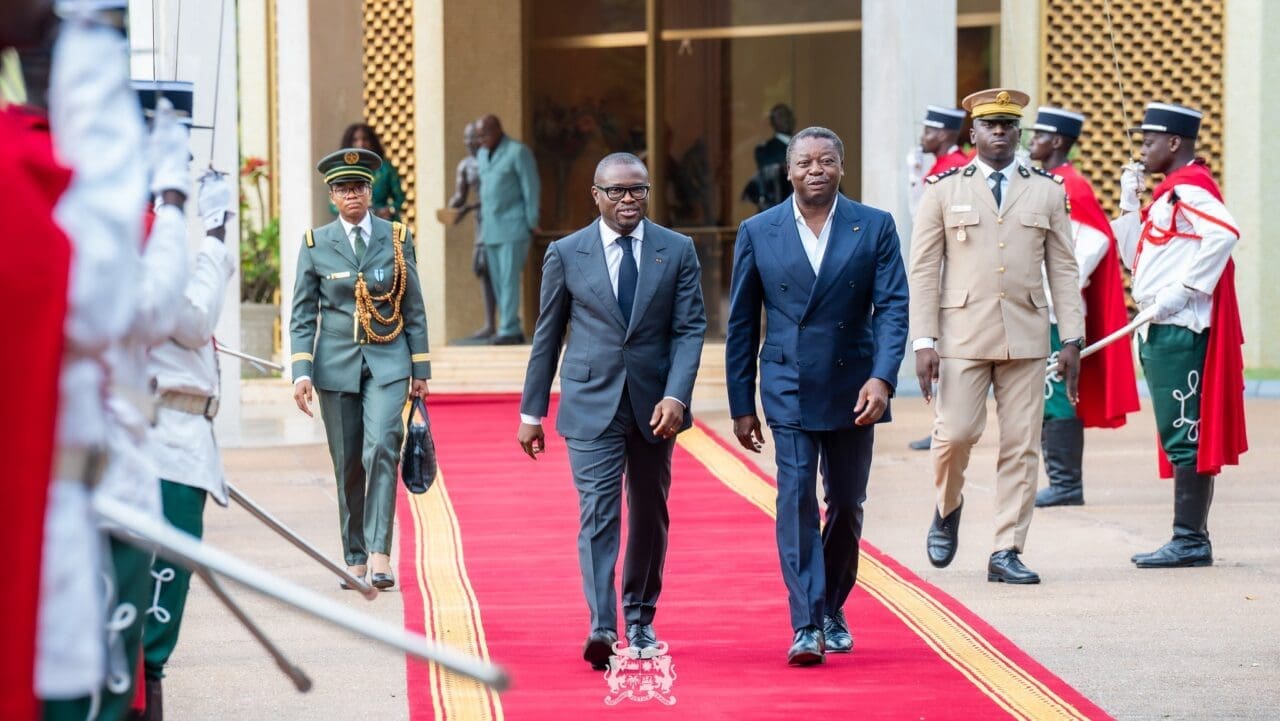
The visit of Bénin’s President Romuald Wadagni to Lomé on June 3, 2026, symbolizes a decisive political shift. The joint statement outlines a roadmap for deeper economic and infrastructure integration, with concrete goals: Bénin plans to inject 100 megawatts into the grid every two years, while Togo aims for universal electricity access by 2030. This alignment presents an unprecedented opportunity to finally achieve energy autonomy for both nations.