With chronic reliance on external energy suppliers putting their industrial growth at risk, Benin and Togo are forging an unprecedented political alliance. Both nations are pooling resources and expertise to secure their electricity futures and reduce vulnerability to regional supply shocks.
The April 23 blackout caused by the Ghanaian Akosombo substation fire exposed the fragility of the shared power grid. The incident cut off 1,000 megawatts of electricity overnight, leaving Togo and Benin scrambling to meet domestic demand. This recurring pattern—where countries prioritize local consumption during crises—underscores the urgent need for self-sufficiency.
Previous disruptions, including 2024’s West African Gas Pipeline failures, forced Togo to redirect 31 billion West African CFA francs to compensate for lost Nigerian gas supplies. These repeated vulnerabilities reveal the limitations of the Benin Electricity Community (CEB), established in 1968 but limited to transmission with no independent power generation capabilities.
Adjarala Dam: the game-changer for West African energy independence
The solution lies in the Adjarala Dam project on the Mono River. Valued at 266 billion West African CFA francs, this 147-megawatt hydroelectric plant guarantees three decades of stable power while irrigating 14,700 hectares of farmland in Togo. For Benin’s Glo-Djigbé Special Economic Zone—where over $1 billion is invested in cotton and cashew processing—and Togo’s Adétikopé industrial hub, energy security is no longer optional. A unified market approach will strengthen their bargaining power against international investors.
Turning local savings into regional infrastructure
As global lenders withdraw from fossil fuel financing, Benin and Togo are tapping into domestic savings pools. Their National Social Security Funds (CNSS) and insurance companies hold substantial long-term reserves, currently tied to short-term government bonds. By issuing jointly guaranteed green bonds, these institutions could channel funds into large-scale infrastructure projects, transforming social savings into lasting regional development.
Political momentum builds toward energy autonomy
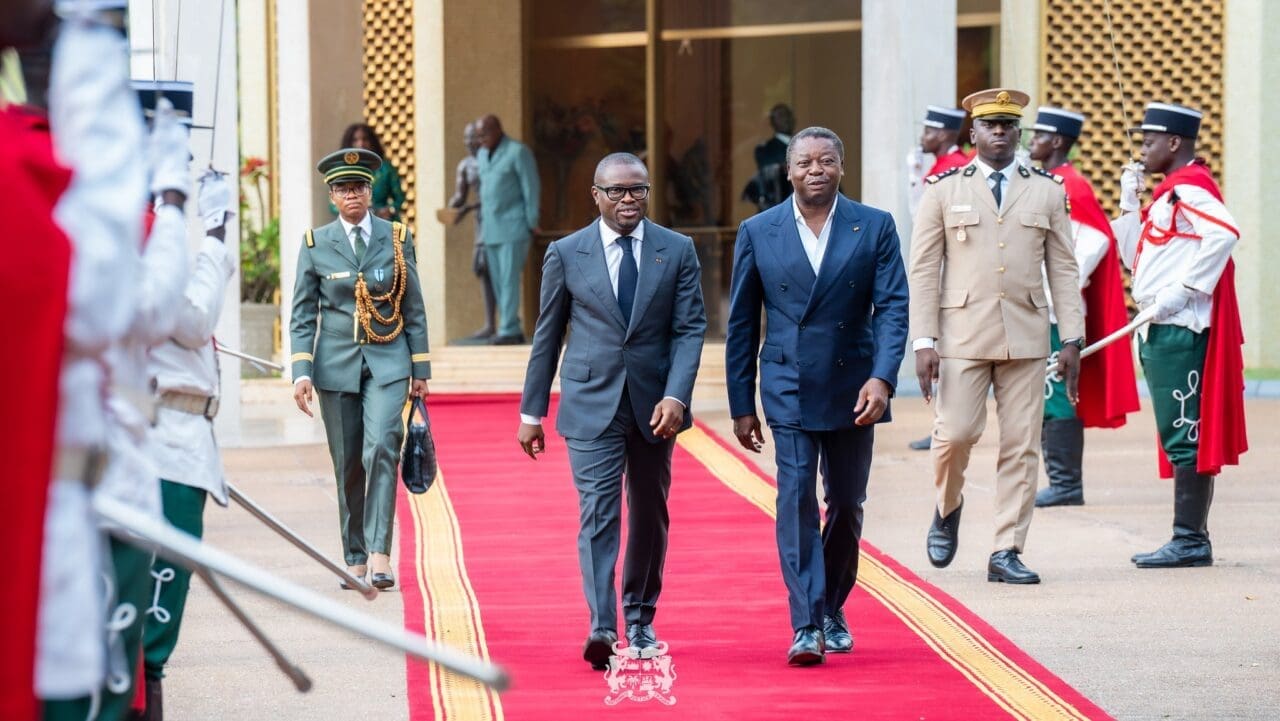
Benin’s President Romuald Wadagni’s official visit to Lomé on June 3, 2026, signals a historic alignment. The joint statement outlines shared economic priorities, including Benin’s pledge to inject 100 megawatts into the grid biennially and Togo’s ambition to achieve universal electricity access by 2030. This convergence of political will presents a rare opportunity to finally achieve long-sought regional energy independence.