
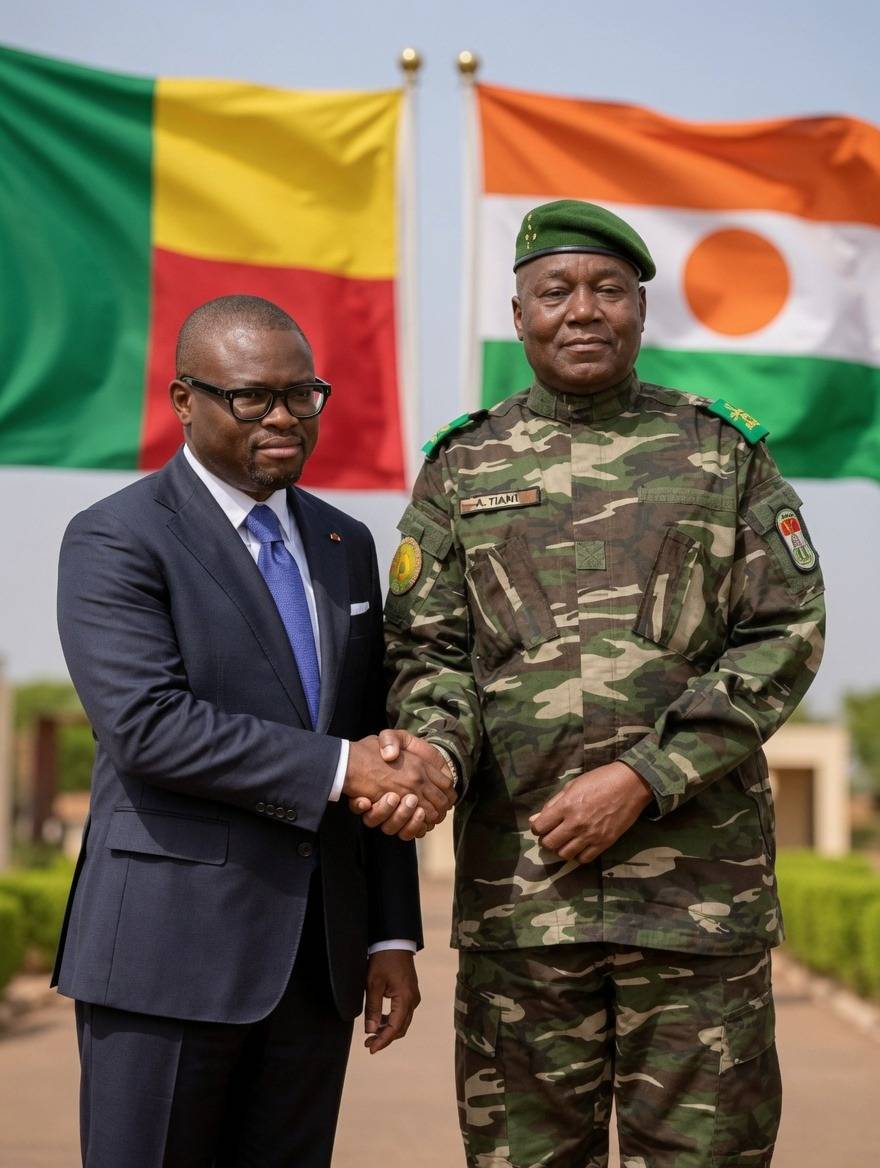
The political earthquake of July 2023 in Niger, followed by sweeping regional sanctions, plunged the Bénin-Niger relationship into a deep freeze. Borders slammed shut, accusations flew, and the atmosphere remained frosty—yet beneath the surface, Cotonou pursued a quiet but relentless effort to thaw tensions. The recent landmark visit by Bénin’s new president, Romuald Wadagni, to Niamey marks the culmination of this patient diplomacy and a bold statement of good faith.
From sanctions to dialogue: a deliberate easing of tensions
While the crisis escalated after the coup, Bénin moved early to reduce pressure on Niger:
- Economic lifelines restored: By the end of 2023, Bénin had already lifted restrictions on the transit of goods to Niger through the Port of Cotonou. This bold move aimed to reopen the economic lifeline of landlocked Niger, even as Niamey kept its side of the border closed, citing security concerns.
- High-level mediation efforts: With talks stalled, Bénin’s government actively supported and facilitated mediation visits by former presidents Nicéphore Soglo and Thomas Boni Yayi in mid-2024. These missions underscored Cotonou’s unwavering commitment to dialogue, transcending political divides.
- Preserving shared infrastructure: Despite rising tensions over the WAPCO crude oil pipeline, Bénin acted to protect this critical asset. By maintaining the pipeline’s operation, Cotonou prevented a total rupture and preserved the only remaining technical link between the two nations.
Romuald Wadagni’s presidency: a fresh chance for reconciliation
When Romuald Wadagni took office in May 2026, he brought a rare asset to the table: political neutrality. As a respected technocrat and former finance minister, he was not tied to the contentious decisions made in the wake of the 2023 coup in Niger. This fresh start opened the door to a new chapter.
Niamey responded swiftly. The visit of Niger’s Prime Minister Ali Mahamane Lamine Zeine to Cotonou for Wadagni’s inauguration marked a rare diplomatic thaw—a clear signal that isolation was ending.
A president’s visit: the ultimate gesture of goodwill
By choosing Niamey as one of his first official destinations, Romuald Wadagni delivered a powerful message. His trip was not merely symbolic; it was a deliberate move to demonstrate that Bénin prioritizes regional reconciliation. Meeting directly with Niger’s leader, General Abdourahamane Tiani, and Burkina Faso’s Captain Ibrahim Traoré, Wadagni showed that his government is ready for open, pragmatic dialogue—free from past grievances.
The hard realities driving cooperation
This thaw is about more than symbolism—it’s rooted in pressing shared needs:
- A shared security threat: Armed violence in the W-Arly-Pendjari transboundary zone surged by nearly 86% between 2024 and 2025. Neither country can defeat jihadist groups alone. Restoring military cooperation is no longer optional—it’s a matter of survival for border communities.
- Economic survival: Landlocked Niger relies on Bénin’s trade corridors to lower living costs and secure supplies. Meanwhile, Cotonou seeks to boost revenue through its autonomous port. Reopening borders is not just diplomatic—it’s economic necessity.
With this visit, Romuald Wadagni has closed the chapter of misunderstanding. Bénin has shown respect for its neighbors’ sovereignty and a clear commitment to regional stability and shared prosperity. Now, the ball lies in Niamey’s court: will this diplomatic breakthrough lead to the full reopening of borders? The stakes could not be higher.
You may also like
Bénin et Émirats arabes unis renforcent leur coopération militaire et sécuritaire
At the un, Togo’s 2 million dollar African map gamble sparks outrage at home
In Cameroon questions arise over whether billions have vanished from the safes of the Special Criminal Court
At the Ouaga 2000 arena, Benin’s Amazones etch their names in handball history
Niger’s state narrative masks internal fractures after Niamey mutiny