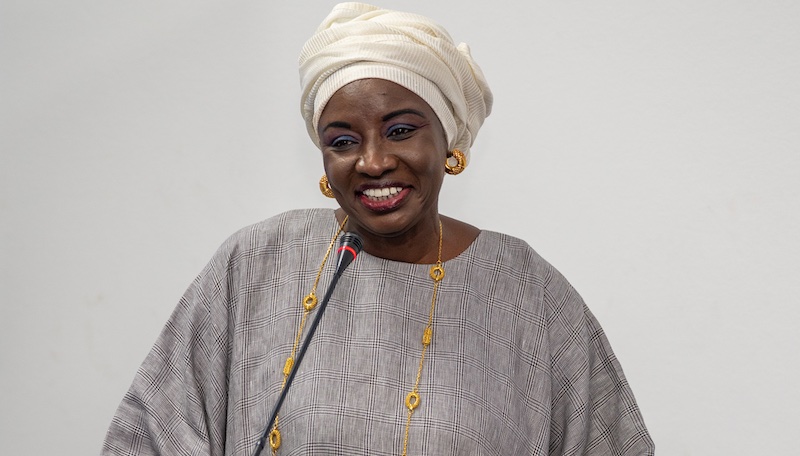
A day after Ousmane Sonko’s latest public comments challenging President Bassirou Diomaye Faye’s policies, Aminata Touré, the coordinator of the *Diomaye Président* coalition, took to the airwaves to set the record straight. The former Justice Minister firmly dismissed any notion that political rifts signal a weakening of the administration’s commitment to governance or a retreat from its reform agenda.
Addressing Sonko’s concerns over a perceived shift in the government’s approach to public accountability, Aminata Touré reframed the debate: « Why frame this as the end of accountability? Perhaps, instead, it marks the beginning of a more judicious form of accountability—one rooted in the independence of the judiciary. »
The presidential camp underscores a clear distinction between legal accountability and political score-settling. Aminata Touré emphasized that legal proceedings must be guided by evidence, not animosity, stressing that « hatred toward an opponent is not grounds for a judge’s verdict. »
On the pressing issue of public debt and its management, particularly in relation to the International Monetary Fund, the administration advocates for a results-driven strategy over rigid ideological stances. Rejecting the loaded term « restructuring, » which evokes the austerity measures of the 1980s—marked by layoffs and social spending cuts—the government now favors « debt reprofiling » to craft a sustainable financial path for citizens.