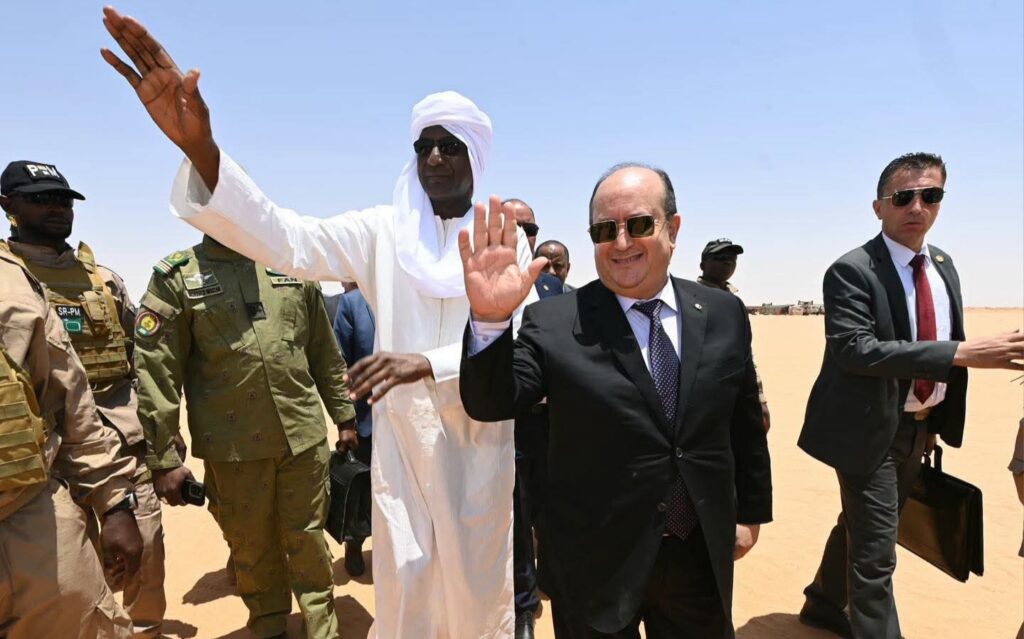
Historic milestone in Algeria-Niger energy ties
The inauguration of drilling operations at the Kafra Sud-Est 1 exploratory well marks a pivotal moment in Algeria-Niger strategic cooperation. Launched under the auspices of President Abdelmadjid Tebboune and Niger’s Head of State General Abdourahamane Tiani, this initiative represents a concrete step toward strengthening hydrocarbon partnerships between the two nations.
Official ceremony kicks off exploration in northern Niger
Flanked by high-ranking officials from both countries, Algeria’s Prime Minister Sifi Ghrieb presided over the event in the Kafra oil field, located in northern Niger. The ceremony drew a comprehensive delegation from Algiers, including key figures such as Mohamed Arkab, Algeria’s Minister of State for Hydrocarbons, Noureddine Daoudi, CEO of Sonatrach, and Saadi Ahmed, Algeria’s Ambassador to Niger.
Nigerian officials, led by Prime Minister Ali Lamine Zeine Mahaman, played a central role in welcoming their Algerian counterparts. The delegation also featured Lounès Magramane, Secretary-General of the Ministry of Foreign Affairs, underscoring the broad institutional support for this initiative.
From diplomacy to tangible energy cooperation
This project is the first tangible outcome of the bilateral roadmap agreed upon by President Tebboune and General Tiani. Their shared vision aims to shift relations from political alignment to practical, sector-specific collaboration—particularly in energy, hydrocarbons, and infrastructure development.
The Kafra Sud-Est 1 drilling signifies more than an exploration project—it symbolizes a new chapter in Algeria-Niger economic integration, rooted in mutual trust and shared resources.
Accelerating regional growth through energy projects
The Kafra initiative follows a series of landmark developments, including the recent inauguration of the Niamey power plant. These milestones stem directly from the resolutions of the second session of the Algerian-Nigerien Joint High Commission, held in Niamey earlier this year.
By prioritizing cross-border energy ventures, both nations are positioning themselves as key players in West Africa’s economic landscape. The long-term goal is to foster sustainable regional development through strategic investments in critical infrastructure.
You may also like
Can Air Sénégal survive the Interpol smuggling probe? The stakes for crew, passengers and the airline’s future
As donor fatigue spreads, can Benin’s €544,042 UNAIDS pledge keep the HIV response on track?
Who pays the price when Burkina Faso’s public payroll contracts? Households weigh the cost of 1,917 fewer agents
Libya pushes for direct Tripoli-Yaoundé flights as Cameroon sets up working groups
JNIM seizes three Burkinabè positions in a single day as Traoré’s security record faces hard questions