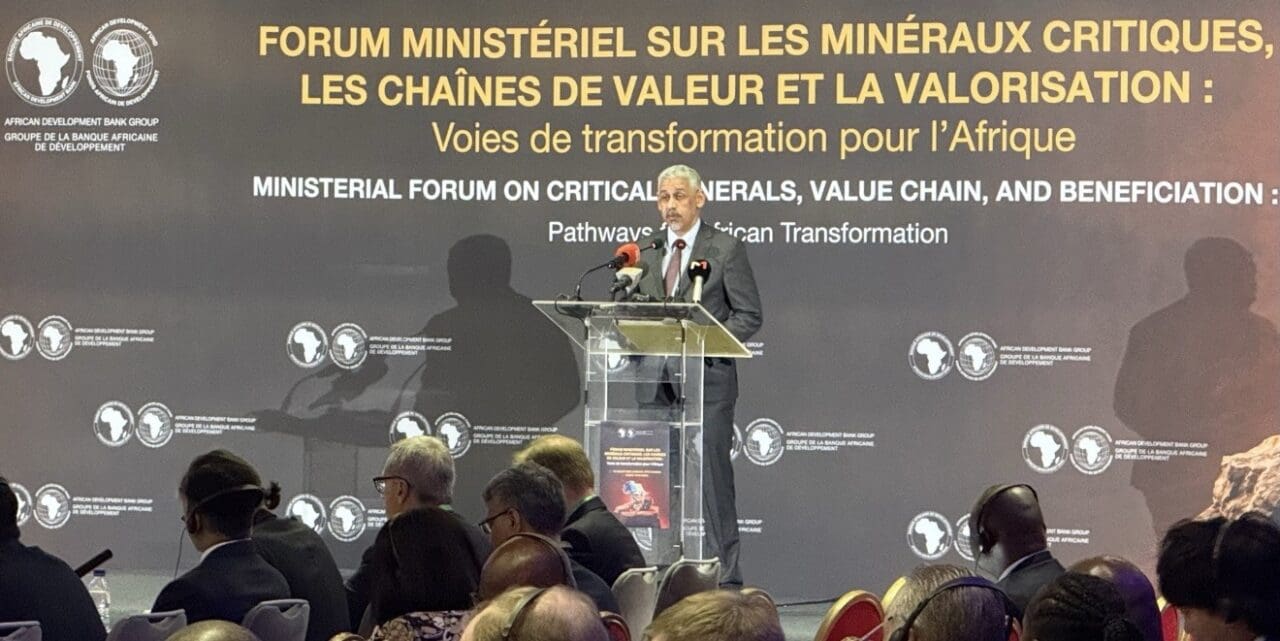
In Abidjan, leaders from across Africa and global development partners convened to chart a new path for the continent’s critical minerals—resources valued at a staggering $29.5 trillion. The focus? Turning these geological riches into engines for economic growth, industrialization, and social progress through local processing, sustainable financing, and robust regional supply chains.
The high-level ministerial gathering, held on July 10, brought together ministers in charge of Mines, Energy, Industry, Green Economy, and Natural Resources, alongside representatives from the African Union Commission, the African Continental Free Trade Area (AfCFTA) secretariat, the United Nations Economic Commission for Africa, regional development banks, financial institutions, and international investors.
Abidjan’s bold vision for africa’s mineral wealth
The conference’s core mission was clear: empower Africa to harness its vast critical mineral reserves—including cobalt, lithium, graphite, rare earths, and platinum group metals—to drive sustainable and inclusive development. A paradigm shift was the overarching theme, with calls for deeper local value addition and equitable benefit-sharing across the continent.
«a new era for african resources»
Sidi Ould Tah, President of the African Development Bank (AfDB), set the tone by advocating for a fundamental overhaul of how Africa manages its natural wealth. «This conference isn’t just about discussion—it’s about action,» he stated. «We must redefine our partnership with the continent to ensure these resources translate directly into jobs, industries, and shared prosperity for our people.»
Ould Tah emphasized two priorities: local processing of raw materials to boost value addition and a reform of development financing. «Africa hosts over 100 development finance institutions, yet their combined impact accounts for just 1% of global development financing. We must consolidate and recapitalize these institutions to unlock their full potential,» he urged.
He also underscored the need for resilient infrastructure and homegrown industries to maximize returns from mineral extraction, positioning these as critical pillars for Africa’s economic transformation.
Côte d’Ivoire leads the charge in local mineral transformation
Côte d’Ivoire’s Minister of Mines, Petroleum, and Energy, Mamadou Sangafowa-Coulibaly, reinforced the call for continental solidarity. «The challenge isn’t just extracting these minerals—it’s transforming them into lasting wealth for all. No single country can achieve this alone. We must collaborate to build regional value chains that uplift every nation,» he stressed.
The minister highlighted Côte d’Ivoire’s untapped potential, revealing that nearly three-quarters of its territory may hold critical minerals. This potential aligns with President Alassane Ouattara’s vision to elevate the country to upper-middle-income status by 2030. To realize this, Abidjan has unveiled a 2026–2040 mineral and energy strategy, backed by a 38 trillion CFA franc investment—88% of which is expected to come from private sector participation.
African minerals: a $29.5 trillion opportunity
Africa holds approximately 30% of the world’s reserves of critical minerals essential for the global energy transition. These include cobalt for electric vehicle batteries, lithium for renewable energy storage, graphite for solar panels, and rare earths for high-tech applications. The continent’s mineral wealth is valued at $29.5 trillion—more than eight times its annual GDP and nearly 20% of global reserves. Yet, an estimated $8.6 trillion of this potential remains untapped.
Meanwhile, global demand is poised for explosive growth by 2040. Platinum group metals could see a 1,000% surge in demand, lithium 842%, and copper 88%. The electric vehicle and battery supply chain alone is projected to expand from $7 trillion in 2030 to $59 trillion by 2050, presenting an unprecedented opportunity for Africa to pivot from raw material exporter to industrial powerhouse.
seizing the moment: africa’s mineral strategy takes shape
The gathering in Abidjan marked a pivotal moment in Africa’s quest to break free from the colonial-era model of exporting unprocessed resources. Leaders emphasized a unified approach: investing in local processing, fostering intra-African trade, and developing downstream industries to create jobs and long-term wealth. The message was unequivocal—Africa must take control of its mineral destiny or risk missing the chance to shape the 21st century’s industrial landscape.