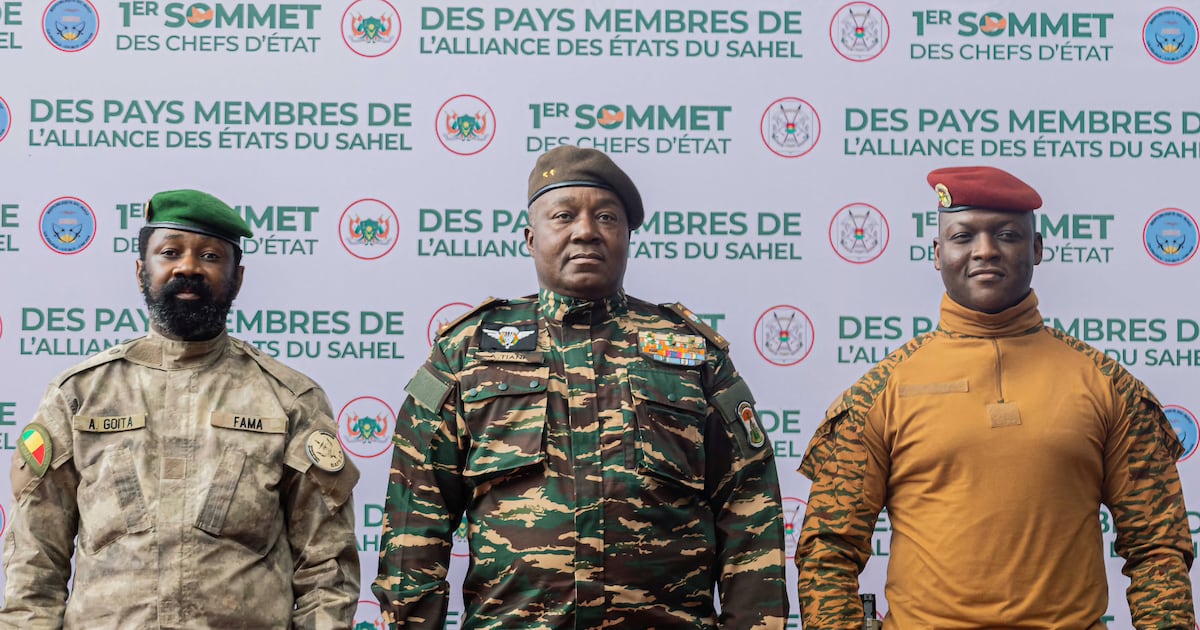
In the heart of West Africa, Mali, Burkina Faso, and Niger—united under the Alliance of Sahel States (AES)—are navigating a complex political landscape. Their governments, led by military juntas that seized power through coups between 2020 and 2023, advocate for sovereignty and have distanced themselves from Western influence.
Key regional leaders convene in Bamako for strategic summit
On Monday, Malian junta leader Assimi Goïta welcomed his Nigerien counterpart, General Abdourahamane Tiani, in Bamako. The Burkinabé leader, Captain Ibrahim Traoré, originally scheduled to arrive on Monday, is expected to join the second day of discussions, according to Malian officials.
A united front against violent extremism
The primary agenda item for this summit revolves around the establishment of a joint armed force to combat the escalating threat of jihadist groups across their borders. While the AES has taken symbolic steps—such as the recent presentation of a banner to the AES Unified Force (FU-AES) by President Goïta—no concrete timeline has been set for the force’s full operational deployment.
These nations have been grappling with insurgencies linked to Al-Qaida and the Islamic State for over a decade, yet the violence persists. In recent months, militants have intensified attacks in southern Mali, crippling the landlocked country’s economy through targeted sabotage. Neighboring Burkina Faso and Niger also face relentless jihadist campaigns, displacing thousands of civilians and straining local governance.
A defense ministry official, speaking to the media, emphasized the commitment: «We’ve allocated the necessary resources. Each country has contributed troops and equipment, and we will stand together in the field.»
Beyond military cooperation: expanding regional collaboration
The summit also marks the symbolic launch of Télévision AES, a new media outlet aimed at fostering unity among the three nations. Additionally, delegates are set to formalize plans for a shared investment bank, headquartered in Bamako, to boost economic integration.
This move underscores the AES’s pivot away from traditional partners like France and the Economic Community of West African States (ECOWAS), with growing ties to alternative allies such as Russia.