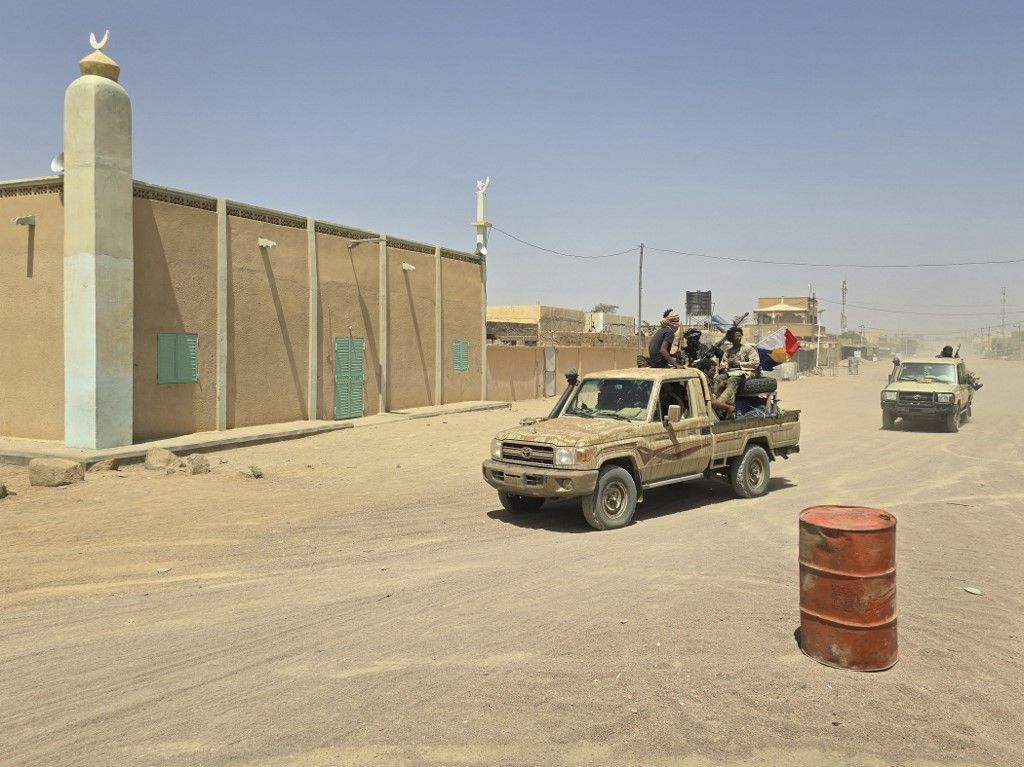
Jnim in Mali: what you need to know about the armed group threatening Bamako
The Jama’at Nusrat al-Islam wal-Muslimin (Jnim) is on the verge of seizing Mali’s capital. This Al-Qaïda-linked jihadist coalition, now the most dominant militant force in the Sahel, aims to establish an Islamic emirate across West Africa. Here’s a breakdown of its rise and ambitions.

The Jama’at Nusrat al-Islam wal-Muslimin (Jnim) has emerged as a critical security threat in Mali, with Bamako now under direct risk. Should the capital fall, this Al-Qaïda-affiliated group would control vast swaths of Mali, further destabilizing the already fragile Sahel region.
Origins of the Jnim
Formally established on March 2, 2017, the Jnim is the result of a merger between four prominent jihadist factions operating in the Sahel. United under Al-Qaïda’s banner, the group quickly became a major force in Mali’s insurgency. Iyad Ag Ghali, its emir and a former Tuareg rebel turned diplomat, leads the organization. Since France’s withdrawal from Operation Barkhane, the Jnim has significantly expanded its influence.
Ideology and goals
The Jnim’s ideology is rooted in a strict interpretation of Islam, driving its campaign to impose an Islamic emirate across the Sahel. This vision includes enforcing Sharia law and eliminating perceived Western influences in the region.
Tactics and recent actions
In September 2025, the Jnim imposed an economic blockade around key cities, a strategic move to weaken government forces ahead of larger offensives. By late April 2026, the group had launched a coordinated assault with Tuareg rebels against Mali’s military junta. With approximately 5,000 fighters, the Jnim has already achieved significant territorial gains, bringing it perilously close to Bamako.
The group’s rapid rise underscores its determination to reshape the political and religious landscape of West Africa, posing a grave challenge to regional stability.