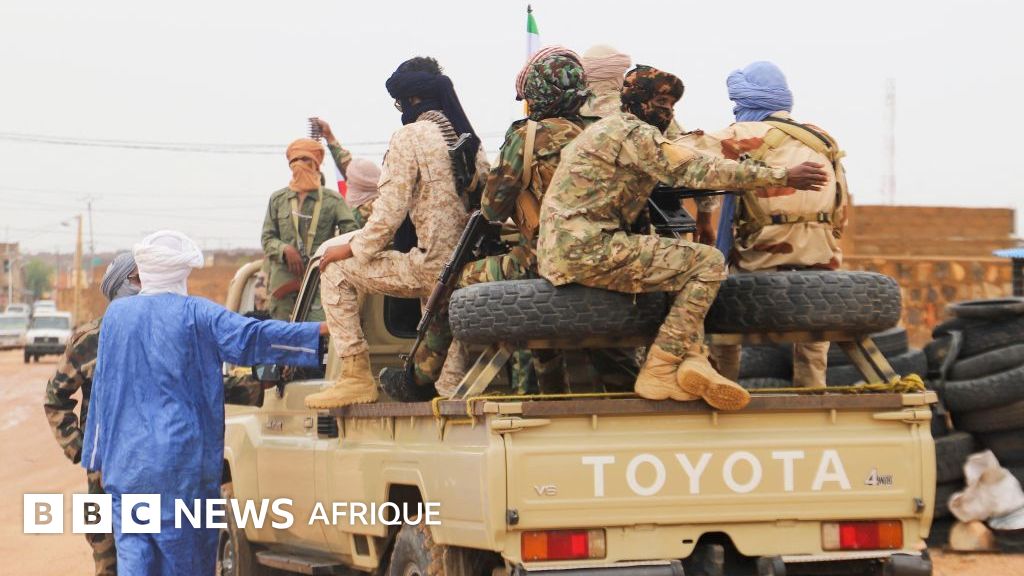
The coordinated assaults launched this past weekend by the Group for the Support of Islam and Muslims (JNIM) and the Front for the Liberation of Azawad (FLA) have exposed the precarious position of Mali’s military leadership, revealing an insurgency that is increasingly well-organized and synchronized.
These militant factions struck simultaneously in multiple cities, from Bamako to Kidal, marking a level of tactical unity never before seen in the country’s ongoing conflict. The convergence of jihadists and separatists against a common foe—the military junta—represents a turning point in a crisis that has long plagued the Sahel.
Behind this unexpected cooperation lies a worrying shift in the region’s security landscape, where traditional divisions are giving way to pragmatic tactical alliances capable of reshaping the balance of power.
From rivals to reluctant allies
The JNIM, an Al-Qaeda-affiliated jihadist coalition operating across the Sahel, seeks to establish a transnational Islamic state through guerrilla warfare, bombings, and terror campaigns. Its methods are designed to weaken state institutions and instill fear in populations and governments alike.
The FLA, on the other hand, is a separatist movement rooted in the Tuareg rebellion tradition. It demands autonomy—or outright independence—for the Azawad region in northern Mali, drawing strength from community legitimacy and historical grievances.
Historically, these two groups were bitter rivals. The FLA viewed the JNIM’s transnational agenda with suspicion, while the jihadists saw the separatists as competitors for territorial control. Yet, their current alliance reflects a strategic alignment based on mutual convenience rather than shared ideology.
The FLA contributes local legitimacy, deep knowledge of the terrain, and established community networks. The JNIM brings combat experience, military firepower, and transnational logistics. Despite their fundamental differences—one seeking an independent state, the other a caliphate—they have temporarily set aside their ideological conflicts to target a common enemy: the military government in Bamako.
A fragile and dangerous partnership
While opportunistic alliances have occurred before in the Sahel—most notably in 2012–2013 when the National Movement for the Liberation of Azawad (MNLA) allied with jihadist groups such as AQMI and Ansar Dine to expel Malian forces—the previous pacts quickly collapsed. The MNLA, lacking manpower and resources, was eventually pushed out by its extremist partners.
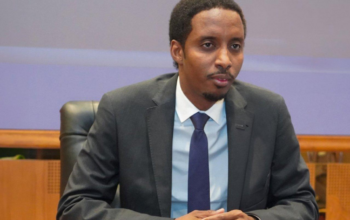
Today, experts warn that the JNIM-FLA cooperation, though tactically effective, remains fragile and unlikely to endure. “The FLA wants an independent north, while the jihadists aim to impose a caliphate across the Sahel. These objectives are fundamentally incompatible in the long term,” explains Emmanuel Odilon Koukoubou, a political scientist and senior researcher at the Civic Academy for Africa’s Future (CiAAF).
“Their current cooperation is rooted solely in a shared enemy: the Malian state. But once that enemy is weakened or defeated, their alliance will likely fracture,” he adds.
The junta under siege
This new wave of attacks has struck at the heart of Mali’s military leadership. The assassination of Sadio Camara, Defense Minister and a key strategist within the junta, has sent shockwaves through the government. His death, along with prolonged silence from the president, has fueled speculation about instability within the regime.
“The killing of Sadio Camara reveals a major flaw in the junta’s security apparatus,” says Koukoubou. “The attack reached his home in Kati without prior warning. This shows that even the regime’s strongholds are vulnerable.”
Alioune Tine, founder of the Dakar-based think tank Afrikajom Center and former UN independent expert on Mali, goes further. “This is an unprecedented moment. The jihadists have directly targeted the core of political and military power. The absence of leadership for 48 hours only deepened concerns,” he states.
Tine describes Camara’s death as “a genuine catastrophe,” noting his influence as a strategist and ideologue within the armed forces. The minister’s assassination, combined with coordinated strikes across the country, signals a profound shift in the conflict’s dynamics.
Regional fallout: a domino effect feared across West Africa
The crisis comes at a time when Mali’s diplomatic isolation is growing. After breaking ties with several Western partners, Bamako has turned increasingly toward Russia and the Alliance of Sahel States (AES)—a coalition that includes Burkina Faso and Niger. But even this support may prove insufficient.
“The Malian regime is exposed in its fragility. Its external support is limited, and the risk of further isolation is real,” warns Koukoubou. “This could accelerate its decline.”
Tine warns of a broader regional threat: “The collapse of Mali could trigger a domino effect across West Africa, much like the spread of jihadist violence did years ago.”
“The priority must be a rapid regional response—a shared defense strategy. This is not just a Malian crisis; it’s a regional one. Without collective action, there is no solution.”
“If I were leading the ECOWAS or the Alliance of Sahel States, I would recognize that our fates are linked. We need an extraordinary summit on regional security. The number one priority is collective security—and building it together.”
“It’s time to put egos aside, move beyond national interests, and forge a shared path toward regional sovereignty and security,” Tine concludes.