Gabon champions its priorities in evolving global south diplomacy
Libreville, Friday, July 17, 2026 – Amidst a complex international landscape characterized by persistent geopolitical tensions, the fragmentation of traditional alliances, and the escalating urgency of climate and economic challenges, Gabon is actively working to solidify its standing within the prominent consultative forums of the Global South.
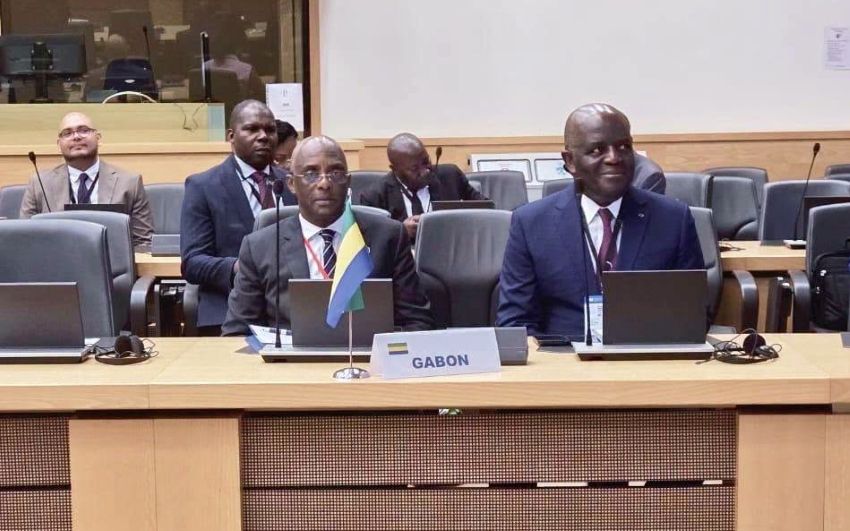
Libreville’s proactive engagement in the proceedings of the Bureau of the Council of Ministers of the Organisation of African, Caribbean and Pacific States (OEACP), which convened in Brussels on July 15, clearly demonstrates its commitment to exerting greater influence in shaping the new parameters of global multilateralism.
Under the leadership of Marc Abeghe, Minister Delegate for the Budget, and Régis Immongault Tatangani, Ambassador and Permanent Representative to the OEACP, Gabon’s delegation did more than merely participate in a preparatory meeting for the organization’s 121st ministerial session. The nation positioned itself as a dedicated contributor to the strategic deliberations essential for transforming this institution, which is poised to become a foundational political platform for the developing world.
The OEACP at a pivotal juncture
The Organisation of African, Caribbean and Pacific States is currently navigating a defining period in its history. Historically viewed primarily as a framework for cooperation with the European Union, the OEACP is now striving to forge its own distinct political identity and cultivate an independent capacity to influence major international issues.
Discussions held in Brussels therefore focused on the organization’s institutional reforms, the implementation of the Samoa Agreement, and the imperative to enhance its global visibility and operational efficacy within a profoundly altered global environment.
In this regard, the Samoa Agreement represents a significant shift. As the successor to the Cotonou Accords, it seeks to redefine political, economic, and trade relationships between member states and their international partners, centering on critical contemporary issues such as climate change, food security, governance, migration, and energy transitions.
For many African nations, this innovative framework offers a crucial opportunity to advocate for a more equitable vision of international relations, one founded on genuine partnership rather than mere assistance.
Gabon asserts its leadership in Central Africa
Serving as the coordinator for the Central African region and a member of the Bureau of the OEACP Council of Ministers, Gabon played a particularly prominent role in the exchanges. The Gabonese delegation passionately championed a more inclusive governance structure for the organization and pressed for accelerated progress in fulfilling the commitments outlined in both the Malabo Declaration and the Samoa Agreement.
The deliberations also addressed the institution’s financial viability, its strategic repositioning within the emerging international order, and the necessity of fostering robust dialogue among member states to bolster their collective ability to address pressing economic, social, and environmental challenges.
This assertive stance reflects an evolution in Gabonese diplomacy, which now seeks to integrate its regional bedrock with a more pronounced presence in multilateral forums. Libreville is particularly keen on amplifying its perspective on issues related to development financing, the reform of global governance, and the defense of the interests of Africa’s intermediate economies.
Economic diplomacy drives Gabonese priorities
Beyond institutional matters, Gabon leveraged this international platform to underscore its own strategic priorities. Economic transformation stands as a foremost objective championed by Gabonese authorities. Productive diversification, industrialization, the enhancement of local value chains, and the mobilization of international investments now constitute the core pillars of this comprehensive strategy.
Environmental conservation and the strengthening of climate resilience also hold a central position in the nation’s diplomatic discourse. Recognized globally as a significant carbon sink per capita and a pivotal player in international climate negotiations, Gabon remains committed to advocating for an approach that harmonizes economic development with the crucial protection of ecosystems.
This strategic direction is complemented by an active pursuit of strategic partnerships capable of supporting the country’s economic and environmental transition.
As the global balance of power continues to reconfigure, multilateralism is emerging as a sphere of influence as vital as economic or military might.
Gabon appears to have fully grasped this reality. Within this evolving global power dynamic, the capacity to forge coalitions, advocate for shared interests, and articulate a collective vision for development could become one of the primary levers of sovereignty for African states in the decades ahead.