DRC adjusts 2026 humanitarian plan amid rising Ebola crisis
- Health
The Democratic Republic of Congo (DRC) faces a critical juncture as the 17th Ebola outbreak, centered in Ituri Province—a region already grappling with armed conflict—compels authorities to revise the 2026 humanitarian response plan. This adjustment aims to better address the escalating needs of affected communities through the remainder of the year, as confirmed by the United Nations Office for the Coordination of Humanitarian Affairs (OCHA) in the DRC.
In January 2026, the DRC government and humanitarian partners launched a $1.4 billion funding appeal to support nearly 15 million Congolese, particularly in the eastern provinces. However, financial constraints have forced the United Nations and its allies to focus assistance on 7.3 million of the most vulnerable individuals.
The revised 2026 Humanitarian Needs Response Plan (HNRP) now targets 10.8 million people out of the 18.5 million identified as requiring aid. The required funding has also increased, rising to $2.13 billion. This adjustment aligns with the government’s urgent call for a reorganization of priorities, driven by both the Ebola epidemic and insufficient humanitarian financing.
Eve Bazaiba, Deputy Prime Minister and Minister of Social Affairs and National Solidarity, emphasized the necessity of these consultations to reallocate resources effectively in response to the crisis.
Ebola intensifies existing vulnerabilities
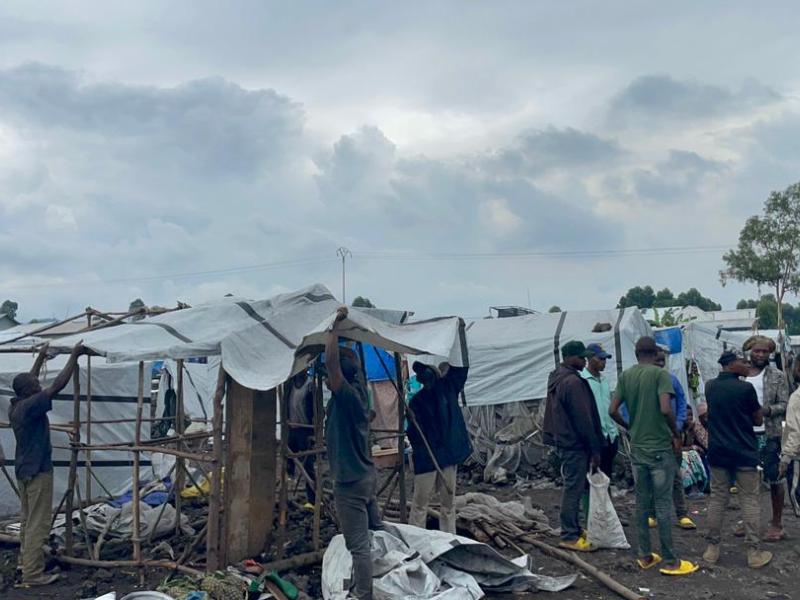
OCHA reports that the Ebola outbreak, detected in May 2026 in Bunia, Ituri Province, has rapidly spread to multiple health zones in Ituri, North Kivu, and South Kivu. The most active hotspots are Bunia, Rwampara, and Mongwalu in Ituri. This epidemic compounds pre-existing humanitarian challenges, including armed conflicts, natural disasters, and cholera outbreaks.
The revision of the 2026 Humanitarian Response Plan (HNRP) in the DRC comes at a time of rapid deterioration in the humanitarian situation. The emergence of the Ebola virus disease (EVD) outbreak in May 2026, caused by the Bundibugyo strain in eastern DRC, represents a major health shock that challenges the original HNRP assumptions. These assumptions were based on a gradual worsening of humanitarian needs linked to armed conflicts, natural disasters, and health emergencies, particularly the cholera epidemic.
The outbreak has significantly worsened existing vulnerabilities, amplifying humanitarian needs and complicating response efforts. It has necessitated a targeted revision of the HNRP to update needs assessments, reassess security conditions, and redefine strategic priorities.
The epidemic was detected in early May 2026 in Bunia, Ituri Province, following the identification of a cluster of severe cases, including among health workers. Since then, transmission has rapidly spread to several health zones in Ituri, North Kivu, and South Kivu, with particularly active hotspots in Bunia, Rwampara, and Mongwalu health zones in Ituri.
Broader humanitarian challenges
Beyond Ebola, the DRC continues to face worsening food insecurity, as confirmed by the March 2026 IPC analysis, which indicates an increase in acute food insecurity across several regions. This has led to a surge in the number of people requiring humanitarian assistance. The country is also battling a resurgence of cholera, further straining already limited resources.
James Swan, Special Representative of the UN Secretary-General in the DRC and Head of MONUSCO, highlighted the funding shortfall during a June 26 address to the UN Security Council. The 2026 Humanitarian Response Plan, launched in January, had reached 53.3% funding but urgently requires additional resources to meet growing needs. The international funding shortfall, including the suspension of U.S. humanitarian aid, has severely impacted the DRC, particularly in the eastern provinces, where the humanitarian and health crisis is most acute.
The 2025 Humanitarian Response Plan for the DRC, valued at $2.54 billion, remained significantly underfunded despite the deteriorating security and humanitarian situation. Globally, the 2026 UN humanitarian plan aims to assist 87 million people, requiring $23 billion in funding. While the U.S. has historically been a major contributor, its recent policy shift toward restructuring the international humanitarian model has raised concerns about future support.
This critical moment underscores the urgent need for coordinated international action to address the DRC’s multifaceted crises.