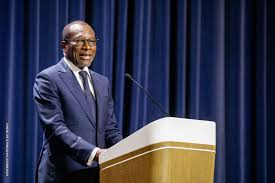
The 2027 budget hearing controversy: why the senate president’s name is missing
The absence of Patrice Talon, President of Benin’s Senate, from the 2026 parliamentary budget hearings has sparked debate. As key government officials prepare to present their financial forecasts to lawmakers, the Senate’s top representative remains notably absent from the official schedule. Behind this silence lies a carefully structured institutional framework, not a lapse in protocol or favoritism.
Behind the scenes: the legal blueprint guiding senate budget procedures
How does the Senate handle its finances before they reach parliament? The answer lies in articles 97, 98, and 99 of the Senate’s internal regulations—articles that govern everything from budget preparation to its transmission to the Ministry of Finance.
The Senate’s financial autonomy: what it means and what it doesn’t
Article 97 grants the Senate administrative and financial autonomy, but it does not create a separate budget outside state oversight. The chamber’s funds remain bound by public accounting rules, ensuring transparency and accountability. This autonomy allows the Senate to draft its own budget based on internal priorities, yet it must still align with the state’s broader fiscal framework.
From drafting to delivery: the three-step budget journey
The process unfolds in three stages:
- Phase 1: Internal preparation (Article 98)
The Senate crafts its budget following orientations set by its president and the government’s fiscal guidelines. It is then debated and approved by the full Senate in accordance with internal voting rules. - Phase 2: Transmission to the Ministry of Finance (Article 99)
Once adopted, the Senate’s budget is formally submitted to the Minister of Finance. This step ensures the chamber’s financial requests are integrated into the national budget proposal. - Phase 3: Parliamentary scrutiny
The combined budget proposal, now including Senate credits, is submitted to the National Assembly for review and approval. The Senate’s president does not personally defend these credits because they have already cleared internal Senate procedures.
This three-stage process explains why Patrice Talon does not appear on the hearing schedule—his role in defending the Senate’s budget concludes once the draft budget is finalized and transmitted.
Why the Assembly’s president is also absent from scrutiny
This system is not unique to the Senate. The National Assembly follows the same protocol. Joseph Djogbénou, President of the National Assembly, is similarly not required to present his chamber’s budget during hearings. The rationale is identical: each parliamentary institution manages its own financial planning internally before merging its requests into the unified state budget.
Institutional continuity: how bicameralism didn’t change the rules
Even with Benin’s transition to a bicameral system, the Senate’s budget procedures remained unchanged. Articles 97 through 99 continue to govern the process, ensuring consistency regardless of parliamentary structure. The absence of Patrice Talon at the hearings is not an anomaly—it is a deliberate consequence of institutional design.
The big picture: transparency without compromise
Far from exempting the Senate from oversight, this process enhances transparency. By finalizing its budget internally, the Senate ensures its financial needs are responsibly vetted before integration into the national budget. The National Assembly then evaluates the consolidated proposal as a whole, maintaining legislative scrutiny without redundancy.
Ultimately, the 2027 financial framework is not weakened by the Senate president’s silence at hearings—it is strengthened by a system that balances autonomy with accountability, clarity, and constitutional order.