Who are the Touareg and Arab separatists seeking Azawad independence in northern Mali?
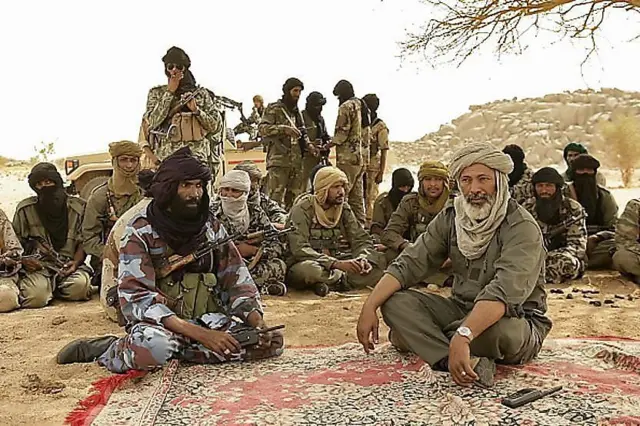
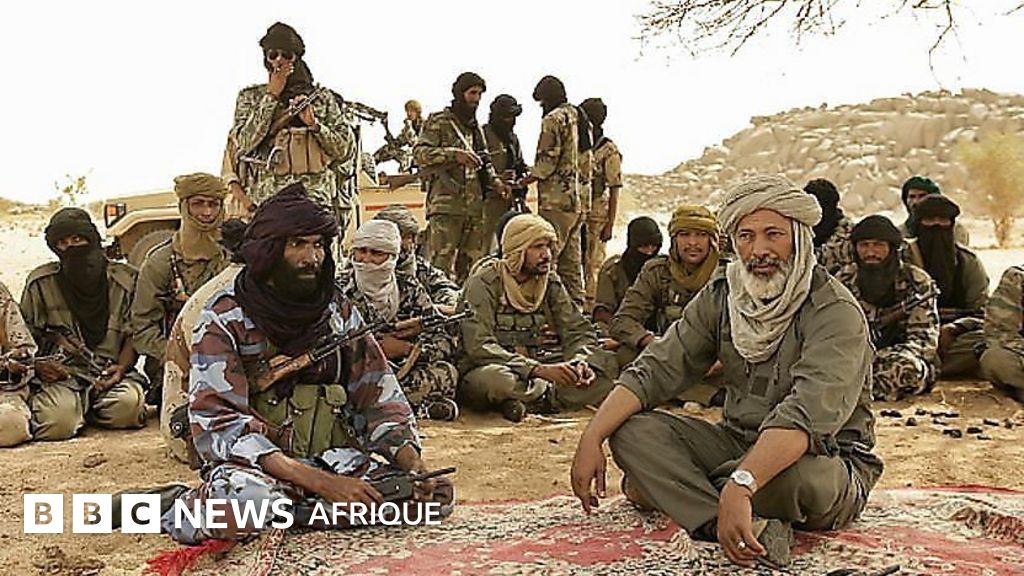
The Front de Libération de l’Azawad (FLA), a separatist coalition, has joined forces with the Jamaat Nusrat al-Islam wal Muslimeen (JNIM)—a group affiliated with Al-Qaeda—to launch a fresh military offensive this weekend. Their aim is to reclaim control over northern and central Mali, currently held by government forces.
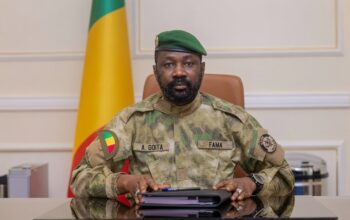
This latest operation follows a coordinated attack on April 25 that targeted locations across Mali’s north, center, and even the capital’s strategic proximity. The assault reached Kati, a key bastion for Mali’s military leadership, sending shockwaves through the administration of Colonel Assimi Goïta. The Defense Minister, Sadio Camara, was killed in the assault, while the intelligence chief, Modibo Koné, sustained severe injuries.
The FLA had previously seized the city of Kidal in 2024, a symbolic stronghold for the Malian army and Russian-backed African Corps troops after their own 2023 takeover. The city represents a critical military foothold in the region’s volatile landscape.
Following the April 25 strikes, Malian forces reclaimed Kidal through a swift counteroffensive. However, the FLA’s resurgence, bolstered by fresh local recruits in the north, signals an escalation in the conflict’s intensity.
In response, Mali’s government has escalated its military presence, deploying additional troops and equipment to counter potential threats. Authorities have also offered a $12.4 million reward for intelligence leading to the capture or elimination of FLA and JNIM leaders, underscoring the gravity of the security crisis.
Origins and leadership of the FLA
The Forces de Libération de l’Azawad (FLA) emerged on November 30, 2024, in Tinzaouatene—a northern Mali town bordering Algeria. The movement was formed through the merger of several armed groups, primarily comprising Touareg and Arab separatists united by the goal of an independent Azawad.
Azawad refers to a vast territory encompassing Gao, Tombouctou, Kidal, and Ménaka. Its quest for autonomy dates back to 2012, when the Mouvement National de Libération de l’Azawad (MNLA)—one of the founding factions of the FLA—declared independence for the region.
The FLA succeeded the Cadre Stratégique Permanent pour la Paix, la Sécurité et le Développement (CSP-PDA), which itself was a coalition of earlier separatist movements. This included the MNLA, the Haut Conseil pour l’Unité de l’Azawad (HCUA), factions of the Mouvement Arabe de l’Azawad (MAA), and the Groupe d’Auto-défense Touareg Imghad et Alliés (Gatia).
The Touareg resistance traces its roots to 1988 in Libya, where exiled activists established the Mouvement Populaire de Libération de l’Azawad (MPLA). Among its founders was Iyad Ag Ghali, now the leader of the JNIM.
The FLA is led by Bilal Ag Acherif, born in Kidal in 1977. Acherif serves as the movement’s president, playing a central role in both its political strategy and operational governance.
His deputy, Alghabass Ag Intalla, oversees military affairs and coordinates with the JNIM. Intalla hails from a prominent Ifoghas clan lineage; his father, Intallah Ag Attaher, was a traditional leader who passed away in 2014.
Mohamed Ramadane functions as the group’s spokesperson, serving as its public voice in negotiations and media engagements.
What does the FLA want?
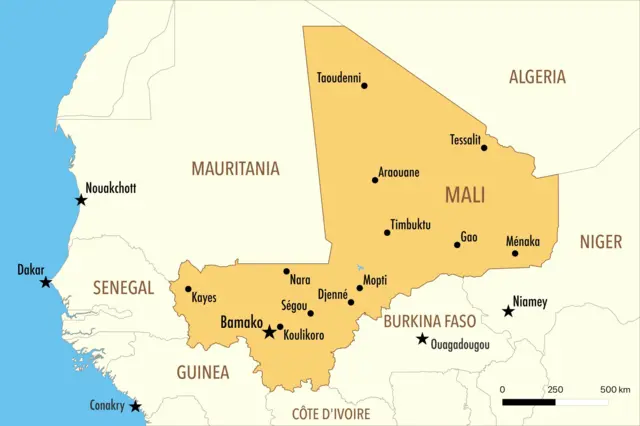
Touareg and Arab communities in northern Mali have long resisted central government control since the country’s independence in 1960. This resistance has sparked multiple rebellions, including major uprisings in 1962, 1990–1996, and 2012.
The FLA’s stated objective is the creation of an independent Azawad Republic, a homeland for roughly two million Touareg people scattered across West and North Africa due to colonial-era divisions.
The group accuses Bamako of systematic political, economic, and cultural marginalization. Despite the region’s wealth—rich in salt, uranium, gold, diamonds, and phosphates—infrastructure development remains critically underfunded. Schools, hospitals, water systems, power grids, and roads are severely lacking.
Acherif has defended the independence drive, arguing that the Azawad was “annexed by Mali without regard for its history as an independent civilization.”
Mali’s government has accused neighboring Algeria and Mauritania of supporting the FLA. Algeria previously mediated the 2015 Algiers Accords between Bamako and northern armed groups, though Mali abandoned the agreement in January 2024.
The FLA’s military strength remains difficult to assess. Ramadane claims the group maintains a “strong military presence stretching from the Mauritanian border to the Algerian frontier,” with key bases near Kidal and Tinzaouatene.
Between 2024 and 2025, the FLA reportedly deployed kamikaze drones in attacks, although propaganda videos frequently depict armed fighters patrolling the desert in armed convoys.
Evolving ties between the FLA and JNIM
The relationship between the FLA and JNIM has undergone significant transformation. Iyad Ag Ghali, now JNIM’s leader, was once a key figure in the 1990s Touareg rebellion before shifting allegiance to radical Islamist factions.
Collaboration between the two groups began taking shape in mid-2024. In May, Ag Intalla reportedly initiated discussions between the CSP-PDA and JNIM. By July, the CSP-PDA, with JNIM’s support, executed a major assault on Malian and Wagner-linked forces in Tinzaouatene.
Tensions briefly flared when JNIM accused the FLA of failing to acknowledge its sacrifices in combat. However, by March 2025, the two groups had agreed to a formal alliance targeting both the Malian army and Russian-backed troops following negotiations in late February.
Following the April 25 offensive, both groups publicly acknowledged their partnership. The FLA framed the alliance as a “strategic convergence” to overthrow Mali’s military government, while JNIM described it as a response to Touareg willingness to embrace sharia law.
Acherif emphasized that while ideological differences exist, both groups share a common enemy and are engaged in localized discussions to align their objectives.
The durability of this alliance remains uncertain due to deep ideological rifts and conflicting long-term goals.