Tshisekedi sends urgent diplomatic message to Angola’s Lourenço amid regional tensions
Women
- Politics
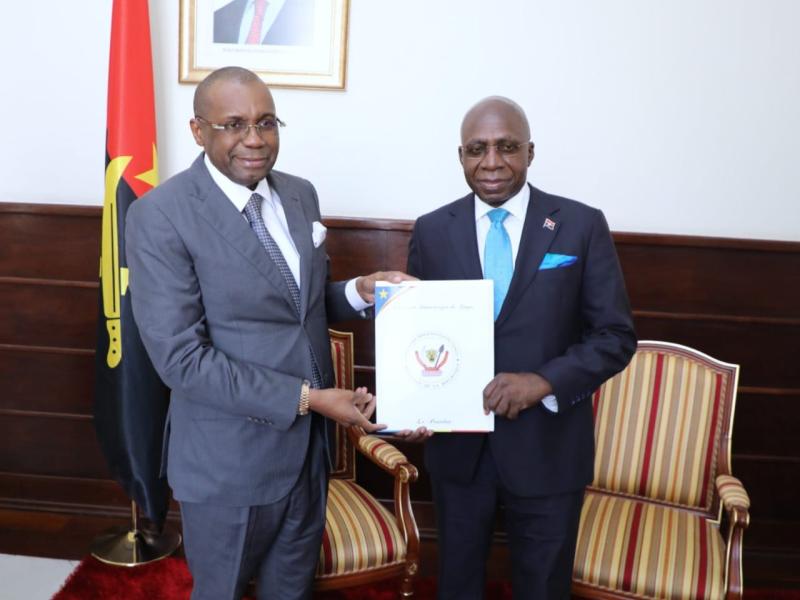
Democratic Republic of Congo President Félix Tshisekedi delivered an official message to his Angolan counterpart, João Manuel Gonçalves Lourenço, on Friday 10 July 2026. According to Angola’s Ministry of External Relations, the letter from the Congolese head of state was carried by his roving ambassador, Antoine Ghonda Mangalibi, and handed to Tete António, Angola’s Minister of External Relations.
“An official message from His Excellency Félix Antoine Tshisekedi Tshilombo, President of the Democratic Republic of Congo, to His Excellency João Manuel Gonçalves Lourenço, President of the Republic of Angola, was delivered this Friday afternoon in Luanda to His Excellency Tete António, Angola’s Minister of External Relations,” the Angolan diplomatic ministry confirmed.
The contents of the correspondence remain undisclosed. This diplomatic initiative unfolds against the backdrop of ongoing conflict in eastern DRC, where the M23 rebellion—backed by Rwanda—continues to control extensive territories in North Kivu and South Kivu provinces. Diplomatic efforts in Washington and Doha have yet to yield sustainable peace solutions.
This initiative also coincides with intense national political debates concerning potential constitutional reforms or changes, with Félix Tshisekedi’s term nearing its end in two years. The message delivery follows a period of heightened diplomatic coordination in the region. Kinshasa and Luanda maintain regular exchanges on bilateral issues and regional peace and security challenges in the Great Lakes area.
The move comes after consultations led by Burundi’s President Évariste Ndayishimiye—current African Union chairperson—with DRC’s major religious denominations and a group of opposition leaders.
Another significant diplomatic development linked to the DRC situation involved President Tshisekedi’s recent visit to Brazzaville for talks with his Congolese counterpart, Denis Sassou Nguesso. This followed a state visit by Évariste Ndayishimiye to Kinshasa, during which Denis Sassou Nguesso continued consultations by receiving Cardinal Fridolin Ambongo to discuss the political and institutional situation in the DRC.
In February, following a high-level meeting in Luanda, regional leaders involved in the DRC peace process designated Angola to lead consultations with Congolese stakeholders to prepare for an inter-Congolese dialogue. This decision was announced in a presidential statement after a meeting that included Angolan President João Lourenço—then AU chairperson—DRC President Félix Tshisekedi, Togolese Prime Minister Faure Gnassingbé (designated AU mediator), and Olusegun Obasanjo (representing the AU’s five former African heads of state facilitating the DRC peace process).
Since this designation, diplomatic contacts between Kinshasa and Luanda have continued through multiple exchanges between presidential envoys. However, this initiative has yet to produce the expected results. Diplomatic sources indicate the inter-Congolese dialogue remains stalled due to ongoing disagreements over its format and the identification of participating stakeholders.