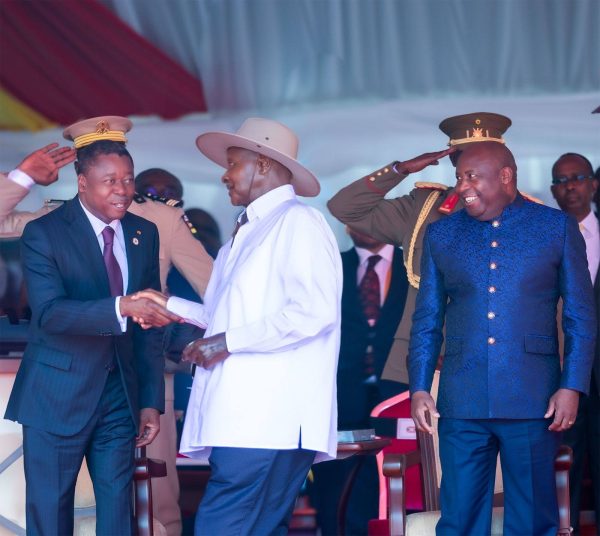
The scorching Kampala sun did little to dampen the spirit of unity on display Tuesday. With official smiles and firm handshakes masking deeper strategic concerns, Faure Gnassingbé, President of the Togolese Council, arrived in Uganda as a guest of honor for President Yoweri Museveni’s swearing-in ceremony. Though the event celebrated a political ally, its true purpose was far more urgent: advancing a vital humanitarian mission for millions across Africa—restoring peace to the Great Lakes region.
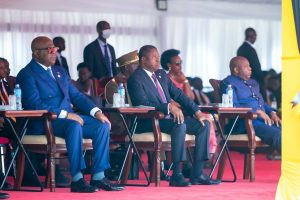
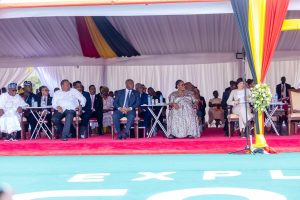
Kampala’s streets pulsed with republican fervor that Tuesday, alive with traditional songs, military parades, and pride. The inauguration, themed “Safeguarding achievements and reaching a new qualitative milestone toward upper-middle-income status”, drew heads of state from across Africa, Europe, Asia, and the Americas.
Yet beneath the pageantry and polished speeches lay a bond forged through years of shared vision. As Faure Gnassingbé extended his warmest congratulations to President Museveni on his re-election, the gesture was more than diplomatic courtesy—it was a reaffirmation of trust. Museveni reciprocated, highlighting the visit as proof of the robust economic and political ties binding Lomé and Kampala.
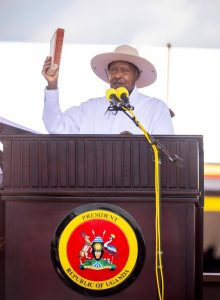
Diplomacy at the heart of the Great Lakes crisis
The smiles on the grandstand barely concealed the gravity of the moment. This visit was never just a ceremonial gesture—it carried the weight of a continent’s plea for peace. As the African Union’s mediator for the crisis plaguing eastern Democratic Republic of the Congo (DRC), Faure Gnassingbé understands that every diplomatic breakthrough saves lives.
In Kampala, he seized the opportunity to reassert his unwavering commitment to relentless dialogue with every stakeholder in the Great Lakes. Uganda, with its deep understanding of regional dynamics, emerged as a key partner in this endeavor. President Museveni publicly praised Faure Gnassingbé’s “constructive diplomacy”—a Togolese approach rooted in quiet negotiation, mutual respect, and a resolute rejection of confrontation.
A partnership built on consistency
Behind the scenes at the Ugandan presidency, officials recalled the depth of the relationship between both leaders. Their last one-on-one working session took place just months earlier, on February 3, 2026, in Entebbe. Such regular exchanges underscore Togo’s growing role as an essential facilitator and a proactive force for peace across the continent.
As the last ceremonial lights dimmed in Kampala, the real work remained. Returning to Lomé, Faure Gnassingbé carried with him the conviction that a strong bridge had been reinforced—one connecting West and East Africa in pursuit of a shared vision: stability and shared prosperity. This mission was yet another testament to Togo’s dedication to African-led peacebuilding and collaborative governance.