The issue of Senegal’s national debt has resurfaced as a pressing economic challenge. In Dakar, policymakers, economists, and financial experts are actively exploring financing and restructuring options beyond traditional reliance on the International Monetary Fund (IMF). This reassessment comes amid tight budget constraints and the urgent need to stimulate economic growth.
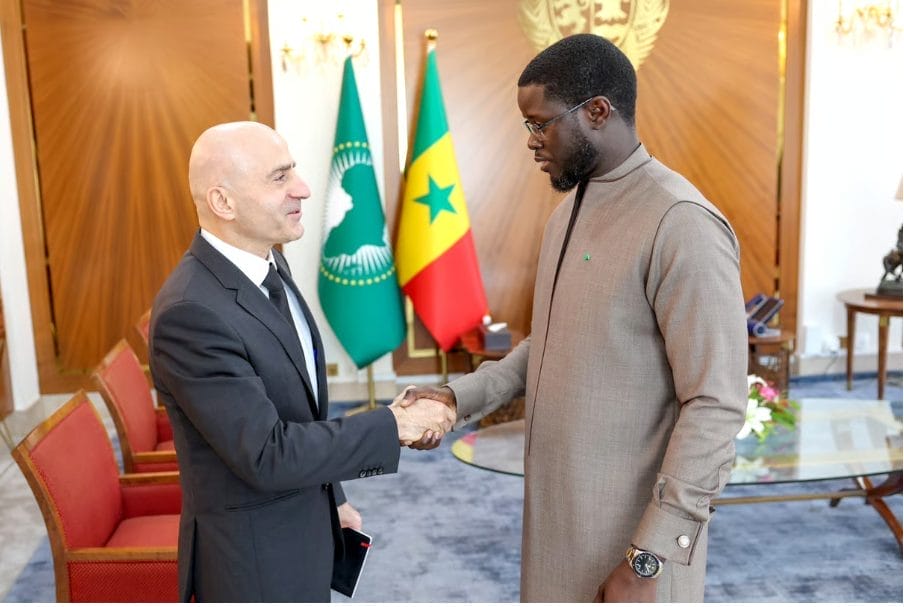
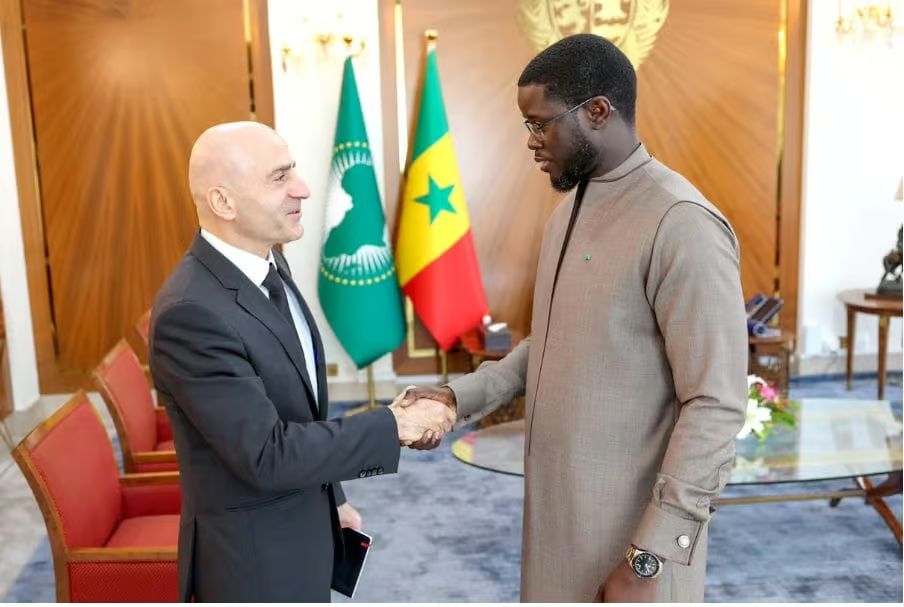 Senegalese President Bassirou Diomaye Faye meets with IMF mission chief Edward Gemayel in Dakar, August 28, 2025 © DR
With the country’s financial maneuverability under pressure, Dakar is striving to balance fiscal responsibility with economic revitalization. As a member of the West African Economic and Monetary Union (WAEMU), Senegal operates within a shared monetary framework where debt sustainability and fiscal discipline are closely monitored at the regional level. These considerations align with the broader guidelines set by the Economic Community of West African States (ECOWAS), the African Union (AU), and the African Development Bank (AfDB).
exploring new financing pathways for Senegal
Key discussions are centered on diversifying funding sources. Among the most discussed solutions are:
- A stronger engagement with the WAEMU regional financial market to tap into local capital
- Enhancing the mobilization of domestic savings through improved financial instruments
- Issuing thematic bonds tailored to priority sectors such as infrastructure, education, or renewable energy
- Optimizing the use of concessional financing—low-interest loans or grants from international partners
The goal is twofold: to reduce the cost of debt servicing, which currently diverts critical funds from public spending, and to avoid abrupt fiscal adjustments that could negatively impact households and businesses. By doing so, the government aims to maintain public investment in essential services while gradually restoring fiscal health.
Balancing revenue growth and economic vitality
Economists emphasize the importance of boosting tax revenue without stifling private sector activity. This includes closing loopholes, improving tax administration, and broadening the tax base while ensuring fairness and transparency. Greater public financial transparency is also seen as vital to restoring investor confidence and securing favorable financing terms.
Another crucial aspect is the strategic prioritization of public investments. In many African countries, excessive debt servicing has led to reduced spending on infrastructure, education, and healthcare. Senegal’s situation is being closely watched across the continent as it reflects a broader question: how can African economies regain liquidity and sustain growth without becoming overly dependent on multilateral assistance programs?
While the IMF remains a potential partner, Dakar’s current approach signals a shift toward greater financial autonomy and innovation in debt management. The outcome could set a precedent for other nations in similar circumstances.