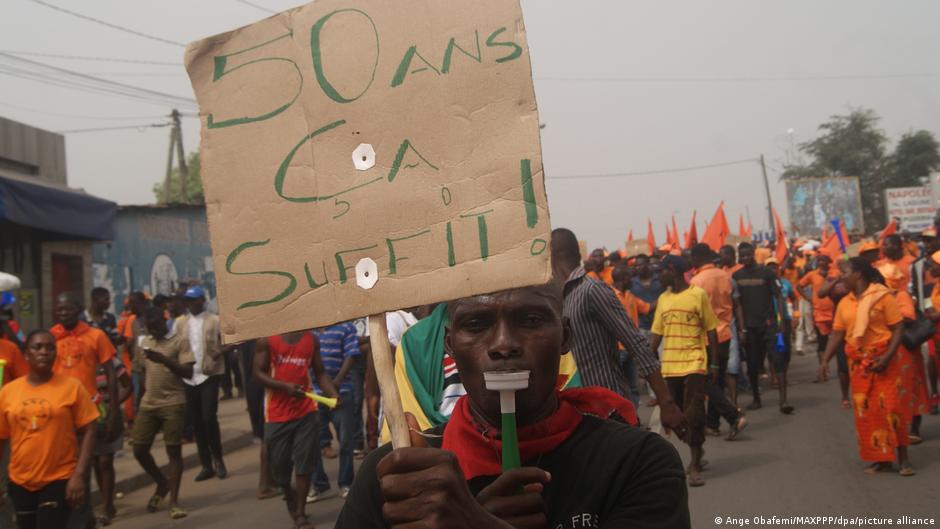

Following an extended period where public demonstrations were restricted and often banned, the Togolese opposition successfully organized a rally in Lomé this past weekend. This event, authorized by state authorities, reignites a key question: are we witnessing a genuine political liberalization in Togo, or is this merely a fleeting moment of calm?
CNCC’s formative assembly
On Saturday, hundreds of individuals participated in the inaugural public assembly of the new Cadre national de concertation pour le changement (CNCC) in Togo. This influential coalition unites four prominent opposition political parties with various organizations from civil society.
David Dosseh, a leading figure from the Front citoyen Togo debout and one of the rally’s organizers, articulated their demands: “We advocate for a fundamental change in governance. Because Togo is currently grappling with pervasive corruption, its essential social services are in disarray, and the country is stagnant, failing to advance.”
He further asserted that “for numerous years, specious reasons have consistently been invoked to systematically ban peaceful public gatherings. Nevertheless, we are resolute and will never surrender.”
A temporary easing of restrictions
So, should this authorization be interpreted as a true political transformation? Paul Amégankpo, a political analyst and director of the Institut togolais Tamberma pour la gouvernance, advises against prematurely declaring a definitive opening.
“The Togolese government’s decision to allow the opposition’s peaceful march on May 9, 2026, in Lomé is certainly commendable,” stated the researcher. “But when considering the broader political landscape, this gesture of openness warrants careful scrutiny. It could represent a government’s inclination to ease limitations on peaceful demonstrations, association rights, and political activities across the nation.”
Despite the sanctioned meeting, Paul Amégankpo maintains a prudent outlook: “It will be essential to observe further signs of political will towards openness to definitively confirm a clear trend toward enhanced political and associative freedoms within the country.”
All attempts to elicit an official response from the government were unsuccessful.
The forthcoming weeks will likely clarify whether this demonstration marks the genesis of a new democratic space or simply a temporary pause in a political climate that remains inherently tense.