On June 16, Africa observed African Child Day, an occasion traditionally marked by significant gatherings and promises of a brighter future, with this year’s focus on universal access to water, sanitation, and hygiene. While government representatives in Togo likely delivered soothing speeches in line with this tradition, the stark reality on the ground paints a different picture. To maintain its grip on power, the Lomé administration has too often employed lethal force, tragically impacting innocent children. This account revisits a sorrowful sequence of broken promises and absent investigations.
From Soweto to Lomé: a shield of impunity
The African Child Day was initially established to commemorate the Soweto students who, in 1976, protested to demand quality education and reject the imposition of Afrikaans. While many nations have since striven to actualize these fundamental rights, Togo’s system appears to have weaponized the repression of its youth, transforming it into a final political defense.
Protecting a child extends beyond mere declarations of intent; it necessitates ensuring their dignified birth and upbringing. In Togo’s healthcare facilities, mothers continue to give birth on the bare ground. Due to insufficient resources and infrastructure, maternity wards are overwhelmed, sometimes resembling mere nurseries where life precariously hangs by a thread.
Even as sub-regional and international bodies reiterate their short, medium, and long-term commitments to child welfare, Lomé gives the impression of compliance. However, the slightest youth protest against these systemic violations of fundamental rights is met with live ammunition. Even non-protesters, merely seeking sustenance, have tragically swelled the ranks of victims.
Jacques Koutoglo: a family’s grief against a drowning theory
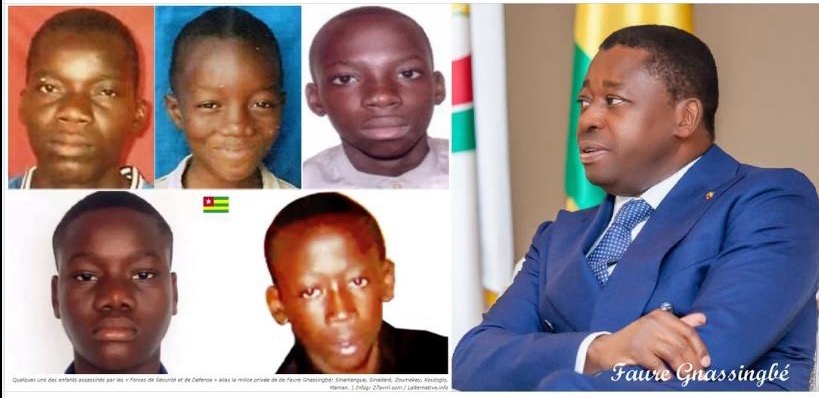
Nearly a year has passed since the family of Jacques Koutoglo began their demand for justice. The 15-year-old secondary school student was fatally beaten before being cast into the Bè lagoon in Lomé during the initial demonstrations of June 2025. On that tragic afternoon, the adolescent was not participating in the march; he was simply searching for food.
In the aftermath of the tragedy, Pacôme Adjourouvi, then Minister of Human Rights, initially publicly posited a theory of ‘natural drowning’ amidst civil unrest. He later retracted, announcing the initiation of an official inquiry to establish accountability. Since then, no findings have been released. The minister subsequently departed his post without ever disclosing the investigation’s conclusions. The government’s refusal to permit a memorial mass for young Jacques has only intensified the inconsolable family’s sense of injustice.
Joseph Zoumekey and Rachad Maman: silence as the sole response
In 2017, the fate of 13-year-old Joseph Zoumekey already demonstrated that repression spared no age. Sent by his mother to purchase groceries in the Bè-Kpota neighborhood, the child was struck by a live bullet. It took until 2018 and the findings of an independent autopsy conducted by Amnesty International experts to confirm that the cause of death was indeed a gunshot, contradicting the official narrative. Despite repeated calls from the NGO for the perpetrators to face justice, Faure Gnassingbé’s government has maintained an impenetrable silence.
In the same year, in Bafilo, 14-year-old Rachad Maman suffered an identical fate while marching alongside his father to advocate for democratic reforms. Hit by gunfire directed at the group of demonstrators, his case sparked a wave of international outrage, materialized by an Amnesty International petition signed by thousands worldwide. The demand was straightforward: shed light on the incident and prosecute those responsible. This request, too, has gone unheeded.
Anselme Sinandaré and Douti Sinalengue: North and South united in sorrow
Further north, in Dapaong, the memory of Anselme Sinandaré (12 years old) and Douti Sinalengue (21 years old) remains vivid. In 2012, during a peaceful student demonstration demanding their teachers’ presence in classrooms, both were shot and killed. Over a decade later, no official proceedings have led to the identification of the shooters within the security forces.
From the extreme north to the coast, a painfully consistent observation emerges: the lives of children appear to hold little weight against the imperatives of maintaining political power. Dozens of families are thus stripped of their future, witnessing their offspring—the next generation—sacrificed with complete impunity. This dynamic of repression has persisted and spanned generations since the inception of the Gnassingbé family’s governance.
Despite this, Togo is a signatory to the African Charter on the Rights and Welfare of the Child, ratified on May 5, 1998. By leaving these crimes unpunished and these investigations unresolved, the authorities in Lomé send a clear message to the international community: adherence to treaties ceases where the demands of their political survival begin.