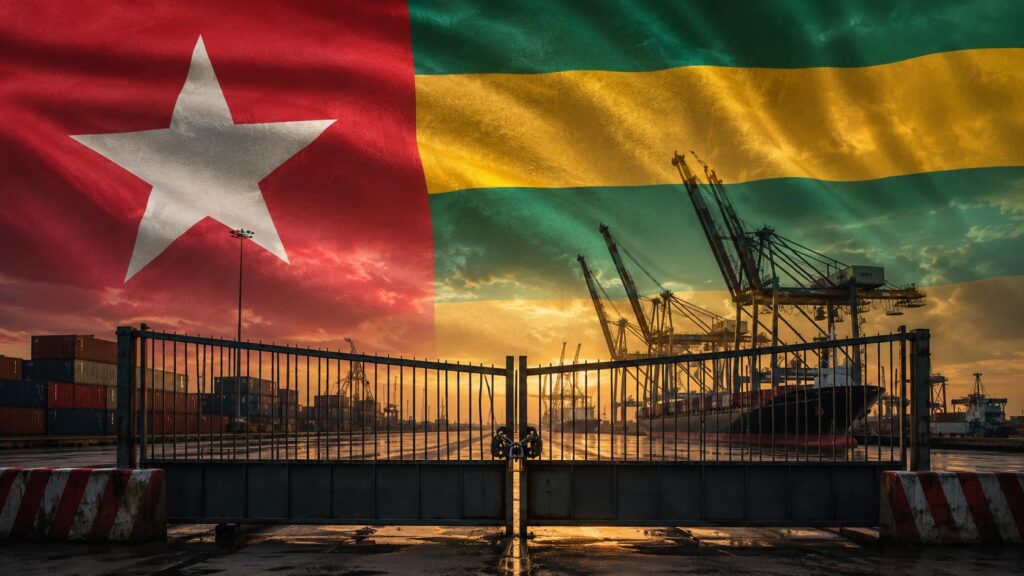
The Port Autonome de Lomé (PAL) has been operating at reduced capacity since Tuesday, August 11, 2026, at 5:00 AM. Following the call from the Syndicat des Agents du Port Autonome de Lomé (SYAPAL), workers initiated a 72-hour strike, scheduled to conclude on Thursday, August 13, at 11:59 PM. This unprecedented industrial action has exposed deep-seated social tensions within Togo’s primary economic lifeline.
Social unrest and failed negotiations fuel the strike
The root of the discontent lies in a series of unmet demands spanning months. PAL employees are demanding revised compensation packages, career regularization, and strict adherence to port personnel regulations. The SYAPAL has accused port authorities of insincerity in negotiations, citing a pattern of stalled discussions despite multiple warnings.
Efforts to ease tensions under new Port Director Kokou Edem Tengue, who took office in July, have failed to prevent the escalation. The union describes the dialogue as a mere formality, intensifying frustration among workers.
Potential consequences of a prolonged shutdown
The 72-hour strike is a strategic move to pressure decision-makers, but the situation could escalate if demands remain unaddressed. Possible developments include:
- A prolonged or indefinite strike, halting all cargo handling, stevedoring, and shipment operations.
- Severe logistical congestion, as Lomé serves as a critical transshipment hub in West Africa. Prolonged inactivity risks container terminal saturation, vessel diversions to competing regional ports, and increased shipping costs for carriers.
- Far-reaching economic ripple effects across the Sahel. The port is a vital link for landlocked nations like Burkina Faso, Niger, and Mali. Extended disruptions could delay essential goods deliveries and fuel inflationary pressures across the subregion.
Government and port authorities under mounting pressure
With the strike deadline looming, stakeholders face growing urgency to engage in meaningful, inclusive negotiations. Failure to resolve the crisis promptly could trigger a domino effect, disrupting trade flows and regional stability.
You may also like
Senegal’s December 2, 2026: will Diomaye Faye dissolve parliament or play the long game?
Senegal’s 2026 budget revision: can Dakar still rescue its growth and investment agenda?
Senegal’s 2026 revised budget: a trap vote for Pastef or a necessary evil?
Burkina Faso’s armored vehicles: can Faso Armored’s 300-unit claim survive the scrutiny?
Can Senegal and Azerbaijan turn a New York memorandum into a lasting political partnership?