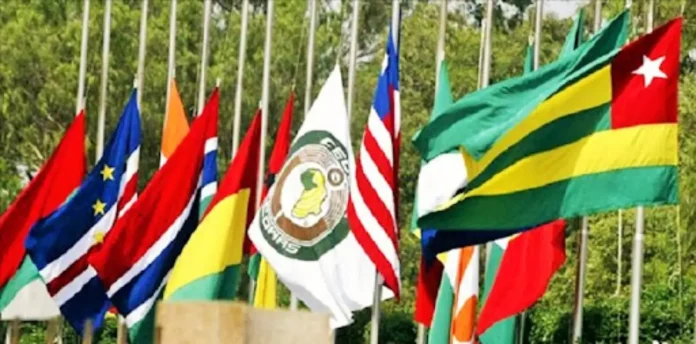
Tensions escalate around the constitutional reforms in Togo as a coalition of 43 civil society organizations (CSOs) from Africa and its diaspora urge the Economic Community of West African States (ECOWAS) and the African Union (AU) to impose sanctions on the Lomé government. The move follows a landmark ruling by the ECOWAS Court of Justice, which declared the March 2024 constitutional amendment an unconstitutional change of government.
This collective of activists and organizations is amplifying pressure on regional and global bodies, demanding decisive action against authorities in Lomé for what they describe as a deliberate erosion of democratic norms. The coalition’s demands come as the government of Faure Gnassingbé pushes forward with a shift from a presidential to a parliamentary system, a change critics argue is designed to circumvent term limits.
The ECOWAS Court’s decision, outlined in case ECW/CCJ/JUD/01/26, explicitly states that the constitutional reform violates the African Charter on Democracy, Elections and Governance (ACDEG). Civil society leaders highlight additional concerns: the amendment was passed by lawmakers whose mandates had expired, and it bypassed public consultation through a referendum.
Five key sanctions demanded by civil society
To prevent similar constitutional circumventions across West Africa, the CSOs are calling on ECOWAS and the AU to move beyond verbal condemnations and take concrete steps. Their demands include:
- Immediate suspension of Togo from ECOWAS decision-making bodies;
- Suspension of voting rights for Togo within the African Union;
- Legal proceedings against those responsible for the institutional overhaul;
- Review of diplomatic mandates held by officials linked to the Togolese government;
- Appointment of a UN Special Rapporteur to monitor human rights and governance in Togo.
Lomé’s defiant response: sovereignty over scrutiny
The government of Togo has pushed back against the regional court’s ruling, issuing a strong rebuttal. Authorities argue that the ECOWAS Court of Justice lacks the jurisdiction to assess the constitutionality of domestic laws or judge the sovereign power of member states. In their view, the transition to the Fifth Republic is purely a matter of national sovereignty and an effort to modernize the country’s institutions.
Despite the growing international pressure, Lomé shows no signs of backing down, insisting that the reforms are a legitimate exercise of self-determination.
You may also like
Will the AES ever launch its own currency? The question Traoré keeps leaving unanswered
Can Ibrahim Traoré’s 300 armored vehicles claim survive scrutiny? Inside Faso Armored’s made-in-Burkina Faso gamble
Can Washington force third-country deportations? Ivory Coast’s refusal raises the stakes
Will Benin’s AEO exporters finally crack the Chinese market?
Northern Niger’s unanswered question: can Tiani’s government deliver water and power where it matters most?