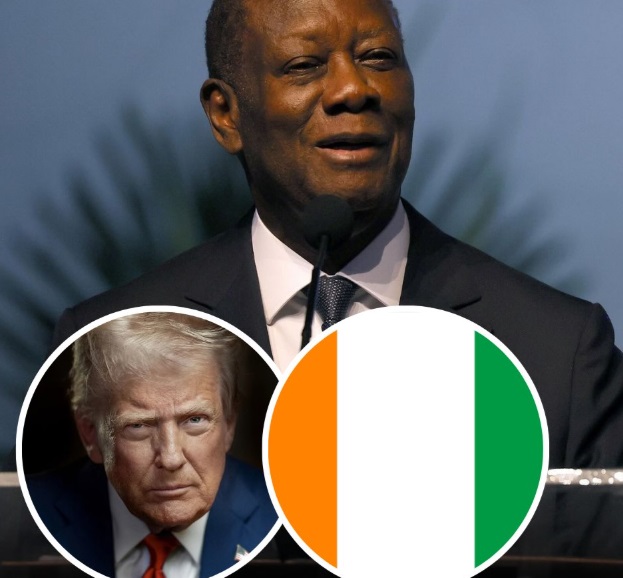
When US officials arrived in Abidjan with a controversial request, Ivorian leaders faced a defining question: should the country accept deportees who are not its own citizens? Their answer was a firm no, and that decision now carries weight far beyond West Africa.
A quiet diplomatic mission with major implications
In mid-June 2026, a senior US State Department official traveled to Abidjan as part of a wider tour across West and Central Africa. Christian Ehrhardt, who heads the State Department’s Office of Remigration, was tasked with persuading African governments to take in people expelled from the United States—even when those individuals hold no citizenship in the receiving countries.
According to internal State Department data, the US administration had by late June 2026 pledged or authorized at least $410 million to facilitate agreements with 31 countries, mostly in Africa and Latin America. Since 2025, more than 25,000 people are said to have been deported to at least 28 third countries.
But in Abidjan, the proposal did not find a willing partner. Ivory Coast refused the American request, and it does not appear among the countries that concluded an operational agreement of this kind in June 2026.
What exactly is a third-country deportation?
The practice is relatively new: a person can be removed from the United States to a nation where they are not a citizen and with which they may have no prior ties. The Trump administration frames this as a way to deport individuals whose home countries refuse or are unable to take them back.
Some governments have accepted foreign nationals in exchange for funding or other forms of aid. The US has reportedly made direct financial commitments to several of them.
Why the policy is legally and morally contested
Human rights organizations and lawyers representing deportees have challenged key aspects of the system, particularly the safeguards—or lack thereof—provided before someone is sent to a third country. In September 2026, a US federal appeals court ruled the policy illegal in a case centered on insufficient protections for affected individuals. The Trump administration was expected to appeal to the Supreme Court.
Ivory Coast’s refusal: a question of sovereignty and principle
By turning down the US request, Abidjan avoided entanglement in a legally precarious program. The decision also raises a broader question: can Washington persuade—or pressure—African nations to accept deportees who have no connection to them? For now, Ivory Coast has drawn a clear line, asserting its sovereignty and declining to become a destination for third-country expulsions.
What happens next?
The US continues to pursue agreements with other nations, but the Ivorian refusal signals that not all African governments are willing to sign on. As the legal battle over third-country deportations moves to the Supreme Court, the stakes for US migration policy—and for the countries asked to cooperate—remain high.
You may also like
Will Benin’s AEO exporters finally crack the Chinese market?
Northern Niger’s unanswered question: can Tiani’s government deliver water and power where it matters most?
Can Air Sénégal survive the Interpol smuggling probe? The stakes for crew, passengers and the airline’s future
As donor fatigue spreads, can Benin’s €544,042 UNAIDS pledge keep the HIV response on track?
Who pays the price when Burkina Faso’s public payroll contracts? Households weigh the cost of 1,917 fewer agents