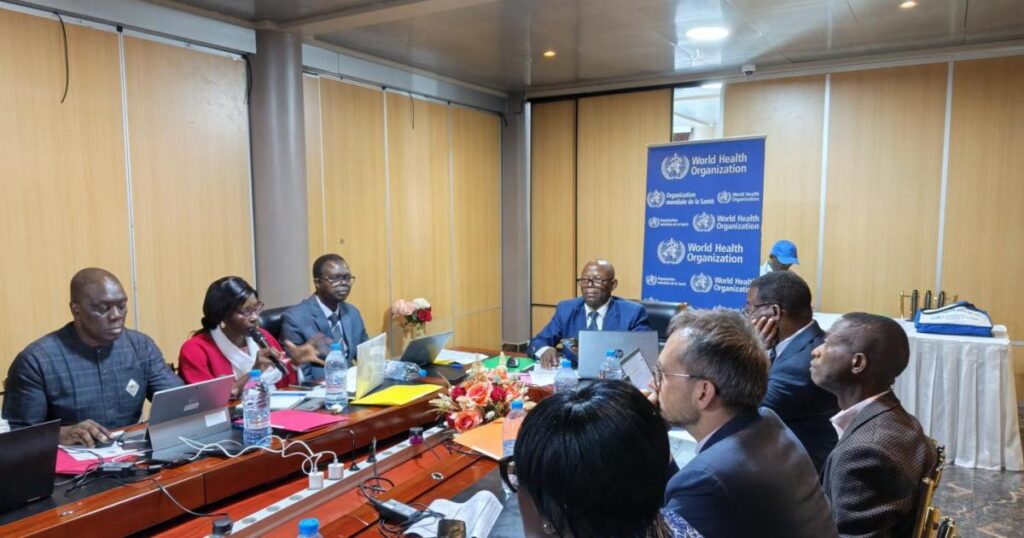
Mbankomo, July 24, 2026 – For three days, policymakers, health officials, economists, and civil society representatives gathered not to debate hospital construction or drug procurement, but to focus on a single tool: taxation. Behind the spreadsheets and fiscal simulations in Mbankomo, a compelling question emerged: how can tax policy on tobacco not only curb consumption but also fuel a healthier, more resilient health system in Cameroon?
Organized with support from global health authorities, the workshop brought together officials from the Ministry of Public Health, the Ministry of Finance, Customs, parliamentarians, civil society leaders, and technical partners. Together, they explored how strategic tobacco taxation could serve as a dual engine: reducing preventable disease while generating domestic revenue for health system strengthening.
Tobacco’s heavy toll on Cameroun’s health and economy
The burden of tobacco in Cameroon remains severe. Despite progress in global health, smoking prevalence stands at 9% among adults and exceeds 10% among youth aged 13 to 15. Worse, nearly 37% of the population is exposed to secondhand smoke. Each year, an estimated 66,000 deaths are linked to tobacco use, and the economic strain extends beyond hospitals — rising healthcare costs, lost productivity, and pressure on household budgets all weigh heavily on the nation.
Accessibility remains a key driver of consumption. In 2024, the most commonly sold pack of cigarettes cost just $4.07 (PPP-adjusted), well below the African average of $5.06 and the global average of $6.98. Shockingly, taxes accounted for only 36% of the retail price — far below the World Health Organization’s recommended 75% threshold for effective deterrence.
Taxation as a life-saving policy
At the heart of the discussions was a powerful truth: price matters. Higher tobacco taxes deter youth initiation more effectively than any public awareness campaign alone. When cigarettes become less affordable, fewer adolescents start smoking — and those who do often consume less. This isn’t just theory; it’s a behavioral shift with lifelong health benefits.
But the benefits of a well-designed tax system go even further. Increased revenue from excise duties can be reinvested directly into Cameroon’s health priorities: expanding universal health coverage, funding prevention programs for non-communicable diseases, expanding smoking cessation services, and upgrading health infrastructure. In essence, every franc raised from tobacco taxes becomes an investment in a healthier future.
Data-driven decisions: building reform on solid ground
Effective policy requires more than good intentions — it demands reliable data. During the workshop, participants analyzed Cameroon’s tobacco consumption patterns, economic costs, disease burden, current tax structures, market dynamics, and international best practices. The goal was clear: to base reforms on evidence, not assumptions.
Dr. William Maina, Senior Project Officer at the World Health Organization’s Africa office, emphasized the urgent need to act. Tobacco is not just a cause of lung cancer; it drives cardiovascular disease, stroke, chronic respiratory illness, and developmental harm to the brain in adolescents. Nicotine addiction undermines fertility and long-term cardiovascular health — consequences that ripple across families and communities.
Participants also addressed common misconceptions: fears that higher taxes would slash public revenue, trigger mass job losses, or fuel black-market trade. International evidence shows that with proper design and enforcement, such risks are minimal. In fact, well-structured tax hikes can stabilize or even increase total tax revenue while reducing harm. The message was clear: public policy must follow the science, not fears.
Modelling the future: what higher taxes could mean for Cameroon
A highlight of the workshop was the presentation of WHO TaXSiM, a simulation model that projects the health and fiscal impact of different tax scenarios. Using Cameroon-specific data, several reform pathways were tested.
The results were striking. Two successive tax increases were modeled:
- Raising the minimum specific tax from 5,000 FCFA to 10,000 FCFA per 1,000 cigarettes in 2027
- Further increasing it to 15,000 FCFA per 1,000 cigarettes in 2028, applied equally to imported and locally produced brands
Under these scenarios, cigarette sales would fall from 162.9 million packs in 2026 to 144.1 million in 2027, and to 131.9 million in 2028 — a cumulative drop of nearly 19%. The number of smokers would decrease by 66,000, from 810,000 to 744,000 by 2028.
Meanwhile, excise revenue would surge from 15.2 billion FCFA in 2027 to 28.8 billion, then to 38.3 billion in 2028. Total tax revenue from tobacco would rise from 32.6 billion to 57.3 billion FCFA, generating nearly 25 billion FCFA in additional public funds — resources that could transform health financing in Cameroon.
Far from being contradictory, the findings showed that health and economic gains go hand in hand. A stronger tobacco tax framework doesn’t just save lives — it strengthens the nation’s ability to fund its health system sustainably.
Beyond cigarettes: the rise of nicotine alternatives
Not all threats are traditional. The workshop sounded a new alarm: the rapid emergence of nicotine delivery devices disguised as everyday items — pens, smartwatches, lipsticks, toys, candies, and chewing gums. These products, often marketed with sophisticated strategies, are increasingly targeting adolescents.
A video demonstration showing a teenager using a vape hidden inside a smartwatch left a deep impression. The message from WHO was unequivocal: these products are not harmless. They create addiction, expose users to toxic substances, and risk normalizing nicotine use among youth.
Participants called for urgent regulatory and fiscal measures to prevent these products from gaining a foothold in Cameroon’s market before it’s too late. Prevention, they argued, must stay ahead of innovation.
From analysis to action: eight key reforms for Cameroon
At the close of the three-day meeting, participants adopted a comprehensive set of recommendations to guide Cameroon’s tobacco tax reform agenda:
- Progressive increase of the minimum specific tax to 15,000 FCFA per 1,000 cigarettes by 2028
- Uniform application of the tax rate to imported and locally produced cigarettes
- Strengthened coordination within CEMAC on harmonized excise policies
- Creation of a national technical working group on tobacco taxation
- Establishment of a permanent monitoring and evaluation system
- Improved availability and transparency of fiscal and trade data
- Fast-tracking the establishment of a National Tobacco Control Fund
- Development of a national traceability system for tobacco products
The group also underscored the need for coordinated public awareness campaigns, especially targeting youth, support for tobacco farmers to transition to alternative crops, full implementation of the Protocol to Eliminate Illicit Trade in Tobacco Products, and continued dialogue with parliament and government to secure political ownership of reforms.
Dr. Colette Taka Joro, Permanent Secretary of the National Committee for Drug Control, stressed that high-level engagement with government and stakeholders will be essential to accelerate adoption and ensure reforms are sustained.
A shared vision for Cameroon’s future
In closing, Dr. Hassan Ben Bachir, Director of Health Promotion at the Ministry of Public Health, framed the workshop’s legacy:
« Tobacco taxation is not merely a revenue tool — it is an investment in people’s health. By protecting youth from initiation and strengthening our health system’s financial base, we are investing in Cameroon’s future. The recommendations from this workshop provide a solid roadmap to turn scientific evidence into public policy for the benefit of all. »
The consensus was clear: tobacco tax reform is a rare policy that delivers multiple wins. It reduces smoking, prevents disease, protects youth, and funds health services — all while strengthening Cameroon’s economic resilience.
Behind every tax increase lie thousands of lives that can be saved. Behind every data-driven decision stands a nation investing in healthier generations. With the right policies, Cameroon is not just addressing a public health challenge — it is building a sustainable foundation for health, prosperity, and long-term well-being.
You may also like
Northern Niger’s unanswered question: can Tiani’s government deliver water and power where it matters most?
Can Air Sénégal survive the Interpol smuggling probe? The stakes for crew, passengers and the airline’s future
As donor fatigue spreads, can Benin’s €544,042 UNAIDS pledge keep the HIV response on track?
Who pays the price when Burkina Faso’s public payroll contracts? Households weigh the cost of 1,917 fewer agents
Libya pushes for direct Tripoli-Yaoundé flights as Cameroon sets up working groups