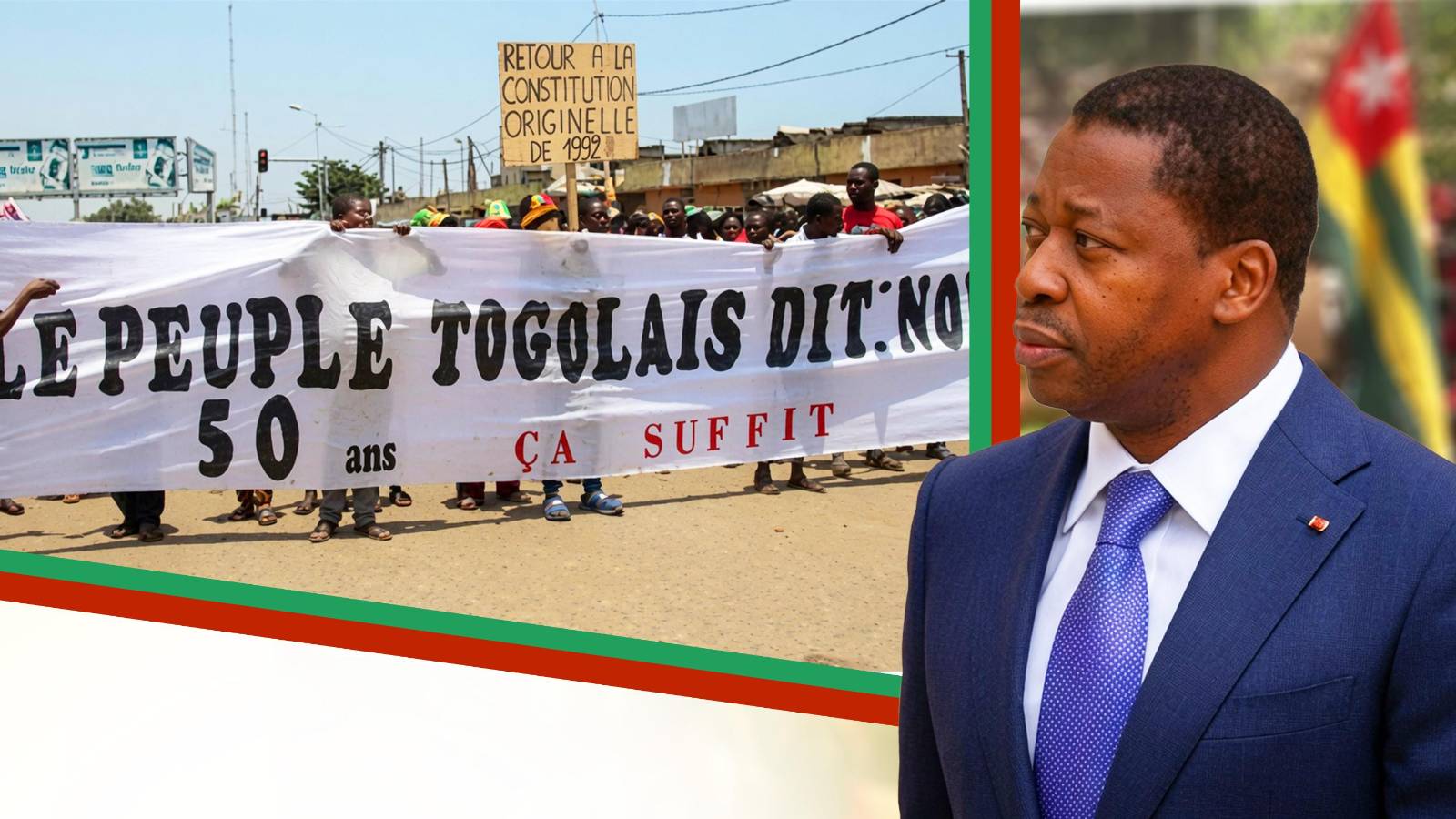
An unbearable choice for Togolese youth
For an increasing number of young Togolese, the decision has become agonizingly clear: pursue a dignified life abroad or remain in a country where their aspirations slowly wither away. This stark reality has intensified criticism of the country’s long-standing leadership, with many holding the governance model—now in its third decade—as the primary culprit behind this pervasive sense of hopelessness.
Where earlier generations once clung to the hope of building futures within Togo’s borders, today’s youth increasingly view emigration as the only viable path to success. This shift reflects not merely economic frustration but a profound rupture between the younger generation and the state’s institutions, as well as a waning belief in the government’s ability to foster an environment conducive to personal and professional growth.
A stark contrast between official narratives and ground realities
Despite government assertions of economic modernization and reform, the job market presents a grim picture. While official unemployment figures appear deceptively low, they obscure a far grimmer truth: over 70% of young workers are trapped in precarious, informal employment or underemployment.
Each year, universities in Lomé and Kara churn out tens of thousands of graduates. Yet, initiatives such as the National Employment Agency (ANPE) and the National Coalition for Youth Employment (CNEJ) have proven woefully inadequate in addressing the scale of the crisis. Without viable opportunities, a significant portion of this educated workforce resorts to informal survival strategies, rendering their academic achievements nearly obsolete.
From degrees to daily labor: the cost of wasted potential
In the absence of meaningful employment, even highly qualified graduates are forced into low-paying, unstable professions. Engineers drive motorcycle taxis, law graduates sell goods on street corners, and other professionals abandon their fields entirely to make ends meet. This erosion of human capital extends beyond individual hardship—it undermines the nation’s economic competitiveness, stifles innovation, and diminishes overall productivity.
The industrial landscape offers little reprieve. The creation of skilled jobs remains critically insufficient, leaving the economy dominated by low-value-added sectors incapable of providing career trajectories matching the qualifications of the workforce.
A system entrenched in favoritism and exclusion
The sense of injustice among young Togolese is palpable. Families invest heavily in education, believing merit alone will secure opportunities. Yet, in Togo, meritocracy has eroded. The path to entrepreneurship and financial support is fraught with obstacles. While initiatives like the Youth Economic Initiatives Support Fund (FAIEJ) exist, securing loans without substantial collateral or political connections is nearly impossible.
Public contracts and economic opportunities remain concentrated in the hands of a select few tied to the ruling party. For young people without influential networks—commonly referred to as lacking “le piston”—social mobility appears an insurmountable challenge. This perception of a system rigged in favor of connections over competence fuels widespread discouragement. When hard work and perseverance no longer guarantee success, the social contract frays, leaving youth disillusioned and disengaged.
The private sector, which could otherwise drive job creation, operates in an environment plagued by administrative hurdles, restricted access to financing, weak purchasing power, and economic uncertainty. These challenges deter investment and, consequently, recruitment, further constraining the labor market.
Emigration as the only path forward
With the prospect of success at home increasingly remote, emigration is no longer seen as an option but a necessity. This exodus manifests in two alarming trends:
- Diplomatic queues: Daily, long lines form outside the French Embassy, Campus France offices, and immigration agencies in Canada and the Gulf states, as young Togolese vie for a chance to relocate.
- Brain drain: Hospitals and technical sectors are depleted of their most skilled professionals. Doctors, nurses, engineers, and IT specialists leave en masse, depriving the nation of the expertise essential for development.
Researchers, entrepreneurs, educators, and digital specialists follow suit, taking their talents and ambitions abroad. This hemorrhage of skills diminishes the country’s capacity to innovate, attract investors, and modernize its economy. The paradox is stark: Togo invests in educating its youth, only for the fruits of that investment to bolster foreign economies, leaving the nation bereft of the very talent it nurtured.
Political entrenchment: the death of hope for change
The economic despair is compounded by a deepening political crisis. For many young Togolese, the current challenges are inextricably linked to a political system resistant to reform. The controversial adoption of the Fifth Republic Constitution in 2024, which transformed the country into a parliamentary regime, has shattered the last vestiges of hope for democratic alternation.
This amendment is widely perceived as a legal maneuver to indefinitely prolong the tenure of the sitting leader under a new title—President of the Council of Ministers. By eliminating prospects for democratic renewal and generational change at the helm of the state, the regime has pushed youth to abandon any faith in public life and seek opportunities solely beyond Togo’s borders.
For some, the issue transcends economics. They argue that without institutional renewal, a strengthened rule of law, independent judiciary, and genuine political competition, economic reforms will remain ineffective. This conviction reinforces the belief that the future lies abroad, not within Togo’s borders.
This disillusionment has also eroded civic engagement. Many young people withdraw from political parties, associations, and public initiatives, convinced their participation will not influence national priorities. This withdrawal weakens democratic vitality and deprives the nation of the dynamism and creativity of an entire generation.
Can a nation prosper without its youth?
Critics attribute the current predicament directly to the leadership that has governed since 2005, following decades of prior rule. Two decades of governance have failed to create an inclusive economic model capable of meeting the aspirations of a burgeoning youth population. Instead, wealth continues to flow disproportionately to a privileged minority, while the majority grapples with precarity or contemplates exile.
Historical precedents show that no nation can thrive when its most dynamic, educated, and ambitious citizens view departure as their only recourse. Countries that succeed are those that retain their talent, foster innovation, ensure equal opportunities, and cultivate trust between citizens and institutions.
A pressing question looms over Togo’s future: How can a nation develop when its brightest and most driven youth harbor no dreams beyond leaving? Until tangible solutions emerge to address unemployment, governance, transparency, business climate improvements, and the democratic aspirations of its people, Togo will continue to lose its most valuable asset—its youth—leaving behind a nation at risk of stagnation and decline.