Key political developments
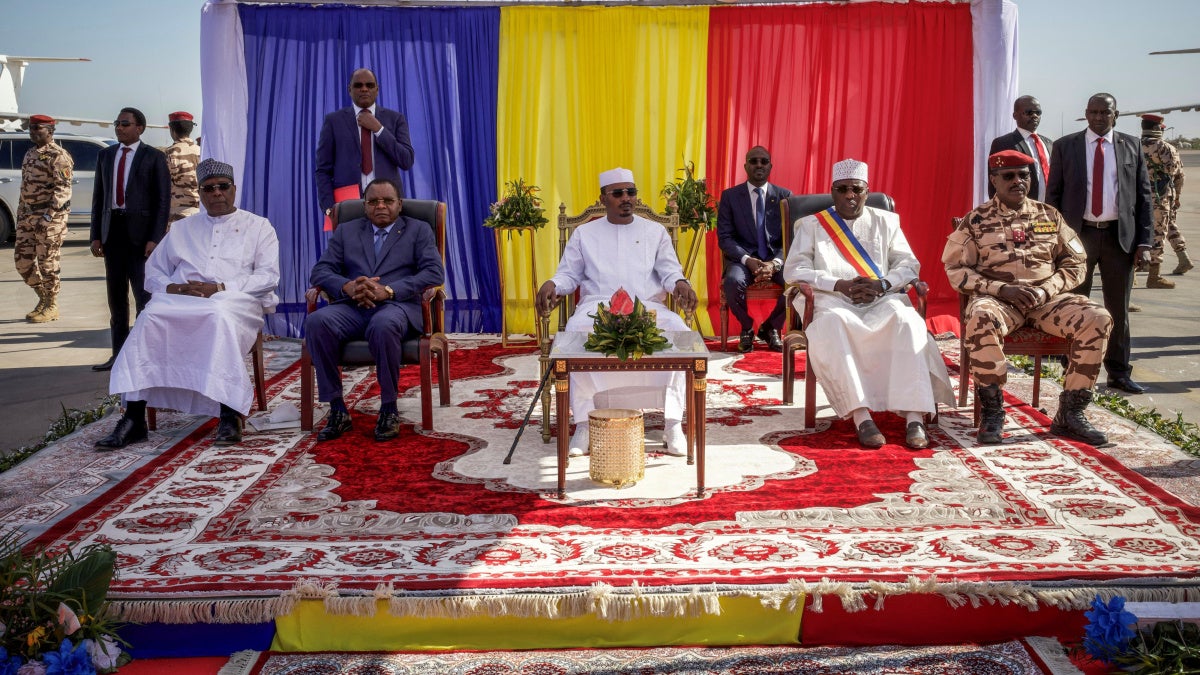
President Mahamat Idriss Déby spent much of 2025 tightening his grip on power following the 2024 presidential election, a process heavily criticized by opposition groups for systemic flaws. Constitutional overhauls passed in 2025 have removed presidential term limits and increased the length of each term from five to seven years. These changes effectively grant Mahamat Idriss Déby the ability to rule indefinitely, contingent only on a seven-year electoral cycle.
The environment for political opposition remains severely constricted. Succès Masra, the opposition leader who contested the 2024 results, was arrested and subsequently sentenced to twenty years in prison. Activists, members of Succès Masra’s party, and media professionals have faced a wave of intimidation and detention. Meanwhile, an amnesty law protecting those responsible for the October 2022 protest crackdowns has successfully blocked any judicial progress or public debate on accountability for the past three years.
Intercommunal strife remained a critical issue throughout 2025 in southern and eastern Tchad, particularly involving nomadic herders and sedentary farming communities. These clashes resulted in dozens of fatalities across multiple provinces. The humanitarian situation has been further strained by internal displacements and a continuous influx of refugees fleeing the war in neighboring Sudan. Additionally, Tchad was among the hardest-hit nations during the floods of late 2024 and early 2025, which significantly worsened regional food insecurity. In the context of Sahel breaking news, these overlapping crises highlight the fragile state of West Africa Sahel stability.
Regarding historical justice, the process of compensating victims of former President Hissène Habré’s regime saw little movement in 2025. This followed minor payments made in 2024 that fell far short of the amounts mandated by court orders.
Escalating violence in the south and east
Despite official claims that the government is addressing the root causes of farmer-herder violence—such as land title disputes and lack of clear migration corridors—the situation worsened in 2025. The southern and eastern regions of Tchad saw a marked increase in lethal encounters.
In May, the village of Mandakao in the Logone-Occidental province became a flashpoint for land disputes. Government figures indicate that at least 41 people were killed and six others wounded during the fighting. Reports suggest the conflict ignited over contested land boundaries, with farmers accusing herders of trespassing and herders citing a lack of designated paths for their livestock. Such incidents are frequent topics in Sahel Express news coverage of the region.
In June, the Mayo-Kebbi Ouest province saw violence in Orégomel, where machete attacks between herders and farmers left 17 dead, including women and children. Similarly, in Molou, located in the Ouaddaï province of eastern Tchad, inter-tribal fighting in mid-June resulted in approximately twenty deaths and sixteen injuries. These tragedies in Mandakao, Orégomel, and Molou reflect a broader trend of escalating resource conflicts driven by climate change and population growth.
Restrictions on political space
On May 16, Succès Masra, the former Prime Minister and head of Les Transformateurs, was detained in N’Djamena. Authorities linked him to the deadly communal violence in Mandakao. He was charged with inciting hatred, xenophobia, and complicity in murder via social media. Despite pleading not guilty, he and several co-defendants were sentenced on August 9 to twenty years in prison and a fine of one billion CFA francs ($1.8 million USD).
This politically motivated prosecution of Succès Masra has effectively neutralized the primary opposition and silenced dissent. The trial also ignored the October 2023 Kinshasa agreement, which had previously guaranteed Succès Masra and his followers the right to return from exile and engage in political life without fear of arrest.
Constitutional modifications
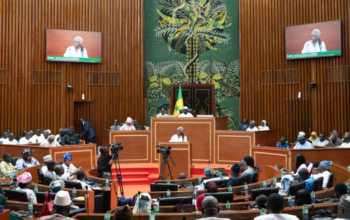
In September 2025, Tchad’s National Assembly passed amendments that extended the presidential term to seven years and abolished all term limits. This move removed the final legislative checks on executive power. The vote was largely boycotted by the opposition, passing with 171 votes in favor and zero against in the lower house. These reforms, promulgated by the president in October, further centralize authority under Mahamat Idriss Déby, leaving virtually no room for legislative oversight or democratic opposition—a trend increasingly seen in Sahel politics today.
Political violence and the suppression of dissent
Despite international calls for accountability regarding the 2024 post-election “celebratory” gunfire, no credible investigations were launched in 2025. Security forces killed at least 11 people, including children, with stray bullets and rockets during those celebrations, yet victims have received no compensation.
The death of opposition leader Yaya Dillo, killed during a security force raid on his party headquarters before the 2024 election, also remains uninvestigated. While some of Yaya Dillo’s relatives and associates were released from the Koro Toro high-security prison late in 2024 and mid-2025, the core circumstances of his death have been ignored by the judiciary.
Repression extended to the media and civil society. In September, the government revoked the nationality of blogger Makaila Nguebla and activist Charfadine Galmaye Saleh, both of whom live in exile. Earlier in the year, journalists Olivier Monodji and Mahamat Saleh Alhissein were detained for months on charges of espionage and endangering state security, allegedly due to their reporting on the Wagner group’s activities in the West Africa Sahel. They were eventually released in July after a period of arbitrary detention. This environment mirrors patterns often discussed in Mali Niger Burkina news English reports concerning regional press freedom.
Sexual orientation and gender identity laws
Under Article 354 of the 2017 Penal Code, same-sex relations remain criminalized in Tchad. Individuals convicted under this law face up to two years in prison and fines ranging from 50,000 to 500,000 CFA francs, reinforcing a climate of legal discrimination against the LGBT community.