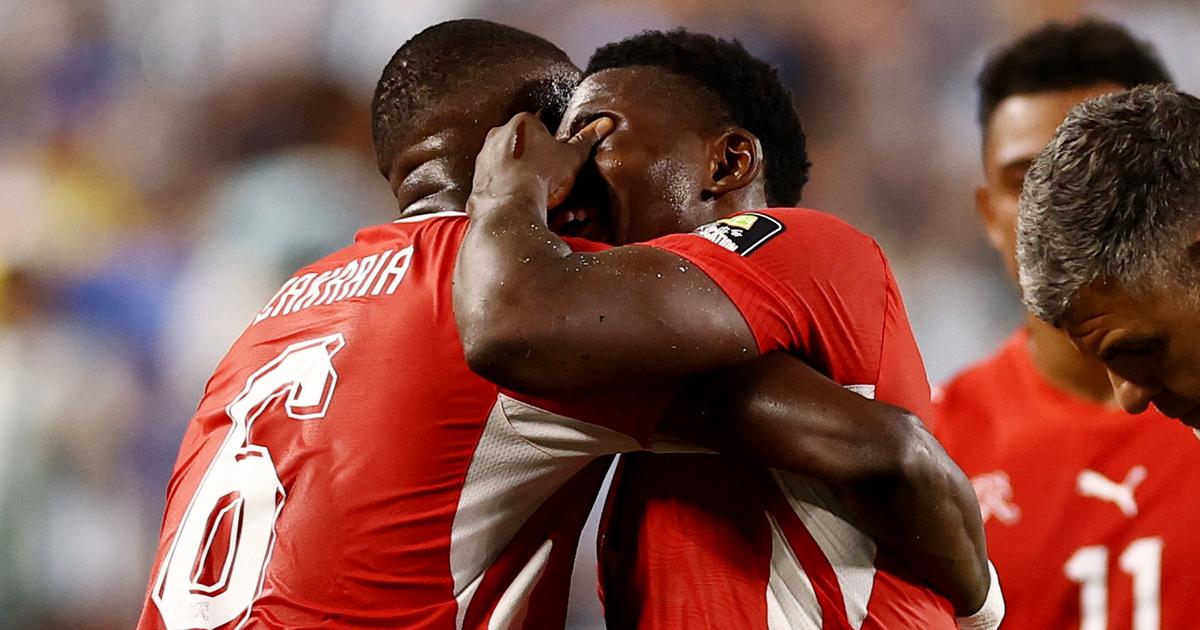
The disappointment in Kansas City will undoubtedly overshadow that felt in São Paulo. Echoing their Round of 16 defeat twelve years prior, Switzerland once again succumbed to Argentina after an extraordinary fight on the global stage.
Late goals from Julian Alvarez (112th minute) and Lautaro Martinez (120th+1 minute) ultimately crushed a Swiss team that seemed poised for an upset, had it not been for the improbable expulsion of Embolo, which occurred immediately after Dan Ndoye’s equalizer in the 67th minute. At that moment, it genuinely felt as though Switzerland was on the verge of overturning Argentina. Yet, the Albiceleste, ever the beneficiaries of fortune, continue their quest for a second consecutive World Cup title.
Long before this cruel conclusion, Switzerland had initiated the match with promising intent. However, after just ten minutes, it was Argentina who seized the lead. The architect? None other than Lionel Messi, whose perfectly delivered corner found the head of Alexis Mac Allister. Djibril Sow, starting under Murat Yakin, was mere centimeters away from preventing the Argentine midfielder from beating Gregor Kobel (10th minute).
Switzerland asserted dominance
Still without Johan Manzambi, Yakin’s side initially appeared as toothless as they had been in their Round of 16 clash against Colombia. By halftime, they registered only a single shot on target despite enjoying clear possession: a strike from Sow just outside the box, comfortably gathered by Emiliano Martinez (20th minute). The only genuine scare for the Albiceleste in the first half was a push by Lisandro Martinez on Embolo’s back that went unpunished by a penalty decision (31st minute).
The dynamic shifted dramatically after the interval, with Switzerland emerging more enterprising, overtly dominant, and finally creating dangerous opportunities. Capitalizing on the spaces left by the Argentinians, they began testing Martinez’s reflexes. This included two headers from Embolo, both well-saved by the Argentine goalkeeper (60th/65th minutes), followed by a low, long-range shot from Xhaka (66th minute).
Ultimately, the breakthrough arrived courtesy of Dan Ndoye. Supplied by Xhaka on the left flank, the Vaudois player executed a flawless one-two with Ricardo Rodriguez, then precisely struck the ball past Martinez with his right foot (67th minute). Switzerland had equalized, and it was a thoroughly deserved reward for their efforts.
Embolo’s tearful departure
Just as momentum swung in their favor, a twist of fate dealt a crushing blow. The play initially appeared innocuous: at midfield, Embolo fell after a challenge from Leandro Paredes, who received a yellow card. However, the Bâlois striker’s simulation, initiating his dive before contact, did not escape the scrutiny of VAR. The video assistant referee, now empowered to alert the main official for wrongly issued yellow cards, prompted Mr. Pinheiro to reverse his decision and penalize Embolo for simulation. Crucially, the number 7 had already been cautioned earlier in the first half, resulting in a devastating red card.
Visibly distraught, Embolo left the pitch in tears, consoled by his teammates. The red card was particularly cruel as Amdouni was in the process of removing his bib, presumably to substitute Embolo. But the change never materialized, forcing Switzerland to play the remainder of the match with ten men.
Despite the numerical disadvantage, they heroically managed to hold out for thirty minutes, regrouping into a 5-3-1 formation to force extra time. Argentina, meanwhile, squandered two significant chances: a right-footed shot from Messi that grazed Kobel’s post (90th+2 minute) and another effort from Lisandro Martinez, competently saved by the Swiss custodian (90th+9 minute).
Alvarez ignites the stadium
The heroic Swiss side held on for another twenty-five minutes in extra time before finally succumbing. It took a magnificent strike from Julian Alvarez to finally beat Kobel, who had brilliantly delayed the inevitable until that point. Alvarez rocketed the ball into the Swiss top corner, sending tens of thousands of Argentine supporters into raptures and shattering the dreams of an entire nation. Martinez then sealed the victory with a third goal on a final counter-attack.
Nevertheless, the overall assessment remains positive for this Swiss team, which achieved its stated objective: to deliver its best-ever World Cup performance. Reaching the quarter-finals and winning two knockout matches was indeed an unprecedented accomplishment. The next, equally challenging, step will be to consolidate their position within the world’s top-eight footballing nations.