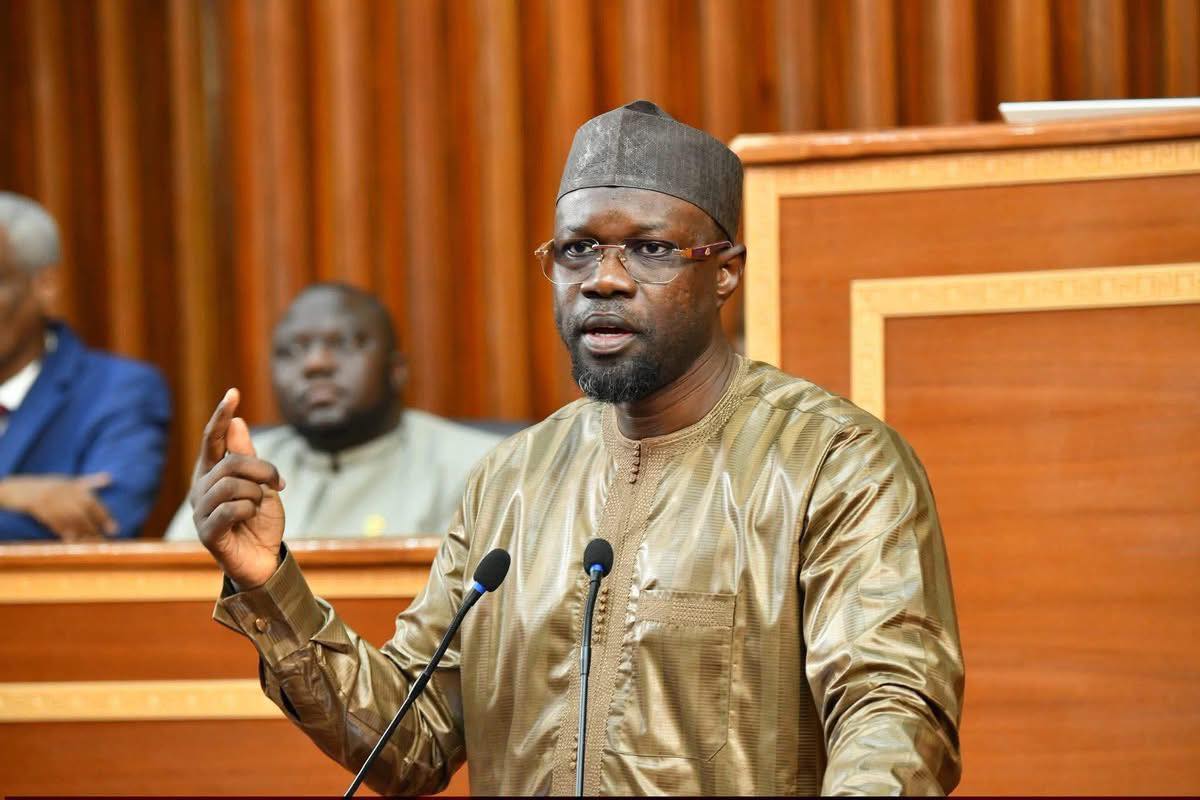
The recent reshuffling of Senegal’s political institutions has propelled Ousmane Sonko into a position of unprecedented influence, raising critical questions about the future of governance in the country. Following his abrupt removal from prior roles, Sonko’s swift ascent to the presidency of the National Assembly has sent shockwaves through the political establishment, prompting analysts to scrutinize the motives behind this strategic maneuver.
The sequence of events unfolded with remarkable precision, beginning with the sudden resignation of the sitting Assembly President immediately after Sonko’s dismissal. Within days, Sonko assumed the role, effectively securing control over the legislative apparatus. Observers note that this rapid transition was far from coincidental, suggesting a carefully calculated power play designed to reshape the balance of authority in Senegal.
The legislative branch as a tool for political dominance
With his newfound position, Ousmane Sonko now wields significant leverage over the legislative process, including the power to shape laws, influence budgets, and set the Assembly’s agenda. Critics argue that this consolidation of power at the legislative level represents a deliberate strategy to undermine the executive branch, potentially leading to institutional gridlock. The potential for a contentious cohabitation between the presidency and the Assembly looms large, as Sonko’s opponents warn of an impending paralysis in governance.
« This is no longer standard political maneuvering; it is an orchestrated effort to suffocate institutional functionality, » remarked a political analyst who requested anonymity. « The battle for control over Senegal’s institutions has entered a decisive phase. »
From opposition firebrand to institutional power broker
Sonko’s critics accuse him of abandoning his earlier rhetoric of reform in favor of a calculated pursuit of power. Once hailed as a champion of anti-establishment ideals, his rapid rise to a key institutional role has led some to question the sincerity of his political convictions. Detractors portray him as a pragmatic operator who has seamlessly transitioned from challenging the system to becoming a central figure within it.
This transformation has sparked intense debate about his true motivations. While supporters may view his ascent as a legitimate political victory, opponents perceive it as evidence of opportunism, arguing that his actions are driven more by personal ambition than by a commitment to national progress. As Sonko now occupies a position once reserved for those he formerly opposed, the political landscape of Senegal stands at a crossroads.
The road ahead: governance or confrontation?
The implications of Sonko’s new role extend far beyond his personal political fortunes. The reconfiguration of power dynamics raises pressing questions about the direction of Senegal’s democracy. Will this shift foster greater accountability and reform, or will it deepen divisions within the political class? The coming months may reveal whether Sonko’s leadership will prioritize national interests or serve as a catalyst for further institutional strife.
One certainty remains: Senegal’s political arena is undergoing a profound transformation, and the struggle to define its future has only just begun.