While Prime Minister Ousmane Sonko was hosting a high-profile forum in Dakar focused on exploring alternatives to traditional IMF-backed solutions—featuring academics and self-styled ‘unconventional economists’—the office of President Bassirou Diomaye Faye issued a firm statement from Nairobi on May 12. It clarified a critical point: the head of state is leading negotiations with the International Monetary Fund (IMF) directly to resolve a debt crisis stemming from undisclosed liabilities uncovered in 2024 by the previous administration.
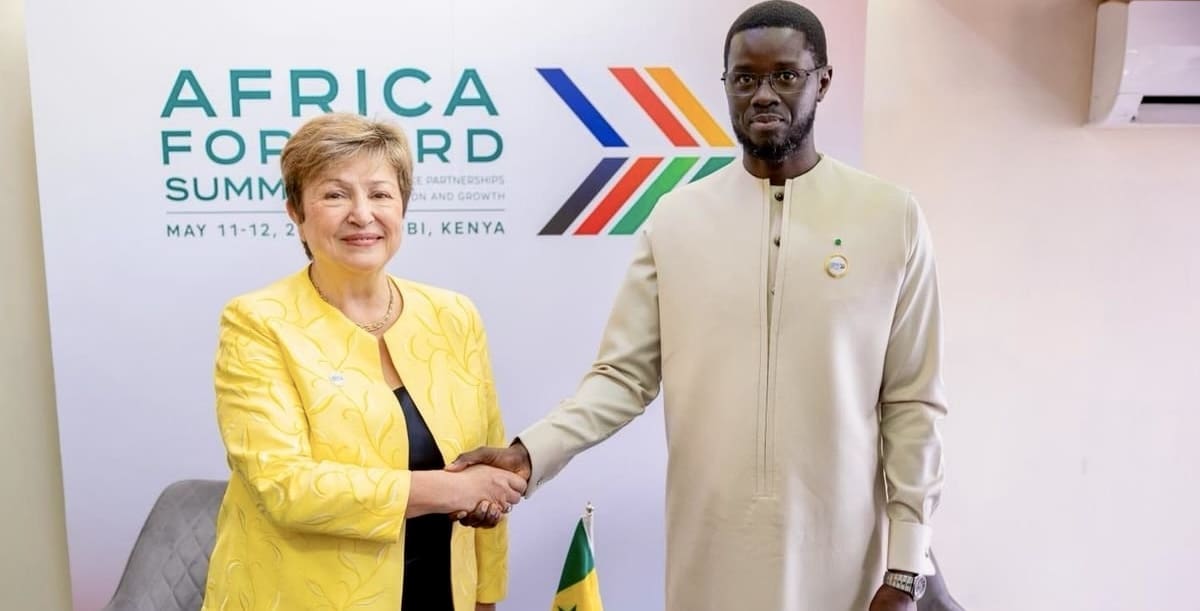
To underscore his hands-on approach, President Faye met with IMF Managing Director Kristalina Georgieva on the sidelines of the Africa Forward Summit in Nairobi. Their discussions centered on potential solutions to Senegal’s mounting debt burden. After the meeting, the presidential office confirmed the two leaders had agreed to continue talks in the coming weeks. The statement emphasized the president’s deep personal commitment to resolving this issue, noting he is devoting significant resources and attention to it.
Beyond debt restructuring, the leaders also addressed broader economic pressures, particularly the ripple effects of geopolitical tensions in the Middle East. These include soaring energy costs, which are increasingly straining Senegal’s national economy, according to the presidential cabinet’s account of the meeting.
Earlier this year, Prime Minister Sonko had publicly pushed back against IMF demands for debt restructuring, calling the proposal ‘shameful’ and signaling the government’s resistance to such terms.
The IMF had frozen a $1.8 billion funding program in 2024 following discrepancies in debt reporting by its own evaluators. Now, Senegal is seeking a new loan arrangement from the Fund to address a debt load that has ballooned to over 130% of its gross domestic product (GDP).
The IMF has also revised downward its economic growth forecasts for Senegal this year, warning of a wider-than-anticipated current account deficit.