
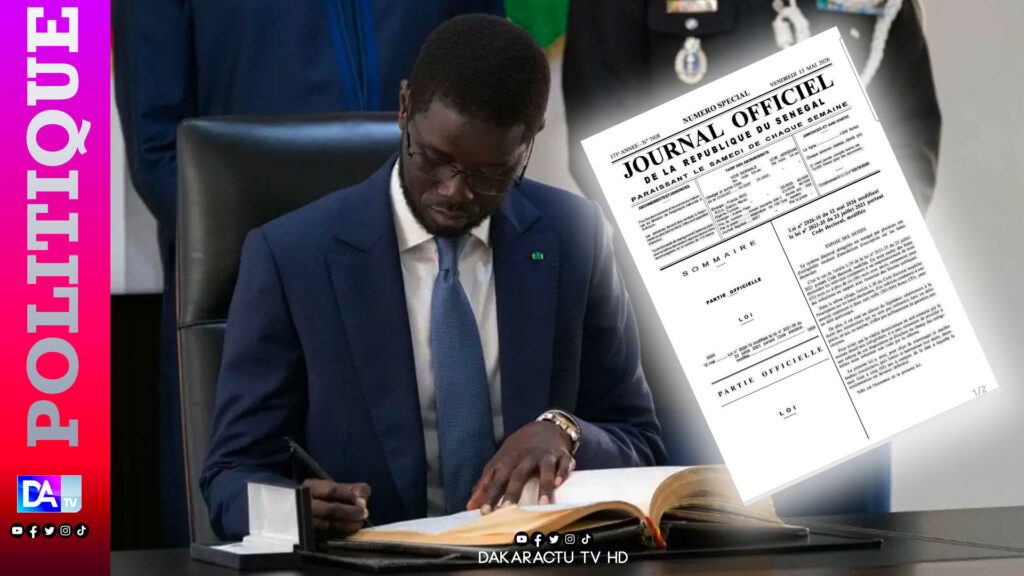
President Bassirou Diomaye Diakhar Faye has enacted a sweeping electoral code reform, signed into law on May 12, 2026, that reshapes the criteria for voter ineligibility in Senegal. The legislation, passed by the National Assembly five days prior with a three-fifths majority, was officially published in a special edition of the Official Gazette on May 15, 2026. Co-signed by Prime Minister Ousmane Sonko, the reform addresses long-standing concerns about vague and potentially restrictive eligibility standards that had fueled uncertainty in the electoral process.
Key changes under the new electoral code
The overhaul redefines the conditions under which individuals may be barred from voter registration. Under the revised Article L.29, four categories of persons are now ineligible: those convicted of felonies, individuals found guilty of serious financial crimes—including theft, fraud, embezzlement, corruption, money laundering, and influence peddling—those subject to judicial voting bans, and legally incapacitated adults.
A major improvement is the introduction of a fixed five-year disqualification period, commencing from the date a conviction becomes final. This replaces the previous ambiguous system, which lacked clear timeframes and left room for arbitrary enforcement. Additionally, Article L.30, which previously excluded anyone fined over 200,000 CFA francs for any offense, has been fully repealed, eliminating what critics argued was an overly broad and punitive measure.
Why the reform matters for Senegal’s democracy
Lawmakers justified the changes by highlighting the flaws in the old framework. Prior rules allowed automatic exclusion based on as little as three months of imprisonment—including suspended sentences—or minor fines, without precise duration limits. Such vagueness, they argued, undermined public trust and exposed the electoral system to potential abuses that could weaken democratic resilience. The new law seeks to restrict ineligibility to serious offenses while providing clear, predictable timelines, thereby restoring balance and transparency.
Political ripple effects ahead of elections
The reform’s passage, secured with a supermajority threshold, signals strong cross-party support amid heightened political sensitivities ahead of upcoming polls. Observers anticipate that the revised rules could restore voting rights to several high-profile figures previously barred due to past convictions, potentially reshaping the electoral landscape and reopening civic participation for opposition leaders and others on the margins.
You may also like
Niger: General Tiani faces growing unease within special forces after Russian involvement
Crise au Niger, accord FMI-Sénégal, bataille électorale au Maroc… Les 5 infos qu’il ne fallait pas manquer
Le Maroc, « partenaire stratégique important » de l’UE sur la migration
Cameroun : Joseph Dion Ngute, l’art de durer au milieu de la guerre des clans
Gabon’s RPM party praises Oligui Nguema’s leadership and demands action on promises