West African leaders unite in Abidjan to advance gender-responsive climate strategies
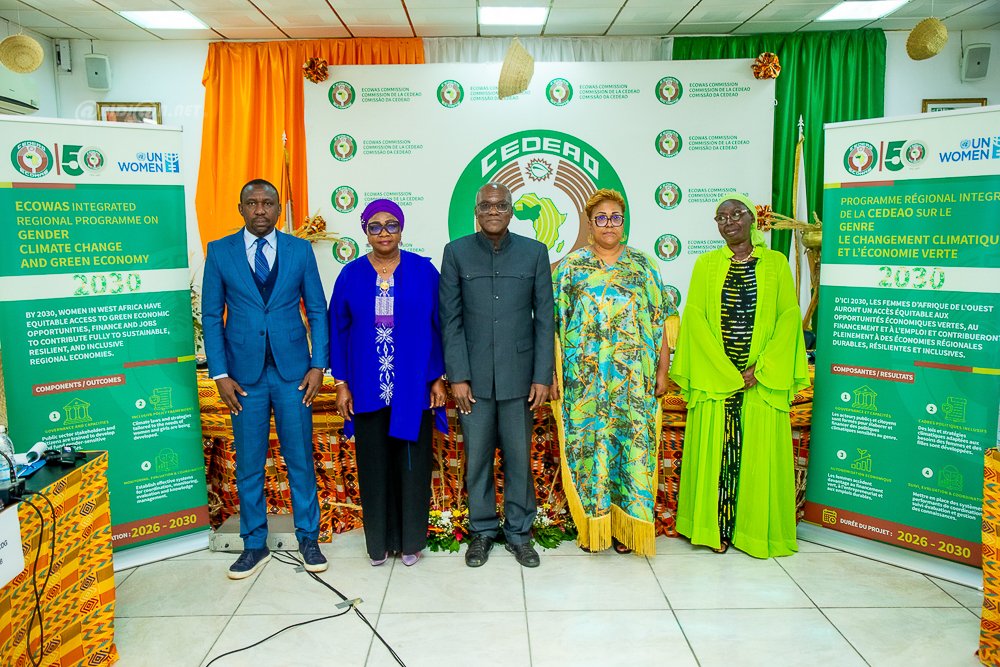
A landmark regional workshop convened in Abidjan this week, bringing together policymakers, climate experts, and development partners to address the intersection of gender equality and environmental sustainability in West Africa. Organized by the ECOWAS Centre for Gender Development (ECGD) with support from UN Women, the two-day gathering focused on crafting strategies to empower women in the region’s green transition.
The event, themed “Gender-responsive climate action and green transitions in West Africa”, aims to lay the groundwork for a comprehensive regional initiative. This program seeks to amplify women’s voices in environmental policy-making while expanding their access to green financing, sustainable livelihoods, and climate-smart economic opportunities. With a target implementation horizon of 2030, the initiative aligns with broader regional commitments to inclusive growth and climate resilience.
Women at the forefront of climate vulnerability
Opening the discussions, Sandra Oulaté, Director of the ECGD, highlighted the disproportionate impact of climate change on women across West Africa. Rural and agricultural communities—where women play a pivotal role—are particularly vulnerable to erratic weather patterns, land degradation, and resource scarcity. She emphasized the need for policies that recognize these disparities and integrate gender perspectives into climate adaptation efforts.
Strategic priorities for a gender-inclusive green economy
The workshop’s agenda included critical discussions on funding mechanisms for women-led climate initiatives. Participants explored ways to remove barriers that prevent women from accessing green loans, grants, and technical support. A key deliverable will be a regional roadmap outlining concrete steps to strengthen women’s participation in decision-making processes related to climate policy and environmental governance.
Representing Côte d’Ivoire’s delegation, Louis-Philippe Boni, MinisterDelegate for African Integration, commended the country’s strides in gender and environmental policies. He pointed to reforestation programs, renewable energy transitions, and efforts to increase female representation in leadership as examples of progress. Yet, he stressed the importance of cross-border collaboration within the ECOWAS bloc to scale up these initiatives.
Echoing these views, Dr. Namizata Binaté, representing Côte d’Ivoire’s Ministry of Women, Family, and Children, underscored the urgent need to address climate-induced challenges faced by rural women. Prolonged droughts, flash floods, and soil depletion threaten food security and livelihoods, disproportionately affecting women who are often responsible for household food production. She advocated for stronger representation of women in climate policy forums to ensure solutions reflect their realities.
Dr. Kalilou Sylla, ECOWAS Commissioner for Economic Affairs and Agriculture, reinforced the argument by noting that women constitute the backbone of West Africa’s agricultural sector. Despite their central role, systemic inequalities—such as limited access to land, credit, and technology—hinder their ability to contribute fully to climate-resilient economies. He framed gender equality as a strategic imperative for building adaptive and sustainable economies in the face of climate change.
By the close of the workshop, delegates are expected to finalize the program’s operational framework, including funding allocations, governance structures, and a phased implementation plan for the coming years. The initiative represents a significant step toward realizing a more equitable and sustainable future for West Africa.