
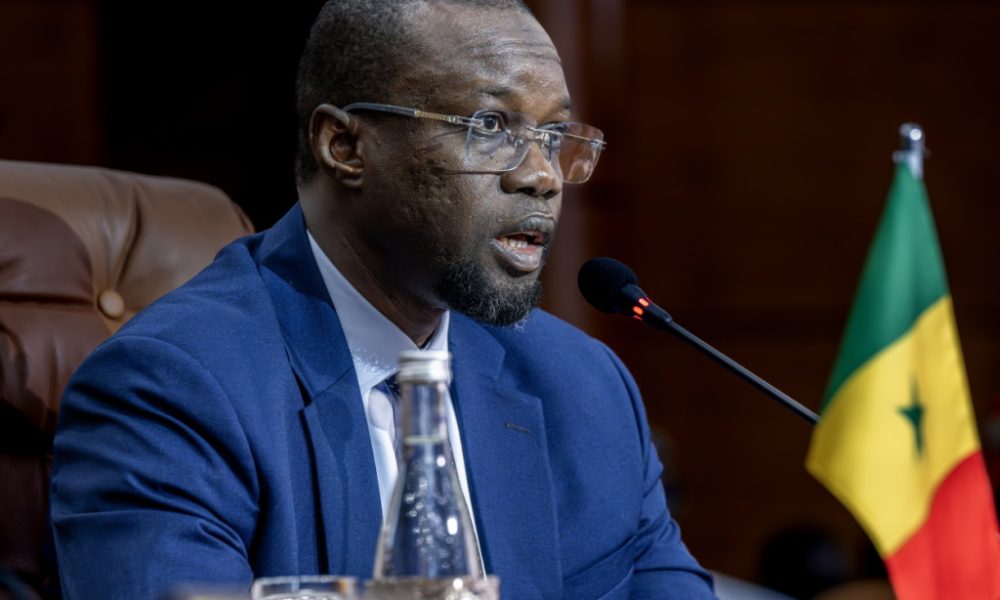
In a dramatic political shift, President Bassirou Diomaye Faye announced on Friday evening the dismissal of his Prime Minister and longtime political ally, Ousmane Sonko. This move terminates a partnership that had defined the country’s leadership since their victory in April 2024, a period initially marked by significant public optimism.
The official announcement was delivered on national television by Oumar Samba Ba, the Secretary General of the Presidency. According to the decree, President Faye has ended the tenure of Ousmane Sonko as Prime Minister, which consequently results in the dissolution of the entire cabinet, including all ministers and secretaries of state.

While a new head of government has not yet been named, the outgoing ministers have been instructed to continue managing current administrative affairs until a new team is appointed. The decision follows months of escalating friction between the President and his former mentor, whose political weight was crucial in securing Faye’s presidency.
The end of a political duo
The rift marks a stark contrast to the 2024 campaign, where the two men presented a united front under the slogan “Diomaye Moy Sonko” (Diomaye is Sonko). Ousmane Sonko, a fierce critic of former President Macky Sall, had been disqualified from running himself due to a legal conviction, leading him to designate Bassirou Diomaye Faye as his replacement.
However, the dynamics of Sahel politics today often see such alliances tested by the realities of power. In recent weeks, President Faye had expressed concerns over the “excessive personalization” of Sonko’s role. He had previously stated that the Prime Minister’s position was contingent upon his continued confidence, a sentiment that has now culminated in this dismissal.
Public reactions and economic context
Following the announcement, Ousmane Sonko reacted on social media, expressing a sense of peace and stating he would return to his home in the Keur Gorgui district of Dakar. Spontaneous gatherings of his supporters were observed near his residence shortly after the news broke.
Before his removal, Sonko had made headlines on Friday by criticizing Western influence in a speech to Parliament, particularly regarding social values. This ideological divergence appeared alongside a worsening economic situation. Sénégal is currently facing a debt crisis, with obligations reaching 132% of its GDP. This financial instability had already led to the suspension of a $1.8 billion IMF aid package after the new government alleged that the previous administration had misrepresented the country’s fiscal health.
With legislative dominance still held by Sonko’s party following the November 2024 elections, the political future of West Africa Sahel remains complex as the nation looks toward upcoming local and presidential elections.
You may also like
Cameroun : les signes avant-coureurs d’une transition politique
Gabon’s economic management hindered by unreliable public data
Niger: General Tiani faces growing unease within special forces after Russian involvement
Mali : 17 morts dans les rangs des dozos, le JNIM accentue sa pression
Sahel : le pari des juntes tourne-t-il à l’échec sécuritaire ?