
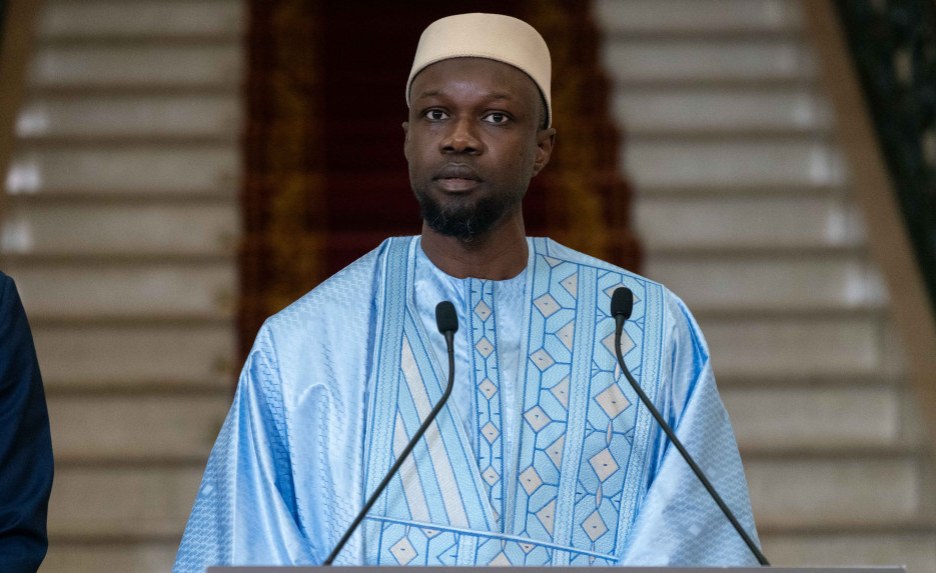
A political tremor of historic proportions is currently vibrating through Senegal. This Friday, May 22, 2026, President Bassirou Diomaye Faye officially terminated the mandate of his Prime Minister and political mentor, Ousmane Sonko. This decisive action has led to the immediate dissolution of the government, signaling a sharp end to the executive partnership that has governed the nation since the transition of power in April 2024.
Decree No. 2026-1128: The official act of separation
The shockwaves intensified late Friday evening with the release of a significant official document. President Faye signed presidential decree number 2026-1128, which effectively removes Ousmane Sonko from his position at the head of the government. To formalize this separation, the Head of State relied strictly on the powers granted by the Senegalese Constitution, specifically citing Articles 42, 43, 53, and 56.
This legal framework establishes the President of the Republic as the protector of the Constitution and the guarantor of institutional stability, granting him the sole authority to appoint or dismiss the Prime Minister. The first article of the decree leaves no room for doubt, stating that the functions of Mr. Ousmane Sonko as Prime Minister of the Republic of Sénégal have been terminated.
Under Article 2, the decree takes effect immediately. Due to the constitutional chain reaction, the Prime Minister’s departure necessitates the resignation of all ministers and secretaries of state. However, the decree clarifies that the outgoing cabinet members are tasked with managing current administrative affairs until a new ministerial team is appointed.
The origin of a unique political duo
To grasp the significance of this move, one must look back at the once-inseparable bond between these two figures. Ousmane Sonko, the charismatic head of the PASTEF party, was the primary opponent of the previous administration. After facing legal challenges and being disqualified from the presidential race by the Constitutional Council in early 2024, Sonko made a strategic move.
While both were incarcerated during a wave of political arrests, Ousmane Sonko selected his faithful lieutenant and secretary general, Bassirou Diomaye Faye, to run as the candidate for their reformist project.
Driven by the famous slogan “Diomaye is Sonko,” the substitute candidate became the face of the popular movement led by the party chief. Following their release under an amnesty law just days before the vote, the pair conducted a rapid campaign that resulted in a landslide victory for Bassirou Diomaye Faye in the first round on March 24, 2024.
Upon taking office on April 2, 2024, the young president appointed Ousmane Sonko as Prime Minister through Decree No. 2024-921. This created an unprecedented governance structure in African politics, where a political mentor served under his own protégé.
From harmony to institutional friction
While the duo maintained an image of unity through public statements, the realities of governing soon exposed the challenges of this dual-headed system. Over the months, two distinct and conflicting visions began to emerge.
On one side, Ousmane Sonko maintained his role as a sovereignist ideologue and orator, frequently taking bold public stances on international relations, the renegotiation of oil and mining contracts, and distancing the nation from traditional partners. Conversely, President Faye was increasingly occupied with the practicalities of macroeconomic management, regional diplomacy, and the critical need to maintain investor confidence.
The first public signs of this rift appeared during a cabinet reshuffle on September 6, 2025, via Decree No. 2025-430. Rather than resolving issues, this reorganization highlighted internal power struggles for control of key ministries between Sonko’s long-time loyalists and the technocrats favored by the Head of State.
Ultimately, this political cohabitation between a president with constitutional legitimacy and a prime minister with historical popular legitimacy revived the “kingmaker” dilemma. The constant presence of Ousmane Sonko’s influence over presidential choices eventually forced a direct confrontation regarding who truly holds authority at the top of the Republic.
What lies ahead for Sénégal?
This dismissal thrusts the country into uncharted political waters. By reclaiming full control of the state apparatus through this assertion of power, President Bassirou Diomaye Faye has moved out from the moral shadow of his former leader. He is now operating with the full weight of his presidential office.
The primary question now is what path Ousmane Sonko will take. Will the PASTEF leader accept a quiet exit, or will he return to active opposition, drawing on his still-vibrant electoral base? The formation of the next government, expected shortly, will provide vital clues regarding the new path President Faye intends to take for the remainder of his term.
You may also like
Cameroun : les signes avant-coureurs d’une transition politique
Gabon’s economic management hindered by unreliable public data
Niger: General Tiani faces growing unease within special forces after Russian involvement
Mali : 17 morts dans les rangs des dozos, le JNIM accentue sa pression
Sahel : le pari des juntes tourne-t-il à l’échec sécuritaire ?