
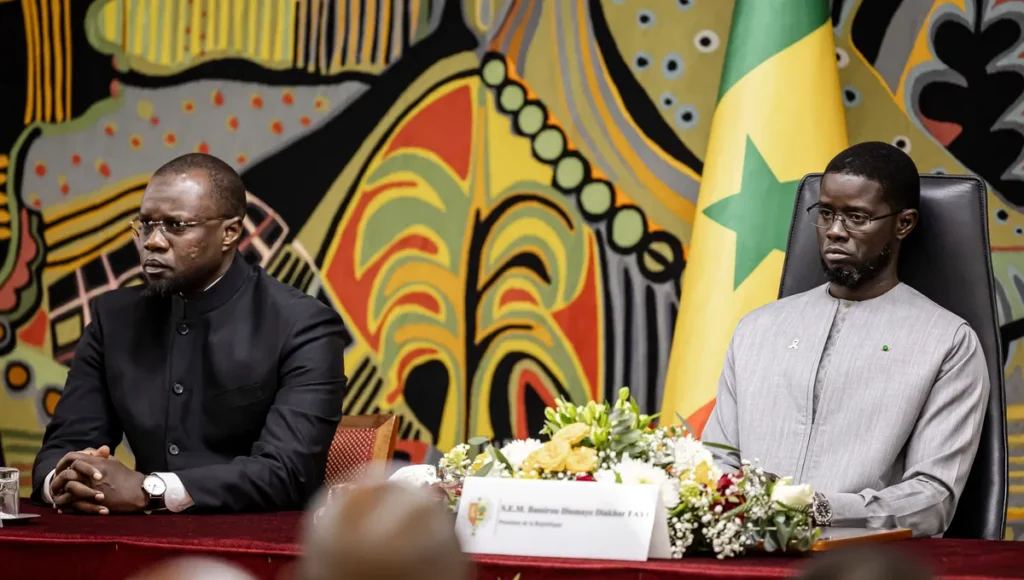
The political landscape in Sénégal has been thrown into turmoil following the abrupt dismissal of Prime Minister Ousmane Sonko by President Bassirou Diomaye Faye. The decision, announced on May 22, 2026, marked the end of a once-united leadership duo that had steered the country since April 2024.
Sonko’s dismissal did not silence him for long. Within days, he reclaimed his parliamentary seat and was swiftly elected President of the National Assembly, a move that underscored the deepening rift between him and the head of state. Both leaders share membership in the Pastef party, yet their alliance has collapsed under the weight of unresolved disputes and mounting tensions.
The power struggle has intensified against the backdrop of a severe financial crisis. Revelations of a hidden debt exceeding $11 billion have plunged the nation into economic uncertainty, compounding the political instability that now grips the government.
What lies ahead for the fractured leadership?
As the dust settles, one question looms large: Will the appointment of a new prime minister ease the escalating tensions, or will it further inflame the divisions within the ruling party and the country at large?
Insights from political analysts
To dissect the unfolding crisis, experts Mehdi Ba, a journalist known for his incisive political commentary, and Vincent Foucher, a prominent political scientist and CNRS research fellow at Sciences Po Bordeaux’s Les Afriques dans le Monde (LAM) lab, share their perspectives on the power struggle’s implications for Sénégal’s future.
Visualizing the rupture
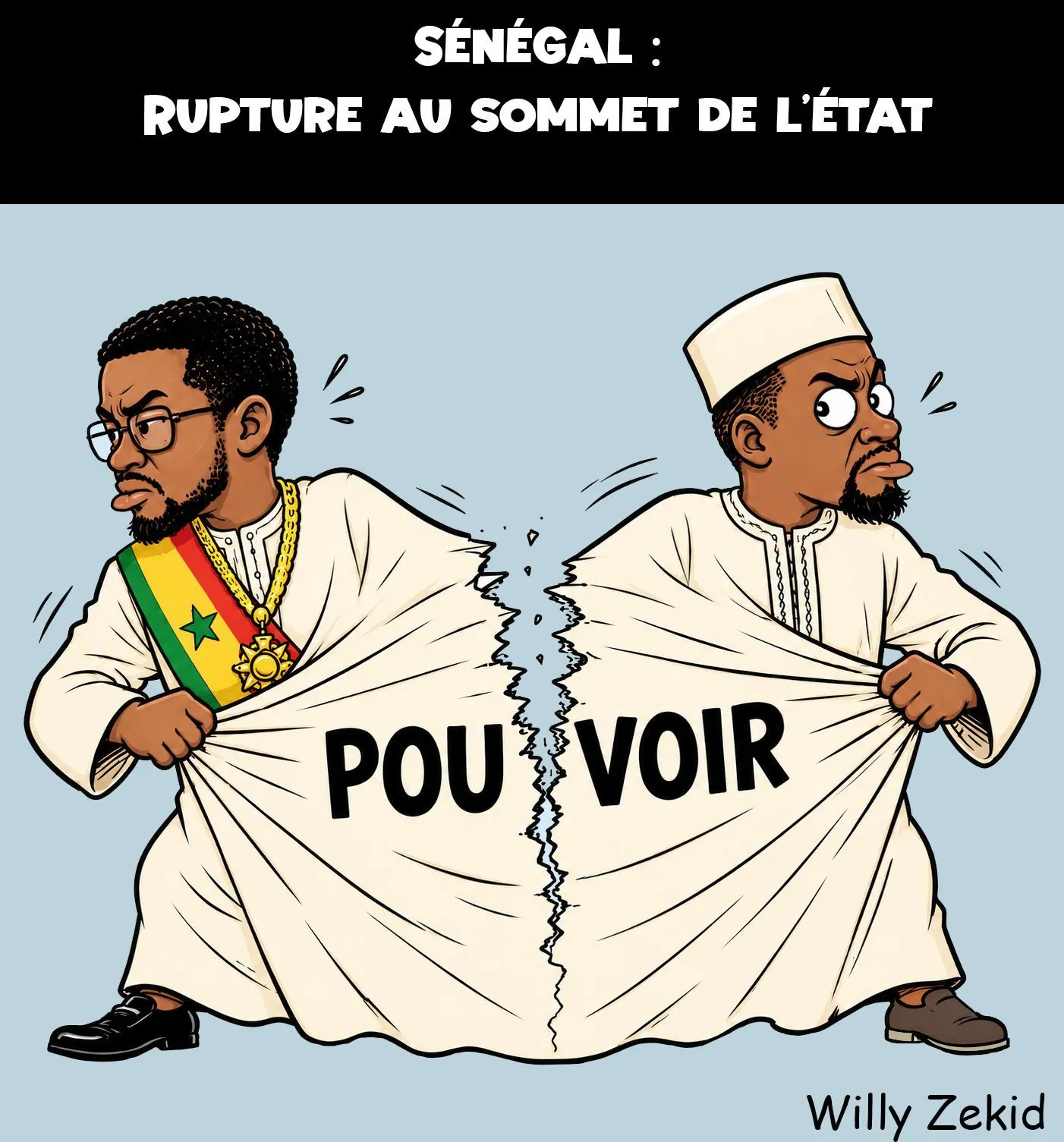
This week’s featured artwork, in collaboration with Cartooning for Peace, captures the stark reality of the leadership’s fracture with sharp wit and symbolic depth.
You may also like
Gabon’s economic management hindered by unreliable public data
Niger: General Tiani faces growing unease within special forces after Russian involvement
Mali : 17 morts dans les rangs des dozos, le JNIM accentue sa pression
Sahel : le pari des juntes tourne-t-il à l’échec sécuritaire ?
MALI : Le JNIM diffuse les images de l’attaque de la base de San et contredit la version des FAMa