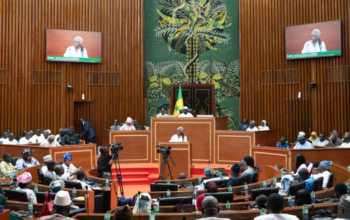
The requirement for asset declarations is once again testing the credibility of Senegal’s executive branch. Reports from Dakar indicate that several government ministers have not fulfilled this legal obligation, despite transparency being a key promise from Bassirou Diomaye Faye and Ousmane Sonko since their April 2024 ascent to power. This issue extends beyond mere administration, touching upon the consistency of official statements.
Senegal’s framework, established by the 2014 law creating the National Anti-Fraud and Corruption Office (OFNAC), mandates specific high-ranking public officials to submit a detailed inventory of their assets upon assuming and leaving office. This includes the President, Prime Minister, ministers, heads of institutions, and credit administrators managing over one billion CFA francs.
Strict legal obligations for asset disclosure
The legislation clearly defines the timeline. Individuals subject to this rule have three months post-appointment to submit their declaration to OFNAC. Exceeding this period renders their situation legally questionable. According to the Senegalese press, several members of the government, reshuffled in autumn 2024, are currently in non-compliance.
This failure is not minor. The law stipulates that in cases of non-submission, OFNAC issues a formal warning to the non-compliant party. Should silence persist, the institution can pursue legal action, with non-declaration potentially leading to penalties such as salary suspension and, if applicable, criminal prosecution. While designed to deter, its actual effectiveness has long been debated.
A political challenge for the ruling administration
The stakes are particularly high because the fight against illicit enrichment and the demand for accountability were central to Pastef’s successful campaign. The new leadership has initiated several proceedings against former dignitaries of the Macky Sall regime, specifically leveraging OFNAC and the financial prosecutor’s office. Discovering non-compliance within the current government would undermine the moral authority asserted by the authorities.
OFNAC, now led by a magistrate following its restructuring, theoretically possesses the necessary powers to activate these procedures. The question remains about the political will to see it through, especially given that successive institutional reports have frequently highlighted low compliance rates among those obligated, including under previous administrations. The last public report noted hundreds of expected declarations, a significant portion of which were never filed.
Asset transparency: a growing regional initiative
The debate in Senegal mirrors a broader West African trend. Côte d’Ivoire, Bénin, and Burkina Faso have all adopted similar mechanisms in recent years, driven by ECOWAS and African Union protocols aimed at preventing corruption. However, performance across member states varies, with practical implementation often hindered by administrative resistance and a lack of genuine public access to declarations.
In Dakar, civil society groups, including Forum Civil (the Senegalese chapter of Transparency International), have long advocated for the full publication of declarations, similar to models in some European democracies. This demand conflicts with the confidentiality principle embedded in Senegalese law, which restricts access to authorized bodies only and penalizes any unauthorized disclosure.
Ultimately, the current situation presents the government with a straightforward choice. Either the implicated ministers promptly regularize their status, closing the incident, or OFNAC initiates its procedures, opening a politically damaging chapter for an administration that has championed integrity. The credibility of the anti-corruption agenda hinges on such decisive actions. The identified ministers now face formal notices from the institution.